


The train is hardly anything to write home about, not with its three rusted and creaky cars and with seats as hard as church pews. But 20 minutes into the journey from Ajaccio, Corsica’s largest coastal city, to Corte, in the island’s rugged outback, a certain alchemy begins to take place.
The smells of palm trees and Mediterranean winds give way to odors of pine forest and damp vegetation. Twenty minutes more and you’re clattering upward past plunging ravines and snow-capped mountain ranges that look transposed from Ansel Adams photos. Red-roofed mountain villages, ruined stone huts and lightning-blasted trees thunder past and vanish behind. All that’s missing is a Corsican Wordsworth to distill these natural wonders into verse.
Almost all the passengers — among them Italian cyclists, Dutch trekkers and my own astonished self — press their faces to the dirty glass, muttering superlatives and wondering what will materialize around the next bend. Our words come rushing out in multiple languages — “Bello!” “Mooi!” “Holy crud!” — with each phrase expressing the same sense of awe.
In a way, our band of travelers is just conforming to history’s pattern. For millennia, visitors have arrived in Corsica only to be blown away by its loveliness. The ancient Greeks sailed into its dazzling turquoise bays and declared the island Kalliste: the Most Beautiful. Henri Matisse strode down a gangplank many centuries later and found a “marvelous land,” where “all is color, all is light.”
These days, French kiosks from Normandy to Nice glow with magazine covers depicting the crescent-shaped sandy beaches, jagged ranges, Roman ruins and pastel-hued port towns that give Corsica its modern nickname, L’Ille de Beaute: the Isle of Beauty.
But while Corsica fires near-religious worship in France and its European neighbors, it remains terra incognita for us Americans. Of the more than 3 million US residents who annually fly into France, barely 6,000 wind up spending a night on this entrancing compact island roughly the size of New Hampshire, according to the Maison de France, the French government’s tourism office.
Earlier this summer, I decided to add one more number to that statistic.
The train empties us in the mountain redoubt of Corte (pronounced core-TAY). A palpable Corsican pride suffuses the town. Shop windows beckon with traditional local delicacies — ropes of sausage, wedges of cheese, bottles of honey, casks of local wine — and the cafes are filled with groups of old men chatting in the native Corsican language. More than a few of the town’s walls drip with graffiti shouting slogans for Corsican independence.
“For Corsicans, Corte is symbolic of our identity, the place that was least altered by outsiders,” says Jean-Marc Olivesi, the director of Corsica’s museums. He’s in town to plan a big 2009 exhibition on the island’s most famous native, Napoleon Bonaparte, to be held in the town’s Musee de la Corse. “The coastal towns” — Calvi, Ajaccio, Bastia, Bonifacio, Porto-Vecchio — “have a history wrapped up with Genoa or with France,” the two powers that successively controlled Corsica for the last several hundred years, Olivesi explains.
As a result, Corte was named capital of Corsica during the island’s lone flicker of independence from the Genoese republic, from 1755 to 1769. The leader of the independence campaign, Pascal Paoli, is a local deity. His name adorns the university, the main street and even the sweet shop on the main square — as well as the square itself. In its center he lives on in statue form, a well-dressed Enlightenment gentleman with an intense gaze.
If possible, approaching the southern town of Bonifacio by sea is even more staggering than arriving in Corte by rail. Immense chalk-white cliffs, horizontally grooved like a geological millefeuille, dwarf our sightseeing boat as it cuts through water the color of Curacao liqueur. At sea level, enormous grottoes open darkly in the cliff walls, revealing candle-drip stalactites. Wind-eroded rock formations, some as large as Manhattan apartment buildings, sprout mysteriously from the sea.
It’s said that Ulysses and his men took shelter in Bonifacio’s cliff-lined port, encountering a race of giants. Thousands of years later, Bonifacio is again drawing famous folks and larger-than-life characters — mainly celebrities and corporate titans. For the mellower segment of the boldface crowd, southern Corsica has lately emerged as a discreet alternative to the South of France.
“In Corsica, you have none of the artificiality of the Cote d’Azur,” says Patrice Arend, proprietor of a nautical antiques store, Mer et Decouvertes, set in the shadow of Bonifacio’s centuries-old citadel, who, while praising the authenticity of the area is also quick to mention that Sting has been a customer, and that a few years ago he ran into Bill Gates just outside. “A lot of famous people come here, but they come so that they can be incognito.”
Sail east from Bonifacio and you’ll tack past the Golfe de Sperone, a seaside golf course designed by Robert Trent Jones and containing private villas created by the likes of Norman Foster. It’s the kind of place where golfers might actually try deliberately to hit their balls into the water, just for an excuse to plunge into the dazzling sea.
Continuing on, you’ll glimpse the Ile de Cavallo, a secluded island community known quaintly in the French press as the Isle of Billionaires. Finally you can pull up directly to the opulent Casa del Mar hotel in the glitzy town of Porto-Vecchio — the only hotel in Corsica with a dedicated yacht mooring. Designed by Jean-Francois Bodin, known for his addition to the Matisse Museum in Nice, the five-year-old hotel has quickly generated big buzz and attracted folks like Giorgio Armani and Marc Jacobs to its Michelin-starred restaurant and lush grounds.
As evening descends on Porto-Vecchio, I slip into the village’s old streets and watch the village transform into Corsica’s night-life mecca. Bronzed from Santa Giulia and Palombaggia — the area’s Tahitiesque beaches — crowds in white linen pop into art galleries and gelato parlors. On cafe terraces, glasses fill with rose from the nearby Domaine de Torraccia vineyard and Corsican Pietra beer, flavored with chestnut. Air kisses flutter like fireflies — “Ciao!” “Bon soir!” “Hola!” — as an outdoor DJ spins electro-soul for the dolled-up girls sipping cocktails at Le Patio.
But this is all a mere preamble for La Via Notte, the island’s nocturnal temple. The scale is enormous, bombastic, as if Napoleon himself had ordered it. Seven bars and nearly as many restaurants spread over multiple levels and pavilions. Inside the DJ booth, three men operate long flashing control panels as if trying to pilot a spaceship. Go-go dancers grind on platforms as streaks of laser light shoot past. A swimming pool glimmers in the distance.
“We have the largest capacity in Europe,” says the owner, Henry Bastelica, estimating the floor space at around 2,000m2. “About 4,000 people can party here.”
To woo them, the club flies in big names from the international DJ circuit, including Roger Sanchez, Dirty Soundsystem and Erick Morillo. (“He flies in a private plane ... and costs 40,000 euros,” says Bastelica of Morillo). The vast VIP area, he adds, has served the designer Jean-Paul Gaultier, the supermodel Laetitia Casta, the soccer star Zinedine Zidane and “all the biggest French actors.”
But Bastelica is quick to crush any comparisons with France’s flashier resorts.
“Celebrities go to St-Tropez and get snapped to death by paparazzi,” he says with a disdainful shake of the head. “Here no one will bother them. Here they don’t even need a bodyguard.”

Behind a car repair business on a nondescript Thai street are the cherished pets of a rising TikTok animal influencer: two lions and a 200-kilogram lion-tiger hybrid called “Big George.” Lion ownership is legal in Thailand, and Tharnuwarht Plengkemratch is an enthusiastic advocate, posting updates on his feline companions to nearly three million followers. “They’re playful and affectionate, just like dogs or cats,” he said from inside their cage complex at his home in the northern city of Chiang Mai. Thailand’s captive lion population has exploded in recent years, with nearly 500 registered in zoos, breeding farms, petting cafes and homes. Experts warn the

No one saw it coming. Everyone — including the Chinese Nationalist Party (KMT) — expected at least some of the recall campaigns against 24 of its lawmakers and Hsinchu Mayor Ann Kao (高虹安) to succeed. Underground gamblers reportedly expected between five and eight lawmakers to lose their jobs. All of this analysis made sense, but contained a fatal flaw. The record of the recall campaigns, the collapse of the KMT-led recalls, and polling data all pointed to enthusiastic high turnout in support of the recall campaigns, and that those against the recalls were unenthusiastic and far less likely to vote. That
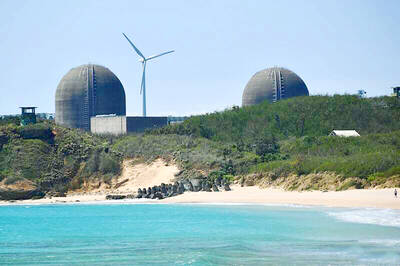
A couple of weeks ago the parties aligned with the People’s Republic of China (PRC), the Chinese Nationalist Party (KMT) and the Taiwan People’s Party (TPP), voted in the legislature to eliminate the subsidy that enables Taiwan Power Co (Taipower) to keep up with its burgeoning debt, and instead pay for universal cash handouts worth NT$10,000. The subsidy would have been NT$100 billion, while the cash handout had a budget of NT$235 billion. The bill mandates that the cash payments must be completed by Oct. 31 of this year. The changes were part of the overall NT$545 billion budget approved

The unexpected collapse of the recall campaigns is being viewed through many lenses, most of them skewed and self-absorbed. The international media unsurprisingly focuses on what they perceive as the message that Taiwanese voters were sending in the failure of the mass recall, especially to China, the US and to friendly Western nations. This made some sense prior to early last month. One of the main arguments used by recall campaigners for recalling Chinese Nationalist Party (KMT) lawmakers was that they were too pro-China, and by extension not to be trusted with defending the nation. Also by extension, that argument could be


 RSS
RSS