


It was past midnight and Mike Matusow, nicknamed the Mouth, was about to hit his stride. Best known as a verbose professional card player on ESPN poker telecasts, Matusow was not gambling at high-stakes Texas Hold 'Em on this night in May. Instead, he was in a spare bedroom at his house, shirtless, furiously pumping his legs on a commercial-strength stepping machine.
His drive to burn calories was motivated by finance, not fitness. “Last year, I talked about how I used to weigh 181 pounds [82kg] and somebody said that I’d never weigh that again,” said Matusow, who stands 183cm tall and who on this day weighed 86kg, down from his peak of 109kg. “I said I would, and we made the bet for US$100,000.”
He was given one year to get back to 82kg by Ted Forrest, one of the world’s leading poker players; on June 3, the year would be up.
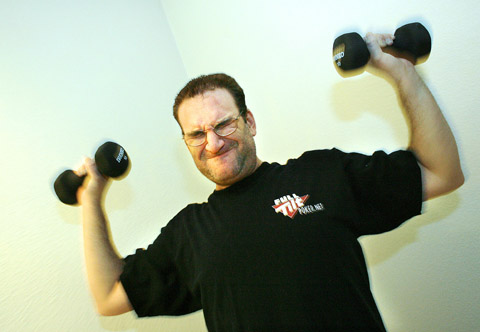
PHOTO: NY TIMES NEWS SERVICE
Matusow seemed headed for victory — he had 19 more days to drop just 4kg — but there was a wrinkle. “My girlfriend and I are going on a cruise,” he said. “I asked Ted to settle for US$70,000, so I could eat and drink with her. He said, ‘I’ll gamble for 30.’ So now I will have to run 5 miles [8km] every day on the boat, drink protein shakes and eat grilled chicken.”
Over the years, so-called proposition betting — the sometimes absurd, usually spur-of-the-moment wagers that gamblers make among themselves — has become as ingrained as oversize designer sunglasses in the professional poker world. Huck Seed, the 1996 champion in the World Series of Poker, once bet US$10,000 that he could learn to do a standing back flip in two months (he did). The pool-player-turned-poker-pro John Hennigan vowed to spend six weeks living in Des Moines, Iowa (action-starved, he returned to Las Vegas after two days). Howard Lederer, an avowed vegan, ate a hamburger to win US$10,000 from a fellow poker professional, David Grey. (Offered an opportunity to win his money back by eating a few olives, which he can’t stand, Grey demurred.)
With US$10,000 or US$100,000 on the line, what often sound like frat-boy boasts had better ring true, and fast. “You make claims? You say you can do something? You put your money up,” Lederer said. “That is being a gambler.”
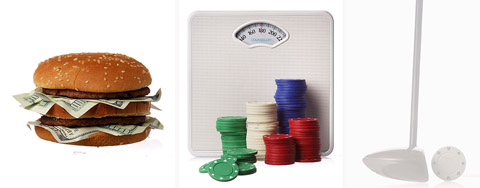
ILLUSTRATION: NY TIMES NEWS SERVICE
These bets offer a glimpse into the rarefied world of professional gamblers, where often money is not the object, but the pawn one moves about the board. Such wagers are “mostly a way of keeping score, but if the points are too small there is no fun in it,” said Daniel Negreanu, the winner of four World Series of Poker tournaments, who has been known to play casual rounds of Wii bowling and Golden Tee golf for sums totaling in the low five figures. “You have to understand that losing money is no big deal when you gamble for a living.”
“We don’t think of money the way that salaried people do,” continued Negreanu, who sports a goatee and two gold hoops in his left earlobe. “We don’t love money the way rich people do. We know we can always make more of it.”
His confidence is abetted by the fact that the professional poker economy has grown significantly in recent years, with an explosion of tournaments, the advent of online poker sites and promotional deals with those sites, giving top players a large pool of money to gamble with when they’re not sitting at card tables. Indicative of this is the 2008 World Series of Poker now taking place here. The event has attracted many of the game’s most successful players for a gross prize pool that is on track to exceed 2007’s total of US$159.8 million. (In an unusual arrangement, the nine finalists will be chosen by July 14, but play will be suspended until Nov. 9 and Nov. 10, when ESPN will cover the final table.)
Among many high-stakes professionals, gambling goes beyond being a job; it’s also a lifestyle and a passion. Of course, there are successful players who avoid proposition betting — Chris Ferguson, called Jesus and known for his mathematically rigorous approach to poker, describes these wagers as “maybe not a waste of money, but often a waste of time.” But it is not unusual for gambling to be in a pro’s blood.
“These guys may play poker 10 hours a day, but that leaves 14 hours in which they need to do something interesting,” said Michael Craig, the author of The Professor, the Banker and the Suicide King, which chronicles a mega-stakes Hold ’Em game between a Texas banker and a group of professional players. “If they are home watching TV, they bet sports. If they are driving through the rain, they bet on how long it will take a raindrop to reach the bottom of the car’s window. They want to have gambling in every aspect of their lives.”
This begs a question as to whether poker’s high-stakes proposition bettors meet the clinical definition of pathological gamblers. “They have their own culture and their own norms,” said Bob Breen, a clinical psychologist at the Rhode Island Gambling Treatment Program. “We’re talking about professional gamblers, not pathological gamblers. They may be doing nothing more than blowing off steam by making these bets.”
Technically, such bets are illegal in some US states, according to gambling and criminal law experts, though authorities almost never pursue wagers between individuals. In Nevada, “gambling between private persons does not require a license and is not illegal,” said David Salas, a deputy chief of enforcement for Nevada’s Gaming Control Board.
Almost anything is fodder for a wager between pros. This was borne out on a recent afternoon in the high-rise apartment of Andrew Robl, 21, who dropped out of college and moved here to make his living as a gambler. His favorite game is online poker, at which he has made more than US$1 million, he said, playing under the name Good2CU.
Facing a floor-to-ceiling window with a view of the Strip below, Robl recounted a wager in which he paid US$20,000 to a friend who endured 25 days without leaving the bathroom of a room at the Bellagio hotel, surviving on room service and food from friends. While Robl regaled this reporter with the story, his manager, Nick Rainey, who recently negotiated Robl’s one-day endorsement deal with the Web site Full Tilt Poker (fulltilt.com) when Robl made it to the final table at a World Series of Poker tournament, initiated a bet of his own. He wagered another poker professional in the room, Luke Kim, that he, Rainey, could tell Coke from Pepsi in a blind tasting.
Rainey disappeared into a bedroom, and Kim filled the first four of 20 Dixie cups with the soft drinks, numbering each cup and compiling a list of which cola was in each. Rainey emerged from the bedroom and began sipping. He flubbed it during the second flight, on the seventh cup.
Kim had won a quick US$1,000, at least on paper; like many proposition bets, this one was added to a running tab between the bettors. Gamblers bet so frequently among one another that money changes hands only when one party requests a payout, and then often in the form of chips or a transfer between online poker accounts.
Collecting on a bet is not always a given. Gavin Smith, who earns his living playing poker tournaments, remembers wagering a wealthy Californian who, with US$100,000 on the line, said he could jump from an automobile roof to a hotel awning. The Californian failed to make it, came close to injuring himself in the process and has yet to pay it all off, Smith said.
Considering Las Vegas’ many world-class golf courses, it is not surprising that gamblers extend their wagering to the links. There, between standard bets on rounds of golf, proposition bets on making specific putts or, in one case, catching drives as if they’re fly balls in centerfield, are an additive to most outings.
“Golf betting is the funnest thing in the world,” said Negreanu, whose game is raggedy at best and whose financial results reflect it. An unlucky card “can kill you at poker,” he said, but golf is only “2 percent luck.”
In the past, he has found himself in the hole for more than US$1 million in golf bets. Nonetheless, he remains surprisingly sanguine about it all. Recently he coolly came back from a deficit of US$160,000 on the front-nine of a golf match against the poker pro Patrik Antonius. They were playing for US$20,000 a hole. Negreanu wound up ahead by US$20,000 after the 18th.
Antonius said he has US$400,000 riding on planned golf and tennis games in the near future. “Having money at risk motivates me to get better and beat the other guy,” said Antonius, a fitness fanatic. “It’s nice to wake up in the morning and know what you need to work on.”
Clearly, though, golf is not for everyone. Matusow, he of the US$100,000 weight bet, said that he avoids taking up the game for a simple reason: “I’d go broke. Those other guys would win all of my money.”
And what came of Matusow’s weight wager? On the seven-day cruise with his girlfriend, Matusow gained 3kg, which left him needing to lose 7kg in nine days. “I didn’t eat for the last five days, did a master cleanse and spent time in the Jacuzzi,” he said by telephone. “It was sheer torture. But I did it. I got down to 179” (pounds) [81kg].
Soon after Matusow made weight, he said, Forrest paid up, with US$60,000 in poker chips (after accounting for US$40,000 Matusow owed from a previous debt). Forrest did not return several messages seeking comment.
As for Matusow, his weight began climbing almost immediately. “Right now I am eating a 20-piece Chicken McNugget meal,” he said by telephone. “And guess what? It’s gooood!”
Days later, after collecting US$675,924 in tournament winnings, Matusow reported that he had bet Erick Lindgren, another poker pro, that he, Matusow, would weigh less than 200 pounds (91kg) on Jan. 15, 2009. “Right now,” Matusow said, “Erick is looking pretty good.”
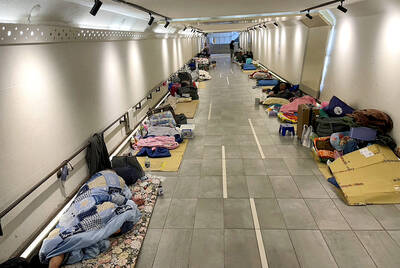
From the last quarter of 2001, research shows that real housing prices nearly tripled (before a 2012 law to enforce housing price registration, researchers tracked a few large real estate firms to estimate housing price behavior). Incomes have not kept pace, though this has not yet led to defaults. Instead, an increasing chunk of household income goes to mortgage payments. This suggests that even if incomes grow, the mortgage squeeze will still make voters feel like their paychecks won’t stretch to cover expenses. The housing price rises in the last two decades are now driving higher rents. The rental market
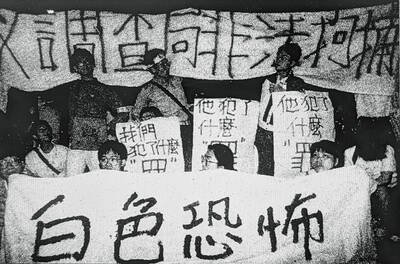
July 21 to July 27 If the “Taiwan Independence Association” (TIA) incident had happened four years earlier, it probably wouldn’t have caused much of an uproar. But the arrest of four young suspected independence activists in the early hours of May 9, 1991, sparked outrage, with many denouncing it as a return to the White Terror — a time when anyone could be detained for suspected seditious activity. Not only had martial law been lifted in 1987, just days earlier on May 1, the government had abolished the Temporary Provisions Effective During the Period of National Mobilization for Suppression of the Communist

Hualien lawmaker Fu Kun-chi (傅?萁) is the prime target of the recall campaigns. They want to bring him and everything he represents crashing down. This is an existential test for Fu and a critical symbolic test for the campaigners. It is also a crucial test for both the Chinese Nationalist Party (KMT) and a personal one for party Chairman Eric Chu (朱立倫). Why is Fu such a lightning rod? LOCAL LORD At the dawn of the 2020s, Fu, running as an independent candidate, beat incumbent Democratic Progressive Party (DPP) lawmaker Hsiao Bi-khim (蕭美琴) and a KMT candidate to return to the legislature representing
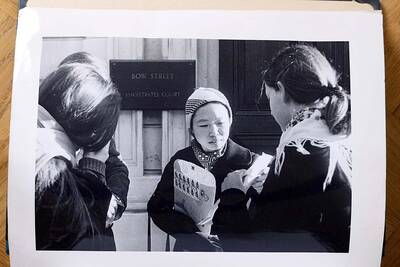
Fifty-five years ago, a .25-caliber Beretta fired in the revolving door of New York’s Plaza Hotel set Taiwan on an unexpected path to democracy. As Chinese military incursions intensify today, a new documentary, When the Spring Rain Falls (春雨424), revisits that 1970 assassination attempt on then-vice premier Chiang Ching-kuo (蔣經國). Director Sylvia Feng (馮賢賢) raises the question Taiwan faces under existential threat: “How do we safeguard our fragile democracy and precious freedom?” ASSASSINATION After its retreat to Taiwan in 1949, the Chinese Nationalist Party (KMT) regime under Chiang Kai-shek (蔣介石) imposed a ruthless military rule, crushing democratic aspirations and kidnapping dissidents from


 RSS
RSS