


The unlikely new face of radical women's activism in the US? Meet Kiki Peppard, a 53-year-old switchboard operator and grandmother from Pennsylvania who claims she is one of millions of victims of "maternal profiling." Defined as "employment discrimination against a woman who has, or will have, children," feminist groups say that maternal profiling has reached epidemic proportions - and is getting worse. In essence, it involves employers building up information on a woman's age, marital status and family commitments to determine whether to hire her, how much to pay her and how much responsibility to give her. Is she likely to have children and need maternity pay? Will she want to work shorter hours?
All these factors push women up against a "maternal wall" - which has been described as the new glass ceiling - potentially stopping them from landing a job for which they are specifically, even uniquely, well qualified.
Peppard has spent the past 14 years campaigning unsuccessfully for a law to ban the practice in Pennsylvania. She experienced maternal profiling first-hand in 1994 when her husband left her and she moved from Long Island, New York, to Effort, Pennsylvania ("The name is appropriate," she sighs over the phone). She was rejected from 19 job interviews in a row because she was a single mother to James, then 14, and Carissa, then 11.
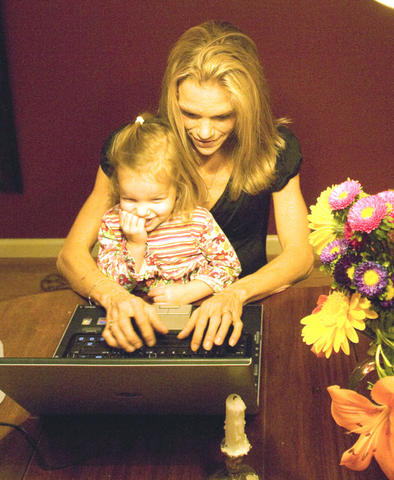
PHOTO : NY TIMES NEWS SERVICE
"The first question was always, 'Are you married?' The second was, 'Do you have children?' After that, they stopped the interview." After a year on welfare she finally got a job as a secretary at a high school where they asked no questions about her childcare responsibilities.
Unbelievably, then as now, it was perfectly legal in 28 states, including Pennsylvania, for interviewers to ask questions about a job applicant's marital status, family plans and caring responsibilities. At the end of last year, the New York Times called "maternal profiling" one of the political buzzwords of the coming year. Moms Rising, the increasingly high-profile US campaigning group, which promotes mothers' rights and has doubled its membership to 140,000 in the past year, has championed Peppard's case. And maternal profiling is edging its way onto the election agenda: Hillary Clinton pledged her interest when campaigning in New Hampshire last year.
In the UK, asking questions in a job interview about a woman's maternal status would leave an employer open to a sex discrimination case, yet there is a great deal of evidence that such profiling goes on unspoken. And it is a practice that affects not just mothers, but all women of childbearing age. Whether or not you intend to have children, the possibility that you might, could well be enough to put off a potential employer.
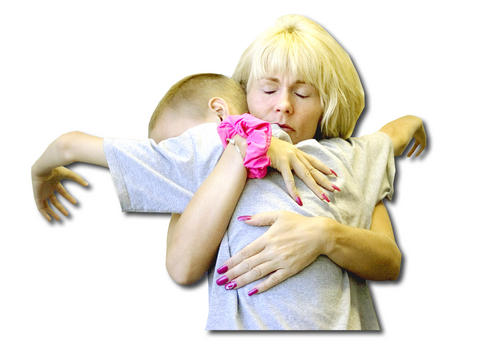
PHOTO: NY TIMES NEWS SERVICE
Last year, a survey by the UK's Equality and Human Rights Commission, headed by Trevor Phillips, found that 70 percent of recruitment agencies had been asked to avoid hiring women who were pregnant or likely to get pregnant. The commission also found that mothers face more discrimination in the workplace than any other group. Those with children under 11 were 45 percent less likely to be employed than men, with that figure rising to 49 percent among single mothers.
A YouGov poll of 1,000 UK directors, also conducted last year, revealed that 21 percent knew of instances in which their company had avoided hiring women of child-bearing age - 19 percent admitted to making this decision themselves. In the same poll, more than two-thirds of senior executives said that the bureaucracy surrounding parental leave posed a "serious threat" to their companies. And in 2004 an extraordinary survey by HR information provider Cromer found that eight in 10 human resources managers would "think twice" before hiring a newly married woman in her 20s. (They had fewer reservations about hiring mothers with older children, they said, as they would be "less likely to take maternity leave.")
All of which reflects the fact that women of child-bearing age increasingly seem to be seen as "difficult" employees. So much so, that earlier this month the British business tycoon Alan Sugar commented that the laws preventing employers asking women about their family plans and childcare arrangements have resulted in him throwing some candidates' resumes in the bin.
"Everything has gone too far," said Sugar. "We have maternity laws where people are entitled to too much. If someone comes into an interview and you think to yourself 'there is a possibility that this woman might have a child and therefore take time off,' it is a bit of a psychological negative thought.
"If they are applying for a position which is very important," he continued, "then I should imagine that some employers might think 'this is a bit risky.' They would like to ask the question: 'Are you planning to get married and to have any children?'"
In the weeks since Sugar made these extraordinary comments, cyberspace has been full of (mostly anonymous) owners of small businesses cheering him on. One blogger writes: "It is high time someone of high profile said what every employer is scared to say:
'I would not employ women.' ... The reason I do not employ women is that I run a small business and there is no way that I could fund maternity benefits." Another replied: "I know where you are coming from as we too are the same. ... if we do look for a female staff member, we would want somebody in her late 40s or early 50s."
And this last comment reflects an observation made by Moms Rising, which estimates that women are only safe from maternal profiling after the age of 44, when they are considered to be past child-bearing age. As one of the group's activists writes on a "maternal profiling" blog: "My life and career path have not made it possible for me to settle down and have children. However this does not keep people from discriminating against me by "assuming" that I either have children or plan to have them soon. As if they can hear my biological clock ticking."
This discriminatory behavior has always taken place, of course, but it is hoped that by giving it an emotive name - with its connotations of racial profiling, and offender profiling - the problem might gain new recognition and an organized campaign of opposition. As Kristin Rowe-Finkbeiner, president of Moms Rising, points out, "sexual harassment is a phrase that helped to spark major legislative and cultural changes. Widespread use of the phrase 'maternal profiling' can similarly help to spark major changes." She describes the incidence of discrimination as "jaw-dropping," quoting a recent US study which showed that mothers are 79 percent less likely to be hired than non-mothers with equal employment experience. "If you're a mother in America maternal profiling is likely to have happened to you."
For her part, Peppard says she has never forgotten the humiliation of having to present her food stamps at the supermarket all those years ago when she was being turned down for job after job. Her most recent attempt to pass the law stalled before it reached the state senate in November last year. "Initially I kept up the momentum in the hope that I would get this law passed before my daughter was ready to enter the workforce," she says. "Now I'm doing it for my granddaughter."
Miami-based lawyer Michael Casey, who specializes in employment law, says that "so-called 'family responsibility discrimination' claims are probably going to constitute the next wave of major litigation directed at employers in the US." Some US companies are already voluntarily showing support to parents, regardless of their state laws, because they fear future litigation. But there is a knock-on effect even to these preemptive moves.
"Giving preferential treatment to people who have familial responsibilities has created a backlash involving employees who lack such responsibilities," says Casey, and, in the future, these childless employees could bring reverse discrimination suits over the injustice of always being the ones asked to work late and on weekends. "Lawyers will be happy with that result, at least," he adds wryly.
Meanwhile in Pennsylvania, Peppard is happy to fight on as long as it takes. "I have written to Oprah Winfrey twice a year for the past 14 years and I contacted her again last week. I think if she knew about this personally, she'd call me."
Peppard is dismissive of the (mostly male) legislature who won't pass her bill. "I wonder if their own mothers know about what they're doing to punish women," she says. "Maybe they think mothers don't vote and don't matter. But we do."

June 2 to June 8 Taiwan’s woodcutters believe that if they see even one speck of red in their cooked rice, no matter how small, an accident is going to happen. Peng Chin-tian (彭錦田) swears that this has proven to be true at every stop during his decades-long career in the logging industry. Along with mining, timber harvesting was once considered the most dangerous profession in Taiwan. Not only were mishaps common during all stages of processing, it was difficult to transport the injured to get medical treatment. Many died during the arduous journey. Peng recounts some of his accidents in
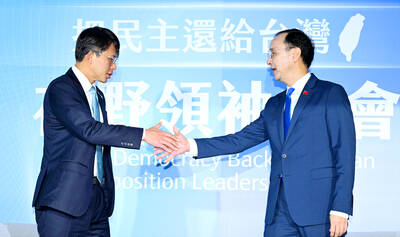
What does the Taiwan People’s Party (TPP) in the Huang Kuo-chang (黃國昌) era stand for? What sets it apart from their allies, the Chinese Nationalist Party (KMT)? With some shifts in tone and emphasis, the KMT’s stances have not changed significantly since the late 2000s and the era of former president Ma Ying-jeou (馬英九). The Democratic Progressive Party’s (DPP) current platform formed in the mid-2010s under the guidance of Tsai Ing-wen (蔡英文), and current President William Lai (賴清德) campaigned on continuity. Though their ideological stances may be a bit stale, they have the advantage of being broadly understood by the voters.
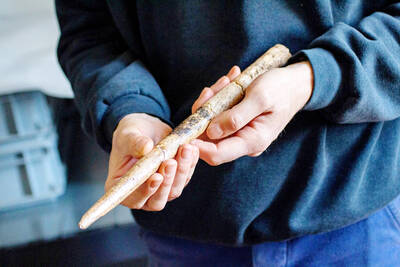
Artifacts found at archeological sites in France and Spain along the Bay of Biscay shoreline show that humans have been crafting tools from whale bones since more than 20,000 years ago, illustrating anew the resourcefulness of prehistoric people. The tools, primarily hunting implements such as projectile points, were fashioned from the bones of at least five species of large whales, the researchers said. Bones from sperm whales were the most abundant, followed by fin whales, gray whales, right or bowhead whales — two species indistinguishable with the analytical method used in the study — and blue whales. With seafaring capabilities by humans
In a high-rise office building in Taipei’s government district, the primary agency for maintaining links to Thailand’s 108 Yunnan villages — which are home to a population of around 200,000 descendants of the Chinese Nationalist Party (KMT) armies stranded in Thailand following the Chinese Civil War — is the Overseas Community Affairs Council (OCAC). Established in China in 1926, the OCAC was born of a mandate to support Chinese education, culture and economic development in far flung Chinese diaspora communities, which, especially in southeast Asia, had underwritten the military insurgencies against the Qing Dynasty that led to the founding of


 RSS
RSS