


One of the most eagerly awaited dance performances in months will preview in Ilan tomorrow before arriving in Taipei next Thursday. It's 37 Arts, by the newly reconstituted LAFA, the company founded by former Martha Graham Company principal dancer Sheu Fang-yi (許芳宜) and her long-time partner, choreographer Bulareyaung Pagarlava (布拉瑞揚).
The company's office/studio is on the 15th floor of a building in downtown Taipei. The studio has great views from big windows on two walls; it also has a fairly low ceiling that rules out grand leaps or throws. The space is the perfect metaphor for a company whose founders are focused both on the here and now and the outside world, on making their own stage, not waiting for someone to offer them space.
Sheu and Bula set up their company in 2002 under the name "Bulafangyi." Their first performance was in the basement of the Eslite Bookstore on Dunhua South Road.
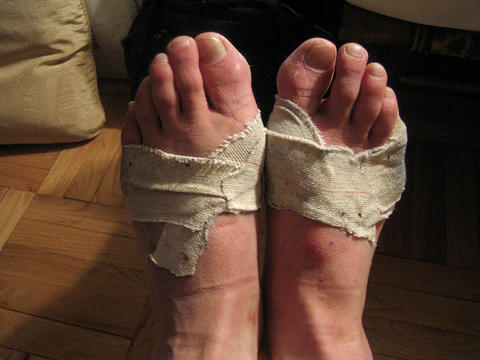
PHOTO: COURTESY OF LAFA
"That was the time we are so innocent … the year we both left Cloud Gate. One choreographer had no stage to present his work and one dancer had no place to dance … . So we thought, why not create a stage?" Sheu said in an interview last month. "When you are young, you are not afraid to fail. And when you are young enough and you are stupid enough and you know you can do it, you just think, 'I will make it happen.'"
After the Eslite shows, the company went into hibernation as Bula went off to Europe before rejoining Cloud Gate as a choreographer for the second company and Sheu went to the Graham troupe, where she became a star. But she said her final year with the Graham company was a struggle, knowing that something felt wrong, something needed to change.
"A lot of dancers want to limit themselves because of insecurities. It is good to be in a big company, you can learn the rules, you can be comfortable," she said. "I'm dancing for no one but myself. From the beginning, dance makes me feel valuable, that I'm worth it. Dance makes me greedy, I want to try lots of things … . I'm not afraid to put fame down. I wanted something else. I'm still eager to see what I have left in my body."
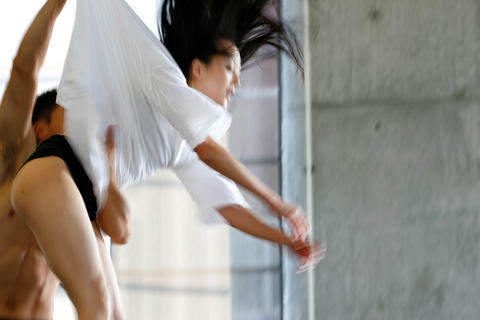
PHOTO: COURTESY OF LAFA
Since leaving Graham, Sheu has given talks to high school dance students around the country that are as much about learning to trust in one's self as they are about performing. As Sheu relaunched the company last year, she spent two months last summer as a guest artist at the Baryshinikov Arts Center in New York City with Bula, where they worked on 37 Arts.
"The funny thing is, before I was afraid that after I left the Graham company I might not be able to come back to New York often, but it has turned out the complete opposite. We have lots of chances to work with different choreographers and invitations to several events," she said.
"I want the dancers to work with different choreographers so their bodies can speak different languages … and for the audiences to see something from outside Taiwan … . That's why LAFA doesn't want to have just one choreographer," she said. "We changed [the name] from Bulafangyi to LAFA because we want this company to go on, we don't want people to only remember Bula and Fang-yi. We are hoping we can find a lot of potential artists, to give them a stage, to have people see them."
What audiences will see with 37 Arts is an hour-long show that begins with a 10-minute piece, The Duet, by young choreographer Sang Ji-jyia (桑吉加). Next will be an excerpt from Bula's 2002 The Single Room. The final piece is Bula's 35-minute 37 Arts, named after the building that houses the Baryshnikov center.
While LAFA offers great promise as a company, what it can't offer its dancers right now is full-time work. Besides Sheu, there are just three dancers, young men who are still students at National Taiwan University of the Arts. The limited budget rules out fancy costumes, although Sheu raved about the big white T-shirt she wears in 37 Arts.
"It's a huge, huge shirt. We cut it a little bit, and we did change it to fit the body a little more, but we are using the costume completely - we use the outside of the shape and we also use the material as part of the choreography. This is not just a costume to cover your body; it is something that is really part of the choreography ... I thought it was really worth it, worth the US$6," she said with a laugh.
Sheu said she often thinks about the questions Mikhail Baryshnikov asked her about being a dancer - and how they apply to a company: "What is the best program, what is the best stage, what is the audience you are looking for, what kind of dance market are you looking for."
"I don't want just quantity, I care about the quality very much," Sheu said.

What was the population of Taiwan when the first Negritos arrived? In 500BC? The 1st century? The 18th? These questions are important, because they can contextualize the number of babies born last month, 6,523, to all the people on Taiwan, indigenous and colonial alike. That figure represents a year on year drop of 3,884 babies, prefiguring total births under 90,000 for the year. It also represents the 26th straight month of deaths exceeding births. Why isn’t this a bigger crisis? Because we don’t experience it. Instead, what we experience is a growing and more diverse population. POPULATION What is Taiwan’s actual population?
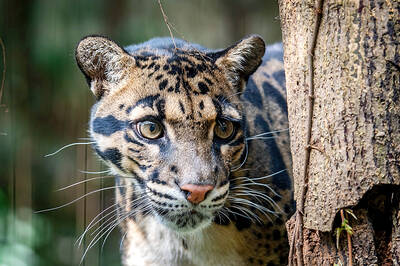
After Jurassic Park premiered in 1993, people began to ask if scientists could really bring long-lost species back from extinction, just like in the hit movie. The idea has triggered “de-extinction” debates in several countries, including Taiwan, where the focus has been on the Formosan clouded leopard (designated after 1917 as Neofelis nebulosa brachyura). National Taiwan Museum’s (NTM) Web site describes the Formosan clouded leopard as “a subspecies endemic to Taiwan…it reaches a body length of 0.6m to 1.2m and tail length of 0.7m to 0.9m and weighs between 15kg and 30kg. It is entirely covered with beautiful cloud-like spots
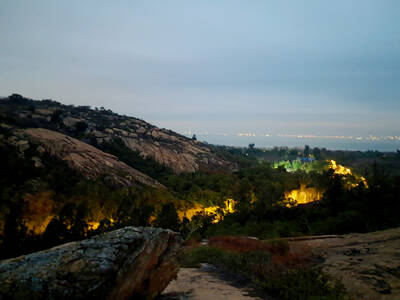
For the past five years, Sammy Jou (周祥敏) has climbed Kinmen’s highest peak, Taiwu Mountain (太武山) at 6am before heading to work. In the winter, it’s dark when he sets out but even at this hour, other climbers are already coming down the mountain. All of this is a big change from Jou’s childhood during the Martial Law period, when the military requisitioned the mountain for strategic purposes and most of it was off-limits. Back then, only two mountain trails were open, and they were open only during special occasions, such as for prayers to one’s ancestors during Lunar New Year.

A key feature of Taiwan’s environmental impact assessments (EIA) is that they seldom stop projects, especially once the project has passed its second stage EIA review (the original Suhua Highway proposal, killed after passing the second stage review, seems to be the lone exception). Mingjian Township (名間鄉) in Nantou County has been the site of rising public anger over the proposed construction of a waste incinerator in an important agricultural area. The township is a key producer of tea (over 40 percent of the island’s production), ginger and turmeric. The incinerator project is currently in its second stage EIA. The incinerator


 RSS
RSS