


Bob Stowell doesn't consider himself to be particularly optimistic, but when you ask the longtime Atlanta-area resident how he deals with adversity, he says he hasn't really had to face all that much difficulty in his life. It's a remarkable observation when you consider that Stowell is now into his ninth decade. But experts who study the mental and physical attributes of people who are living long and healthy lives say this glass-is-half-full sort of attitude is common.
"What we have learned from centenarians is that it is not so important how much stress a person has in their life, it is how they manage it that is important," explains Thomas Perls, director of the New England Centenarian Study and a geriatrician at Boston Medical Center He observes that many centenarians have personalities that are conducive to managing stress well. "Instead of internalizing stuff that is stressful, they seem to be able to let it go," adds Perls.
In fact, precisely how people age, and how you can potentially intervene to slow the process down are topics of profound interest all over the world. In Atlanta, for example, more than 20 research projects are under way as part of Emory University's Predictive Health Initiative, a new model of healthcare established in 2005 that focuses on health maintenance rather than treatment of disease.
PHOTO: AGENCIES
"There is a lot of work to do there because health has generally been defined by the medical profession as absence of disease," explains Ken Brigham, director of the Predictive Health Initiative. "And we have tools available now that ought to make that a totally inadequate definition. We ought to be able to define health in more positive terms."
In an effort to change this paradigm, Emory researchers are studying select groups of people to see if they can identify what is right rather than what is wrong with their health. "These are people, spanning the decades from age 20 to 70, who are selected because they are very healthy," says Brigham. "And then we are taking a lot of both biochemical measurements and measurements of cell functions, to try and define what is special about these people that allows them to remain healthy into older age."
While science has not yet been able to pinpoint why some people age more successfully than others, many ongoing studies suggest the process is influenced by more than just diet and exercise. Attitude, social networks and mental stimulation all seem to play a role. And people such as Stowell who have spent their lives stimulating their minds and their bodies may well have an advantage. However, it is also clear that many of the healthy behaviors that these individuals exhibit can be adopted by almost anyone.

PHOTO: AGENCIES
Make social connections
For example, Judy Kiely, 79, doesn't get stressed very often, but when she does, meditation helps a lot. It's a strategy she has been using successfully for 25 years. "It's simple. You just sit down and make sure that you relax, and let your mind relax," she says. Kiely also finds that doing handiwork such as embroidery or knitting, or getting together with friends, helps to relieve stress as well.
In fact, friends seem to offer other positive benefits to healthy aging, too. Researchers have noted that individuals who live independently well into their 80s, 90s, and beyond tend to have many friends and acquaintances, and maintaining these relationships is important to them. "People who are in a social network live longer and are more satisfied with their lives," explains Gary Small, director of the UCLA Center on Aging, and author of Longevity Bible, the 8 Essential Strategies for Keeping Your Mind Sharp and Your Body Young (Hyperion). Even a simple 10-minute conversation with another person every day is enough to provide some benefit, according to some studies, adds Small.
PHOTO: AGENCIES
Nurturing a strong social network is a skill that can be learned, but experts stress that it is helpful to begin the process-and to value it-early on in life. For example, Helen Grogan is only 60, but she has always thrived on meeting and getting to know new people. "The more moral support you have, the richer your life is," says Grogan, who lives in northwest Atlanta.
Grogan meets many new people through her passion for gardening and conservation. She does this by manning the plant hotline at the Botanical Gardens once a week, judging gardening events and taking on outdoor-related projects for the charitable organization, Hands-On Atlanta. "When you are raising children and working a lot, you don't necessarily have the time to get as involved as you might otherwise, so I guess it is making up for those years," says Grogan. "It may seem like you are just doing gardening, but you'd be surprised at the things you learn from people. It is not just you teaching them. You learn from them, and a lot of spiritual moments happen."
Find your passion

PHOTO: AGENCIES
Indeed, having a passion or a purpose in life is another one of the common attributes that researchers notice in people who live long, healthy lives. "When you ask centenarians what is important, they will tell you that having a cause that gets them up in the morning is very important," stresses Perls. "And I think that those who do not have that languish, and are probably in poorer shape that those who do."
Some people are lucky enough to discover their passion early on. And it is not uncommon for passions to turn into vocations. Ozell Sutton, who lives in southwest Atlanta, for example, never was much good at sports, but he found that he had a gift for public speaking. And he has been able to marry that gift with a passionate commitment to civil rights and black history.
He is now retired from his career working on conflict resolution for the US Justice Department, but at the age of 82, he is still an active lecturer on the topic, he is in the process of writing his second book, an autobiography that covers his life's work, and he regularly mentors young men as a member of the board for the charitable organization, 100 Black Men. "I have been privileged to act out my own personal commitment, and conflict resolution is a personal commitment," says Sutton. "I remember my mother told me that you are as good as anybody, but you are better than none. And my commitment in life has been to that particular point."
PHOTO: AGENCIES
Stay active in mind and body
Like Sutton, Stowell's list of activities can be dizzying to people of less than half his age: He regularly volunteers for Habitat for Humanity, making porch columns, chair rails and other components for houses. He also walks 3km a day, takes university classes, reads and attends the symphony. Such a packed schedule comes naturally to Stowell, who grew up on a dairy farm in New York. But he believes, and experts concur, that his consistent productivity-both physical and mental-probably has a lot to do with his longevity. "You've got to stay active. Physical activity is very important, but I think mental activity is, too," stresses Stowell. "I am geared up. I have to be doing something all the while."
Sometimes a single passion can deliver multiple benefits in terms of longevity. That's what running has done for Charlie Gregory, 73, of Marietta. Just this past October, he completed his goal of running a marathon in all 50 states, and now he wants to do it again. Clearly, he enjoys running, and it offers substantial benefits in terms of physical conditioning. But it is also the primary source for his social connections.
Every Saturday, he goes running with his buddies in a local running group. And when he travels to run marathons in other states, he often gets together with colleagues who share his passion for running. In addition, there is no denying the stress-relieving benefits of regular physical activity. "Going out and doing my hour to hour-and-15-minute run during the week I'll think about things that may be stressful, and that seems to help a lot," says Gregory.
Small emphasizes that you don't have to be a marathon runner to achieve multiple benefits from a regular schedule of exercise. You can simply take a walk every night with your spouse or a friend. In return, you can develop improved cardiovascular conditioning and help to control your weight while lowering your stress level and strengthening your relationship. "Just one simple, daily strategy can have a huge impact," adds Small.
Gregory, Stowell, and Kiely all think the biggest key to their longevity is that they have been blessed with good genes. But experts suspect that genes may be getting too much credit. "Our finding is that [exceptional longevity] runs very strongly in families, but remember that families have a lot in common besides just genes," says Perls, pointing out that behavioral factors that positively impact longevity, such as not smoking, eating a healthy diet, and more years of education are often passed from generation to generation as well.

Last week, Viola Zhou published a marvelous deep dive into the culture clash between Taiwanese boss mentality and American labor practices at the Taiwan Semiconductor (TSMC) plant in Arizona in Rest of World. “The American engineers complained of rigid, counterproductive hierarchies at the company,” while the Taiwanese said American workers aren’t dedicated. The article is a delight, but what it is depicting is the clash between a work culture that offers employee autonomy and at least nods at work-life balance, and one that runs on hierarchical discipline enforced by chickenshit. And it runs on chickenshit because chickenshit is a cultural
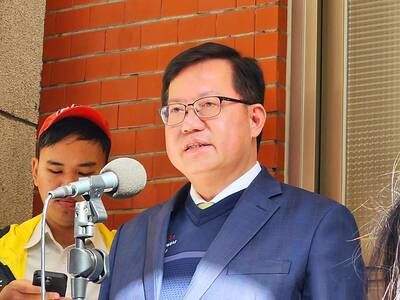
By far the most jarring of the new appointments for the incoming administration is that of Tseng Wen-tsan (鄭文燦) to head the Straits Exchange Foundation (SEF). That is a huge demotion for one of the most powerful figures in the Democratic Progressive Party (DPP). Tseng has one of the most impressive resumes in the party. He was very active during the Wild Lily Movement and his generation is now the one taking power. He has served in many of the requisite government, party and elected positions to build out a solid political profile. Elected as mayor of Taoyuan as part of the

Moritz Mieg, 22, lay face down in the rubble, the ground shaking violently beneath him. Boulders crashed down around him, some stones hitting his back. “I just hoped that it would be one big hit and over, because I did not want to be hit nearly to death and then have to slowly die,” the student from Germany tells Taipei Times. MORNING WALK Early on April 3, Mieg set out on a scenic hike through Taroko Gorge in Hualien County (花蓮). It was a fine day for it. Little did he know that the complex intersection of tectonic plates Taiwan sits

When picturing Tainan, what typically comes to mind is charming alleyways, Japanese architecture and world-class cuisine. But look beyond the fray, through stained glass windows and sliding bookcases, and there exists a thriving speakeasy subculture, where innovative mixologists ply their trade, serving exquisite concoctions and unique flavor profiles to rival any city in Taiwan. Speakeasies hail from the prohibition era of 1920s America. When alcohol was outlawed, people took their business to hidden establishments; requiring patrons to use hushed tones — speak easy — to conceal their illegal activities. Nowadays legal, speakeasy bars are simply hidden bars, often found behind bookcases


 RSS
RSS