


A boiling hot day in Philadelphia and I am standing on the steps of the Franklin Institute, a big and stately science museum and the temporary host of what is currently the world's most successful touring exhibition: Tutankhamun and the Golden Age of the Pharaohs. The exhibition is now in its final week and it shows: the treasures are about to be packed up again and taken to London where they will be displayed in the O2, a new exhibition space in what used to be the Millennium Dome at Greenwich in the east of the city.
Nearby is a sign that records, totalizer-style, the number of visitors so far. Today it reads, "1 million."
I go inside, hoping to escape the chaos; it's no better. A guard tells me that, this morning alone, they are expecting 500 schoolchildren. Is he exaggerating? No. A moment later the doors swing open and the first batch advances on us like a miniature army. These kids don't make my journey around the exhibition easy - especially since many of them have iPods with big microphones attached, into which they read aloud the notes that accompany the exhibits. It's maddening.
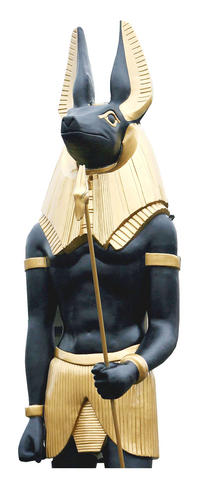
PHOTO: AFP
Used to the reverential quiet of the British Museum, it takes me a while to get used to this.
Since childhood I've been an Egypt nut and, yes, there are some wonderful things here: the gold diadem that was still on Tutankhamun's head when the tomb was opened; the lovely mirror case in the shape of an ankh that the king expected to use to gaze on his face in the afterlife. But today they leave me strangely unmoved. I stand in front of the coffinette for the viscera of Tutankhamun. It is made of gold, obsidian, rock crystal and glass but for me it might as well have been thrown together last week using model enamel and a few toilet rolls. The spirit of the theme park - queues, noise, spooky music - is upon me and I just can't shake it off.
The exhibition has been both a smash hit and a hefty disappointment since it first hit America in June 2005 (as well as Philadelphia, it traveled to Chicago, Los Angeles and Fort Lauderdale; after it closes in London next year it will go on to Dallas). "I believe we have set a new standard for the term 'blockbuster' by attracting nearly four million visitors in our four-city tour," said John Norman, president of Arts and Exhibitions International (AEI), the company behind the show (its partners are National Geographic and the Egyptian Supreme Council of Antiquities). It is true that its Philadelphia leg, which eventually attracted just under 1.3 million visitors, is now the second most successful touring exhibition stop in US history (the most successful is still Treasures of Tutankhamun at the Field Museum, Chicago, in the 1970s). But it has not been without its critics - and not only on grounds of taste. Some visitors used the words "cheated" and "deceived" when they came to write their Internet reviews and blogs. "The exhibit[ion] was totally misrepresented," said one. "There were enough major omissions to raise some ethical questions," wrote another.
The focus of their ire was the marketing of the exhibition, which featured - as it does for the British end of the tour - what appeared to be the star of the show in the 1970s, the boy king's gold funerary mask. But this piece is now considered too fragile to leave Cairo, and what you see on the posters is the coffinette (a miniature coffin, used to store the King's liver). At a glance, however, you'd never know this, and finding out the truth later infuriated some.
But the thing about Tutankhamun is that he is immune to bad publicity and has been so for decades. People still talk about the queues of people outside the British Museum in London when Treasures of Tutankhamun arrived there in 1972; over nine months it was seen by 1,694,117 people (only nine items included in the 1972 show will be seen at the O2 when it opens on Nov. 15). "There was such great pressure to see it that they opened the museum on a Sunday for a day so the staff could go," says Terence Davies, a former curator. "Even then, the queue was two hours long. Around the funerary mask there was always a bottleneck. People had to be encouraged to move along."
On Nov. 26, 1922, the greatest day of his life, British archaeologist Howard Carter entered the tomb: "At first I could see nothing, the hot air escaping from the chamber causing the candle flame to flicker, but presently, as my eyes grew accustomed to the light, details of the room emerged slowly from the mist, strange animals, statues, and gold - everywhere the glint of gold. For the moment ... I was struck dumb with amazement, and when Lord Carnarvon, unable to stand the suspense any longer, inquired anxiously, 'Can you see anything?' it was all I could do to get out the words, 'Yes, wonderful things.'"
It's not that I want to spoil anyone's day out, though the exhibition I saw in Philadelphia was not exactly my cup of tea. But this is not just a matter of taste: Tutankhamun and the Golden Age of the Pharaohs raises serious questions for the future. In the past, such exhibitions have been coordinated and hosted by venerable institutions with expertise and no profit motive: the British Museum or the Metropolitan Museum of Art in New York. The rise of a company such as AEI suggests that, henceforth, this will not always be the case. Its ability to stage so-called blockbusters lies not only in its roadie-ish skill at packing and unpacking an unwieldy and fragile exhibition, nor even in its bank account (these objects must be insured, remember), but in the fact that countries in the developing world are fast shaking off the cultural legacy of colonialism and demanding something in return for the loan of their priceless artifacts.
"In the past, Egypt gave many exhibitions freely," Zahi Hawass recently told American journalists. "Museums made a lot of money but we made hardly anything. Now, why do we send exhibitions to the US or Europe? It's about money. The Metropolitan Museum of Art is still making money today on King Tut replicas [from the 1970s] in its gift shop and we see not one penny of it. There are no free meals any more."
On paper, the British Museum has been supportive of Tutankhamun and the Golden Age of the Pharaohs, and it has curated the Howard Carter Gallery, a new section of the exhibition that will be unique to London. But I wonder how its staff feels privately. When I speak to Andrew Burnett, the museum's deputy director, he is diplomatic. "We see it as working with the Supreme Council of Antiquities [rather than a private company]," he says. "They want to raise money and we want to support them."
But does this mean that in future the British Museum will be in competition with big business? This could have a significant effect on its own budgets (blockbuster shows, for which it charges, help to draw people into other parts of the museum and to spend money in its shops). It would also, I think, be bad news for the public: tickets for the British Museum's current blockbuster, The First Emperor - China's Terracotta Army, admittedly a much smaller show than Tutankhamun, are the equivalent of US$25; those for King Tut are over US$30 for an adult, rising to over US$40 on weekends. "We're realistic. There will be an element of competition but it won't be destructive."
AEI is equally keen to avoid talking of competition. After my return from Philadelphia, I meet Mark Lach, senior vice president of the company and the designer of its shows. "We don't want to - or think we can - replace the global museums," he says. "We know that we can't survive as a business unless our relationship with the museums is a good one, and we are very sensitive to that relationship." Lach shows me around the O2 bubble and it's a bit like being backstage at, say, a Rolling Stones tour: lighting rigs, scaffolding, lots of big, black boxes.
Oh well. See the exhibition, you can - and you should, if you can bear the crowds, the noise, the general confusion. If you can be sufficiently Zen about it, the contents of King Tutankhamun's remarkable grave may still work their magic on you and "annihilate," as Carter puts it, the passing of 3,000 years with their "intimate details." And if they don't, well, you can always buy a King Tut headdress, for the amusement of all your friends.

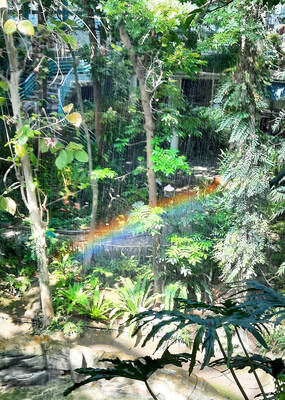
It’s only half the size of its more famous counterpart in Taipei, but the Botanical Garden of the National Museum of Nature Science (NMNS, 國立自然科學博物館植物園) is surely one of urban Taiwan’s most inviting green spaces. Covering 4.5 hectares immediately northeast of the government-run museum in Taichung’s North District (北區), the garden features more than 700 plant species, many of which are labeled in Chinese but not in English. Since its establishment in 1999, the site’s managers have done their best to replicate a number of native ecosystems, dividing the site into eight areas. The name of the Coral Atoll Zone might
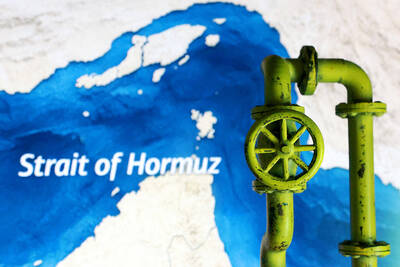
The US war on Iran has illuminated the deep interdependence of Asia on flows of oil and related items as raw materials that become the basis of modern human civilization. Australians and New Zealanders had a wake up call. The crisis also emphasizes how the Philippines is a swatch of islands linked by jet fuel. These revelations have deep implications for an invasion of Taiwan. Much of the commentary on the Taiwan scenario has looked at the disruptions to world trade, which will be in the trillions. However, the Iran war offers additional specific lessons for a Taiwan scenario. An insightful
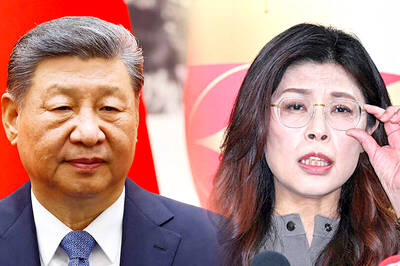
On Monday morning, in quick succession, the Chinese Communist Party (CCP) and the Chinese Nationalist Party (KMT) released statements announcing “that the Central Committee of the Communist Party of China and General Secretary Xi Jinping (習近平) have invited KMT Chairwoman Cheng Li-wun (鄭麗文) to lead a delegation on a visit to the mainland” as the KMT’s press release worded it. The KMT’s press release added “Chairwoman Cheng expressed her gratitude for the invitation and has gladly accepted it.” Beijing’s official Xinhua news release described Song Tao (宋濤), head of the Taiwan Work Office of the CCP Central Committee, as

Polling data often confirms what we expect, but sometimes it throws up surprises. When examined over time, some patterns appear that speak to something bigger going on. In this column, whenever possible, Formosa’s polls are used. Despite the sometimes cringeworthy antics of Formosa’s Chairman, Wu Tzu-Chia (吳子嘉), the data produced includes detailed breakdowns crucial for analysis. It has also been conducted monthly 11-12 times a year for many years with many of the same questions, allowing for analysis over time. When big shifts do occur between one month and the next it is usually in response to some event in


 RSS
RSS