


You don't have to be a Gucci-handbag-carrying oligarch's wife to enjoy eating and drinking in Moscow - if you know where to look.
My favorite destination for a cheap, decent meal is the capital's gloriously eclectic Izmailovo market next to Partisanskaya metro. The market sells everything from matrioshki - those annoying Russian dolls - through to pirated DVDs and real bearskins. (Yup, they come with head and claws.)
Just inside are several guys grilling kebabs in the open air - including delicious lamb ones (250 roubles, US$9.75), which are even tastier than the lovely chops served in Moscow's feted Georgian restaurants.
Nearby is one of Moscow's few affordable Soviet-era hotels - the unpretentious and down at heel Hotel Izmaylovo Gamma-Delta (hotelizmailovo.ru). Built for the 1980 Olympics, this cavernous hotel has 8,000 rooms and is allegedly Europe's biggest. Rooms cost US$149 for a twin - not exactly a bargain but cheap for Moscow.
Near the metro, babushkas in tracksuit trousers also offer rooms in private flats. Another Soviet hotel worth considering is the gargantuan Hotel Cosmos (hotelcosmos.ru) - a sweepingly retro-futuristic edifice a couple of metro stops from the center.
The hotel is pleasingly next to the All Russian Exhibition Center (nearest metro VDNKh) - a sprawling park devoted to junk left over from the Soviet Union. My kids love the woolly mammoth exhibition. You can have your photo taken with a life-sized woolly mammoth, and peer at the remains of extinct cave lions and shaggy Siberian rhinoceroses. Rooms at the Cosmos cost US$230 a double.
For a relaxing drink, this summer's most alluring Moscow venue is Kak Na Kanarakh - or Like on the Canary Islands. This floating bar includes two swimming pools and a sundeck jutting into the dark beer-colored Moscow river. The non-alcoholic cocktails are fun - 150 roubles (US$5.80) for a mojito. If you can't get past the face control, there are several beer tents next door in Gorky Park.
A more bohemian venue popular with students and aspiring musicians is Ogurets (Cucumber) - a bar near Polyanka metro station in Moscow's south. There is live music, avant-garde theater (when my wife peered in she spotted four naked thespian bottoms) and cheap cocktails. It feels more like Berlin than Moscow.
For breakfast-lovers, meanwhile, the cafe chain Schokoladnitsa is a good bet. For 129 roubles (US$5) you can eat blini-style pancakes with cream and cherry jam or old-fashioned Russian porridge, kasha - together with freshly squeezed juices and coffee.
Sadly, though such bargains are rare, Moscow now has the reputation as the world's most expensive city. It deserves it.
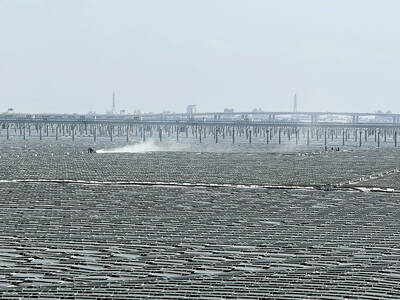
The arithmetic is straightforward and uncomfortable. By the end of 2025, Taiwan had committed itself to a 50-30-20 electricity mix — half natural gas, 30 per cent coal, 20 per cent renewables. The Ministry of Economic Affairs’s (MOEA) own monthly energy reports tell a different story. Natural gas reached 47.8 per cent of generation last year. Coal stood at 35.4 per cent, comfortably above its target ceiling. Renewables came in at 13.1 per cent, well short of the 20 per cent Taipei had pledged a decade earlier. Installed renewable capacity reached roughly half of the 12 gigawatts (GW) the government
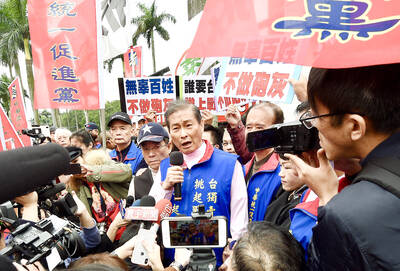
There are shadowy cabals plotting to sell out Taiwan to be annexed by China, by invasion if necessary. Fortunately, they are buffoons. In 2019, former Bamboo Union gangster and founder of the China Unification Promotion Party (CUPP), Chang An-le (張安樂, colorfully known as “White Wolf”), led a protest at the Legislative Yuan against comments made by then-premier Su Tseng-chang (蘇貞昌) that in the event of an attack by China, he would never surrender, but would protect the nation by fighting to the end, even if he only had a broom. Chang had party members bring a wooden casket that they
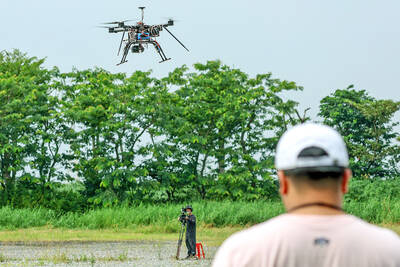
Taiwan’s drone exports are taking off, fuelled by the war in Ukraine, as Taiwanese companies seek a stake in the fast-growing global market for unmanned aerial vehicles (UAV). Low-cost drones used for reconnaissance and strikes are in high demand as governments around the world boost defense spending in the face of intensifying conflicts. A relative new player in the increasingly competitive industry, Taiwan’s pitch is to be an “Asian hub” for the production of UAVs and components free of Chinese materials, or “non-red.” That means its UAVs can be up to three times more expensive than their Chinese competitors, like the world’s biggest
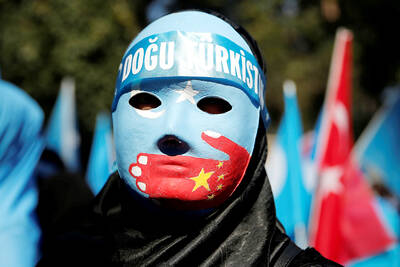
It seems every few days one bumps into one of those “real man” comments in which Taiwan is urged to “face reality” or similar, and “make a deal,” with the speaker implying that soon it will be too late. “Deal” advocates always present themselves as having a superior grip on reality, and the manly ability to make the “hard choice.” Their testosterone-laden language often echoes that of Taiwan sellout advocates. Note that such commentary always specifies a process (“make a deal, work with, make progress”), never the end state of what occupation by a violent authoritarian colonialist state will entail. In


 RSS
RSS