


In the Military Dependants Village Museum in Hsinchu City, 85-year-old veteran Liu Chiao-chi (劉教之), a member of the 34th Squadron in the ROC Air Force, was telling a visitor of the dangers and hardship he experienced when he was still in service.
While talking, Liu pointed the different travel routes he had flown on a map and to photos of pilots he recognizes. He also explained in detail the significance of the squadron's emblem - a bat with seven stars - and explains how this special squadron was formed.
"Not too many knew about this," Liu told the Taipei Times. "The Ministry of Defense even acted like we'd never existed and tried to dissociate themselves from this part of history."
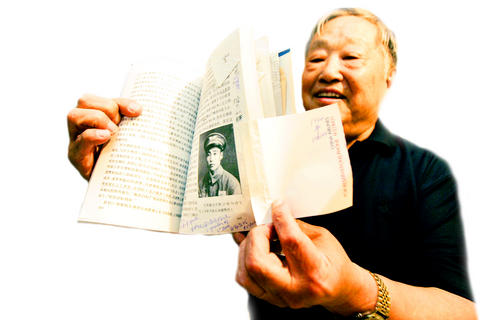
PHOTO: AP
Liu's disappointment may have been shared by other members who used to serve in this particular air force squadron, whose sacrifices have been ignored by the government and were almost unknown by their contemporaries.
A Bit of History
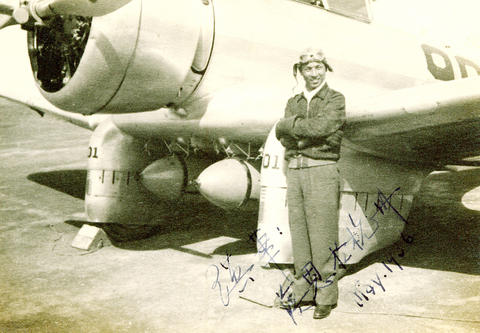
PHOTO: AP
In the early 1950s, when the US was engaged in the Korean War, the US government recognized the strategic role that Taiwan could play and decided to work more closely with Taiwan.
The Nationalist Government in Taiwan at the time had its own agenda, with President Chiang Kai-shek (蔣介石) still hoping to one day retake China. For this, he would need US military aid.
A secret cooperation between the two began through the establishment of Western Enterprises Inc in Taipei, which was composed mainly of experienced combat and intelligence specialists from the Central Intelligence Agency (CIA). The purpose was to facilitate the provision of advanced armaments and personnel training from the US to Taiwan.
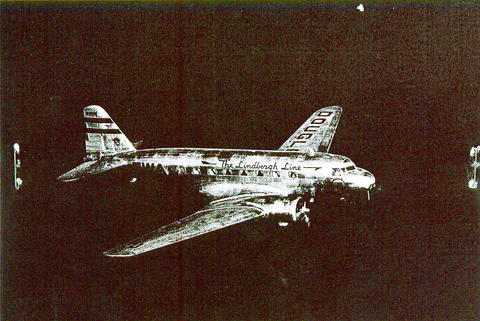
PHOTO: AP
Some of the local trainees eventually became members of the 34th Squadron, which was charged with flying secret low-altitude reconnaissance flights over China. Special cameras were installed on their planes, allowing them to capture photos of China's military infrastructure. As they would only be sent for missions at night, they were nicknamed the Black Bats Squadron (黑蝙蝠中隊).
The Bats reported directly to Taiwan's Air Force Intelligence Administration, an organization independent of the Air Force's chain of command.
General I Fuen (衣復恩) was the chief of the administration and the main coordinator between the US and Taiwan in this project .As the actions taken by the Bats were highly classified, General I was granted the authority to report directly to Chiang Kai-shek (蔣介石) and his son Chiang Ching-kuo (蔣經國).
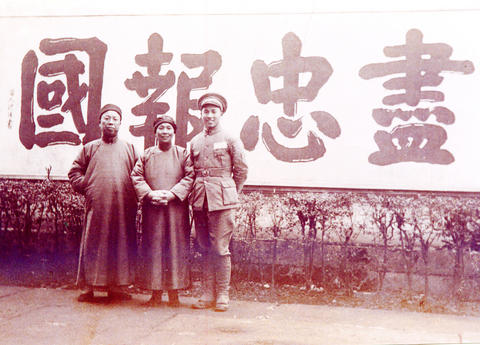
PHOTO: AP
Each member of the squadron was asked to write his will before he began to fly missions. Each also was required to sign a document demanding they keep all their actions secret.
Between 1955 and 1968, the Bats flew 838 missions, during which 142 officers were killed.
In the documentary The Secret Hidden in the Sky of Taiwan (台灣天空的祕密), director Ting Wen-chin (丁雯靜) located some members of the Bats Squadron and persuaded them to tell their story.
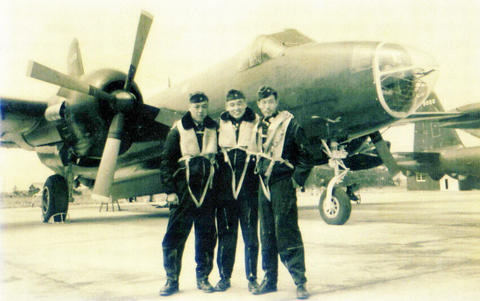
PHOTO: AP
Pilot Chu Cheng (朱震) remembered being on a mission one night, when Chinese planes got a lock on him soon after the team had completed their task.
"They were following us closely and I couldn't fly any lower to the ground," Chu recalled. "The situation left me with no time to think about questions of life and death; I only knew I needed to find ways to dodge."
Chu survived - but only because his attacker used up all his bullets.
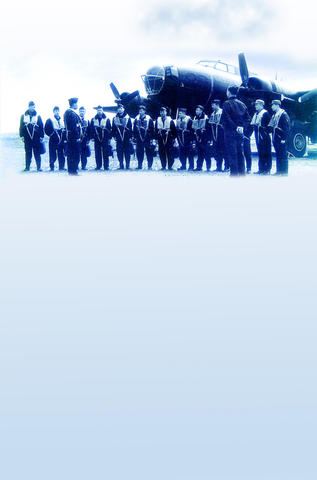
The first-hand information the squadron collected enabled the US to deliver an effective counterstrategy against China's military advancement.
The Creation of China Airlines
In the build up to the Vietnam War in the early 1960s, the 34th Squadron was also dispatched in support of the US. To avoid controversy in the international community, the Bats needed a new identity. China Airlines, Taiwan's first airline carrier, was born under these circumstances.
Wang Chi-cheng (汪積成), the former general manager of the China Airlines, said in Ting's documentary that the CIA had appropriated quite a few aircraft for the airline. He said these aircrafts had first to be "sterilized," meaning that staff had to remove all identifying marks on the plane.
"In those days, China Airlines was really just a top-notch D-squad in the air force," Wang said.
Liu was one of the Bats who worked as a member of China Airlines' personnel. He was once in charge of transporting special US Army combat teams to North Vietnam. The facade of a civil airliner, however, didn't free his team from the threat of relentless attack. Until this day, Liu can still remember the night when a bullet passed through his cabin and almost hit him in the neck.
During the Vietnam War, the airline lost 10 airplanes and 49 personnel.
Following a successful nuclear test by China in 1964, the Chi Long Project (奇龍計畫) was launched to send Bats to Xinjiang Province - where nuclear tests were executed - to gather information.
Huang Wen-lu (黃文騄) recalled the 13-hour flight experience on May 17, 1969, when his team was ordered to drop a large nuclear dust detector in the target zone.
"You only have one chance to do it right, and you could not afford to miss," he said.
Based on Huang's descriptions, a small bag of explosives would be hidden in the parachute attached to the detector, which would explode soon after the detector hit the ground, so that no one could identify it easily.
Two high sensitivity antennas were set up in Huko (湖口), Hsinchu to receive the data transmitted by the detector. The project allowed US and Taiwan officials to track China's progress in developing nuclear weapons.
Buried memories
The Bats' operation ceased after the Vietnam War ended in 1975. Despite the sacrifices, the records on this special unit remained unknown to most people in Taiwan. During the 1960s, it was even treated as a forbidden subject after I Fuen was detained for three years on unknown charges.
Even after I Fuen and some of the Bats passed away, Taiwan's Ministry of National Defense has yet to declassify documents related to the operation of the 34th Squadron.
And while the US has already declassified part of the records in 1992 and made it available for public access, statements or terms indicating the cooperation between Taiwan and US have all been censored.
Some of the Bats, however, have begun to disclose logs, photos and personal journals they kept when they were still in the service. Their effort to make people understand and recognize this part of history has gained support from the Hsinchu City Government and former Taipei City cultural affairs department commissioner Lung Ying-tai (龍應台).
"Some people said we agreed to do this to protect the Chiangs (蔣家)," Liu sighed, "We were flying every night to monitor if there is any noteworthy military activity in China so that we could set up a rapid response. We were actually protecting Taiwan!"
Lu said it was time that this history became known.
"Chiang Ching-kuo once said to us that we couldn't tell what we were doing. We are unsung heroes. All this would be made known to people some day. Now it's the time."
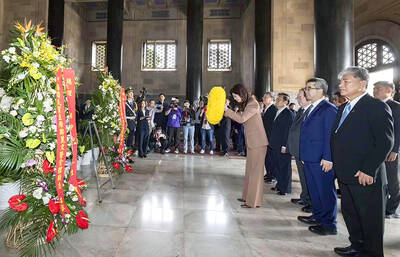
The problem with Marx’s famous remark that history repeats itself, first as tragedy, the second time as farce, is that the first time is usually farce as well. This week Chinese Nationalist Party (KMT) Chair Cheng Li-wun (鄭麗文) made a pilgrimage to the People’s Republic of China (PRC) “to confer, converse and otherwise hob-nob” with Chinese Communist Party (CCP) officials. The visit was an instant international media hit, with major media reporting almost entirely shorn of context. “Taiwan’s main opposition leader landed in China Tuesday for a rare visit aimed at cross-strait ‘peace’”, crowed Agence-France Presse (AFP) from Shanghai. Rare!

What is the importance within the Chinese Nationalist Party (KMT) of the meeting between Xi Jinping (習近平), the leader Chinese Communist Party (CCP), and Cheng Li-wun (鄭麗文), the leader of the KMT? Local media is an excellent guide to determine how important — or unimportant — a news event is to the public. Taiwan has a vast online media ecosystem, and if a news item is gaining traction among readers, editors shift resources in near real time to boost coverage to meet the demand and drive up traffic. Cheng’s China trip is among the top headlines, but by no means
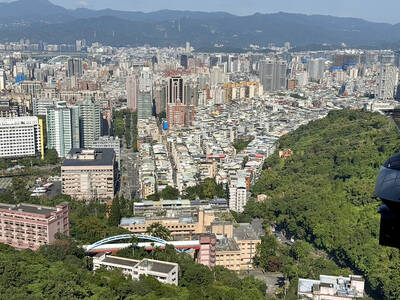
A recent report from the Environmental Management Administration of the Ministry of Environment highlights a perennial problem: illegal dumping of construction waste. In Taoyuan’s Yangmei District (楊梅) and Hsinchu’s Longtan District (龍潭) criminals leased 10,000 square meters of farmland, saying they were going to engage in horticulture. They then accepted between 40,000 and 50,000 cubic meters of construction waste from sites in northern Taiwan, charging less than the going rate for disposal, and dumped the waste concrete, tile, metal and glass onto the leased land. Taoyuan District prosecutors charged 33 individuals from seven companies with numerous violations of the law. This
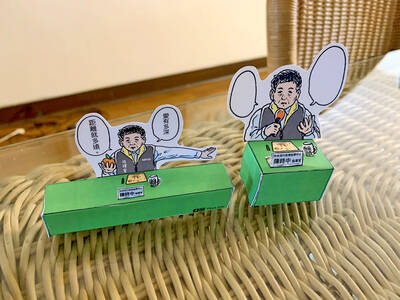
Sunflower movement superstar Lin Fei-fan (林飛帆) once quipped that the Democratic Progressive Party (DPP) could nominate a watermelon to run for Tainan mayor and win. Conversely, the DPP could run a living saint for mayor in Taipei and still lose. In 2022, the DPP ran with the closest thing to a living saint they could find: former Minister of Health and Welfare Chen Shih-chung (陳時中). During the pandemic, his polling was astronomically high, with the approval of his performance reaching as high as 91 percent in one TVBS poll. He was such a phenomenon that people printed out pop-up cartoon


 RSS
RSS