


If France ever doubted that the new Rwanda was a lost cause then the news that the tiny African state had established a cricket board was final confirmation that it had gone over to the other side. Rwanda's current president decided long ago that he could not be bothered to learn French. His government asked to join the Commonwealth even though the country was never a British colony. And then there are the billboards screaming mobile-phone adverts in English outside the padlocked French cultural center.
Yet little more than a decade ago, France claimed Rwanda as a solid member of the Francophone bloc viewed from Paris as a great family, with itself as a generous and indulgent parent, particularly to its former African possessions. In Rwanda, only about one in eight of the population actually spoke French, but it was the official language, and the people who mattered — the country's political elite in a one-party state — embraced Paris as a source of cultural identity and protection.
Today, not only is English flourishing in Rwanda but France is widely talked of as the enemy. In some quarters, French is thought of as the language of death; of those who killed and those who stayed to be murdered in the genocide of 1994. The young elite posing in the bustling cafes and night clubs of Rwanda's capital, Kigali, flaunt English as the language of the strong, of those who resisted the genocide, of the anti-French.
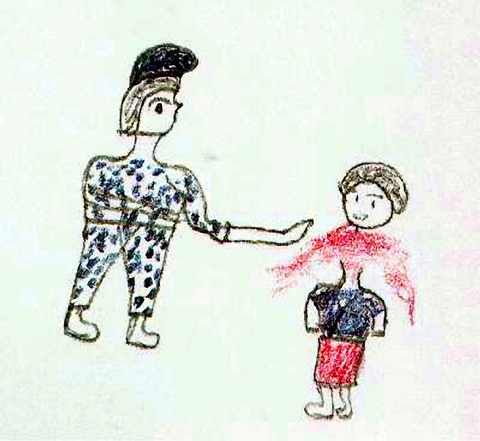
To understand this remarkable transformation you only have to talk to Venuste Kayimahe. By April 1994, he had worked for the French government for 25 years but it still, he says, left him to die when Hutu extremists unleashed the slaughter that took 800,000 Tutsi lives in 100 days. He was employed as an audio-visual editor at the French cultural center in Kigali and happened to be watching a football match on television there with his wife and two of his seven children on the evening two missiles shot down President Juvenal Habyarimana's plane and kick-started the genocide. Kayimahe is a Tutsi.
"Five of my children were in one place and I was in the cultural center and the killing had started and I couldn't get to them. I was wondering how I would protect them," he says. "It was quite impossible to escape Kigali because they were killing people all over." Kayimahe hid in the cultural center and called its French director, Anne Cros, to beg for help to get his family to safety. Cros said there was nothing she could do until French troops landed in Rwanda. Two days later, she arrived with the soldiers.
"I thought they were there to save us but she said they were there to collect some official files. I begged for help. I pleaded with her. I showed her my children. She said 'No' and left," says Kayimahe. He later learned that the same day one of his other children, 13-year-old Aimee, was murdered by the notorious machete-wielding Hutu militia, the Interahamwe, meaning "we who work together."
The French army turned its back on many others, including the French embassy's Tutsi staff, who were mostly abandoned to their deaths despite desperate pleas to diplomats they had worked with for years. The French soldiers did rescue some Rwandans. They took the assassinated president's wife (a notorious anti-Tutsi extremist in her own right), and various Hutu politicians who helped organize the genocide. They also remembered the French embassy dog, which was carefully loaded on to an army lorry while a Tutsi man who ran up to beg for help was turned away.
Now, almost 13 years later, the French ambassador's chair in Rwanda is again empty, its occupant having been forced to leave hurriedly. But this time he was thrown out by the Tutsi-led government as bitterness between these English-speaking rulers and France came to a head six weeks ago over the 1994 slaughter. At the heart of the dispute is a battle for history as each side attempts to pin the other with moral responsibility for the last genocide of the 20th century.
That the mass killing was organized by Hutu extremists in the Rwandan army and government who swiftly seized power after Habyarimana's death is not in doubt. But in November of last year, France's leading anti-terrorism judge, Jean-Louis Bruguiere, accused Rwanda's president, Paul Kagame — the Tutsi leader who has held power since overthrowing the genocidal regime — of bringing mass murder on his own people. The judge alleged that Kagame, as the leader of Tutsi rebels in 1994, ordered Habyarimana's assassination and unleashed the killing.
Bruguiere cannot indict Kagame because he is a head of state, but he did issue international arrest warrants for nine of the Rwandan president's closest aides and recommended that the Tanzania-based international tribunal trying those who organized the genocide also pursue Kagame. Rwanda responded by expelling almost everything French from the tiny central African country. Not only was the ambassador unceremoniously booted out with his staff, but the French school and cultural center were shut, and France's world service radio taken off air in Rwanda.
As the French left, years of anger among Rwanda's Tutsis spilled out over the price they believe they have paid for Paris's unique view of its place in post-colonial Africa — a role critics say is shaped by an obsession with the influence of its language and culture that led Paris to support a murderous regime because its opponents spoke English. France went on backing the killers even as the bodies piled up in the streets, churches and football stadiums. "France wants to blame us, the ones whose families were murdered, the ones who put a stop to the murderers; they want to blame us for the genocide because they cannot face their own guilt," says Rwanda's foreign minister, Charles Murigande. "The French armed the killers and they trained them even when they were saying they were going to kill the Tutsis, and France supported the genocide regime right up until the end, even helping the killers to escape." Why? "Because they have this obsession with Anglo-Saxons."
Bruguiere's indictment against the head of the Rwandan military, General James Kabarebe, and others alleges that Kagame and his Tutsi-dominated Rwandan Patriotic Front rebels were dissatisfied with a peace accord negotiated with Habyarimana's Hutu government to end the war begun in 1990 and so plotted to assassinate him and seize power. In doing so, the French judge said, the RPF unleashed a whirlwind of hatred against the minority Tutsi population that created a spontaneous genocide.
Bruguiere's interpretation is highly contentious given that Hutu extremists had been threatening to kill Habyarimana for months and that plans for the genocide were well laid before the death squads went into action. It has not helped the judge's case that he did not visit Rwanda, but he did take evidence from men on trial at the international tribunal for organizing the massacres, such as Theoneste Bagosora who might be regarded as the Himmler of Rwanda. Two of Bruguiere's key witnesses, disaffected former RPF soldiers, have since accused him of using the indictments for political ends in an ongoing campaign by France against the present Rwandan leadership.
One of those indicted by Bruguiere is Sam Kanyemera, formerly an RPF colonel and now a member of Rwanda's parliament. "This judge's evidence is really rubbish. Who has told him this? The killers and some soldiers who could not possibly know this," he says. "We know this is political." After leaks appeared in the French press two years ago saying that Bruguiere planned to accuse Kagame in connection with the shooting down of the presidential aircraft, the Rwandan government set up its own commission to probe France's role in the killings that ensued.
The commission has been delving into a stack of official papers abandoned by the defeated Hutu regime that sources say throw new light on the extent of French support for it, with large weapons shipments to the army, the training of the militias which later carried out the genocide, and French soldiers involved in frontline combat against the RPF by overseeing the firing of artillery and by flying helicopter gunships. The year before the genocide, there were so many French weapons sloshing around Rwanda that hand grenades were on sale next to the fruit in Kigali market for about US$2 each.
The commission's public hearings may cause France to regret resurrecting the past. One witness, Isidore Nzeyimana, a former military instructor, told the commission he worked with French officers who trained members of the Interahamwe, which led the killing. Another former soldier, Corporal Jean Damascent Kaburare, said French soldiers were involved in ideological indoctrination against Tutsis. "They told recruits that the enemy was the Tutsi," he said. "After the training that lasted a few days, they provided each of the trainees with a gun."
When the genocide started, Paris made no secret of where its loyalties lay. The French military flew in ammunition for government forces and, in the following weeks, a stream of Hutu officials traveled to Paris, including Jean-Bosco Barayagwiza, who was later convicted of genocide by the international tribunal, for meetings with President Francois Mitterrand and the French prime minister. Even as the mass graves filled across Rwanda, Paris engineered the delivery of millions of US dollars' worth of weapons to the Hutu regime from Egypt and South Africa.
Africa has traditionally been considered such a special case in Paris that France's policy is run out of the presidency. At the time, the "Africa cell" was headed by Mitterrand's son, Jean-Christophe, a close friend of the Habyarimanas. He later said that there could not have been a genocide because "Africans are not that organized." France's president did not deny what had happened, but took a view no less racist: "In such countries, genocide is not too important."
Gerard Prunier, a French historian who advised the French government during the later stages of its intervention in Rwanda, has characterized Paris's view of its former African colonies not as foreign countries but as "part of the family." Paris' African "back yard," he wrote in a history of the Rwandan genocide — in which he made clear his disaffection with French support for the Hutu regime — "remains its back yard because all the chicks cackle in French. There is a high degree of symbiosis between French and Francophone African political elites. It is a mixture of many things: old memories, shared material interests, delusions of grandeur, gossip, sexual peccadilloes."
He added: "Of course, the arch-enemy in this cosy relationship, the hissing snake in the Garden of Eden, is the 'Anglo-Saxon.'" Prunier said French governments viewed "the whole world as a cultural, political and economic battlefield between France and the Anglo-Saxons ... . It is the main reason — and practically the only one — why Paris intervened so quickly and so deeply in the growing Rwandan crisis."
The RPF's invasion of Rwanda in 1990 rang all the alarm bells about encroaching Anglo-Saxon influence. The rebel front was dominated by Tutsis whose families had been driven into exile by wholesale massacres around the time of Rwanda's independence from Belgium in 1962. Many families settled in neighboring Uganda where their children grew up speaking English, joined Yoweri Museveni's rebel movement that seized power in Uganda in 1986 and then began to plan an assault on their homeland. Kagame was among them.
France immediately sent troops and weapons to defend Habyarimana's regime. Politicians and the military top brass cast the conflict as between Francophone Hutus and invading Anglo-Saxon Tutsis — though 15 percent of Rwanda's population was Tutsis who had not left the country. Some in the French military talked of the RPF as wanting to destroy the Hutus, calling the rebels the "Black Khmers." Despite the growing evidence of a genocide in the making during the early 1990s, and the excesses of Habyarimana's regime in assassinating opponents and organizing periodic massacres of Tutsi civilians, France's support did not waver.
Even as the Hutu government was facing collapse in the last phase of the genocide, and no one doubted that there had been a slaughter of Tutisis, France was trying to save the failing regime by sending troops to carve out a "safe zone" in the western parts of Rwanda still under Hutu control. "Operation Turquoise" was billed as an intervention " to stop the massacres and to protect the populations threatened with extermination." But, as the Rwandan commission into French actions has been heraing, the zone proved to be safe for the Hutu Interahamwe to carry on murdering and to protect the extremist government from capture and trial by the RPF. The killers understood this. At the roadblocks, they cheered the first French troops to arrive. Later, General Jean-Claude Lafourcade, commander of Operation Turquoise, admitted that the safe zone was intended to keep alive the Hutu government in the hope that it would deny the RPF total victory and international recognition as the rulers of Rwanda. It was also an opportunity for France to help leading members of the regime to flee. Other killers made their own way to France knowing they would find protection from justice.
The true nature of Operation Turquoise was laid bare by events in the hills of Bisesero in the western province of Kibuye. Even after French soldiers arrived, the governor of Kibuye, Clement Kayishema, led militia attacks in the hills to kill Tutsis who had survived the slaughter of about 21,000 people, a slaughter he had organized in local churches and stadiums. The French commander in Kibuye, Captian Marin Gillier, took the attitude that Kayishema was the legal authority and chose to believe the governor when he said the Tutsis in the hills were armed rebels even though the front line with the RPF was about 50km away.
Hundreds more innocents were murdered before Gillier finally ventured into the hills. When he did, he recognized that the Tutsis there were not rebels and were armed only with sticks and bows and arrows to defend themselves. Many were starving, others severly wounded.
French soldiers were shocked when they saw the bodies of hundreds of those killed lying at the bottom of the hills, and some complained to reporters that they had been duped by their own government. Gillier appeared to have been misinformed about what was happening in fromnt of hsi eyes, and later jumiliated at what he had been drawn into by the politicians in Paris. Others were not so troubled. The commander on the ground was a colonel who identified himself as Didier Thibault. At the time I asked him about French cooperation with Kayishema and other killers. He responded that the Rwandan government and its army were "legal organizations."
"Some members might hve blood on their hands but not all. It is not my task and not my mandate to replace these people," he said.
Colonel Thibault was later revealed to be Colonel Didier Tauzin who was previously an adviser to the Rwandan army who had commanded the French operation that halted the RPF advance on Kigali a year earlier.
Rewanda's foreign minister says that one of the RPF's crimes in Paris' eyes is that it has shown other Francophone African countries that "France can be challenged. At the end of the day there is life away from France." French fears were nnot misplaced. The present Rwandan administration looks to the US and Britain as its principal allies outside Africa, and the Rwandan conflict heoped bring down another French ally, Mobutu Sese Seko of what is now the Democratic Republic of congo. That country, too, is now ruled by an English-speaking president.
Rwanda's foreign minister, Murigande, accuses France of spending more than a decade punishing the RPF for its victory: "In all international forums - the World Bank, the IMF - France not only voted against any development program that these institutions would want to undertake in Rwanda but it even went out of its way to mobilize other countries to vote against them.
" Before the genocide, France was the largest donor of any country ot Rwanda. Today, it is the smallest.
Yet France still unnerves the Rwandan leadership. The RPF fears that if the accusation that it killed Habyarimana is given currency it will unermine the very justfication for its power. The genocide provided a moral legitimacy to the victory of a rebel organization dominated by the Tutsi minority, and has continued to provide cover for a government that has grown increasingly authoritarian, locking up and even assassinating opponents, and that has much blood on its hands in Congo.
The weight of circumstantial evidence suggests that the Hutu extremists, and not Kagame, killed Habyarimana. But some say the RPF still faces a moral indictment over the genocide. Sam Kanyemera, the former colonel indicted by Bruguiere, says it is true that, fiven the long history of massacres -1959, 1964, 1973 - the RPF knew that the invasion would put the lives of ordinary Tutsis at risk. But he says it could never have predicted the genocide. "We knew some people would by killed like goats, but that's why we were fighting, to stop that."
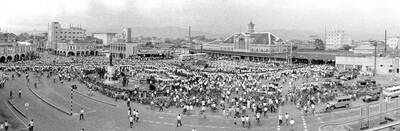
May 11 to May 18 The original Taichung Railway Station was long thought to have been completely razed. Opening on May 15, 1905, the one-story wooden structure soon outgrew its purpose and was replaced in 1917 by a grandiose, Western-style station. During construction on the third-generation station in 2017, workers discovered the service pit for the original station’s locomotive depot. A year later, a small wooden building on site was determined by historians to be the first stationmaster’s office, built around 1908. With these findings, the Taichung Railway Station Cultural Park now boasts that it has
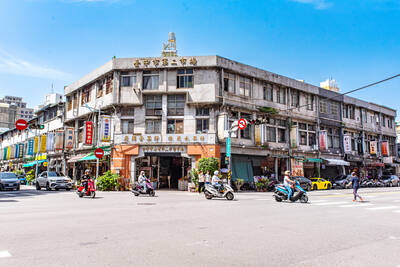
Wooden houses wedged between concrete, crumbling brick facades with roofs gaping to the sky, and tiled art deco buildings down narrow alleyways: Taichung Central District’s (中區) aging architecture reveals both the allure and reality of the old downtown. From Indigenous settlement to capital under Qing Dynasty rule through to Japanese colonization, Taichung’s Central District holds a long and layered history. The bygone beauty of its streets once earned it the nickname “Little Kyoto.” Since the late eighties, however, the shifting of economic and government centers westward signaled a gradual decline in the area’s evolving fortunes. With the regeneration of the once
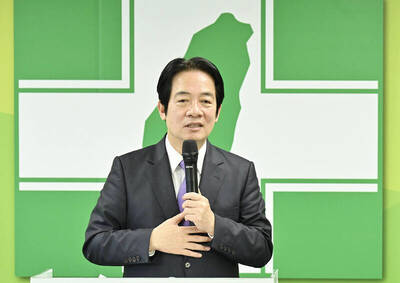
The latest Formosa poll released at the end of last month shows confidence in President William Lai (賴清德) plunged 8.1 percent, while satisfaction with the Lai administration fared worse with a drop of 8.5 percent. Those lacking confidence in Lai jumped by 6 percent and dissatisfaction in his administration spiked up 6.7 percent. Confidence in Lai is still strong at 48.6 percent, compared to 43 percent lacking confidence — but this is his worst result overall since he took office. For the first time, dissatisfaction with his administration surpassed satisfaction, 47.3 to 47.1 percent. Though statistically a tie, for most

In February of this year the Taipei Times reported on the visit of Lienchiang County Commissioner Wang Chung-ming (王忠銘) of the Chinese Nationalist Party (KMT) and a delegation to a lantern festival in Fuzhou’s Mawei District in Fujian Province. “Today, Mawei and Matsu jointly marked the lantern festival,” Wang was quoted as saying, adding that both sides “being of one people,” is a cause for joy. Wang was passing around a common claim of officials of the People’s Republic of China (PRC) and the PRC’s allies and supporters in Taiwan — KMT and the Taiwan People’s Party — and elsewhere: Taiwan and


 RSS
RSS