


Andrew White is the ultimate loose canon. This may be stereotyping, but I generally think of Anglican churchmen as thin, balding men with an interest in cricket. White is large, voluble and stylishly dressed. He is also carrying several mobiles on which he is receiving e-mails from the US State Department about the latest atrocities in Iraq and talking to someone at the Pentagon.
White wears several hats, metaphorically speaking. The hat that has attracted most attention in the UK is his role as Anglican vicar of Baghdad (strictly limited at present to the international zone — his church, St George's, is just a kilometer away from the high-security area). But it is his other job that accounts for the contact with the Pentagon and State Department — as head of the Foundation for Reconciliation in the Middle East, a free-ranging role that allows him to act as the link between US power-brokers and the region's indigenous movers and shakers.
His current preoccupations are attempting to find common ground among the religious groups in Iraq and providing humanitarian aid in Gaza, and he divides his time between Iraq, Israel and Gaza and the West Bank, with monthly trips back to the UK and bimonthly visits to the US. An absurd schedule, especially for someone who for 20 years has had multiple sclerosis and walks with a stick.
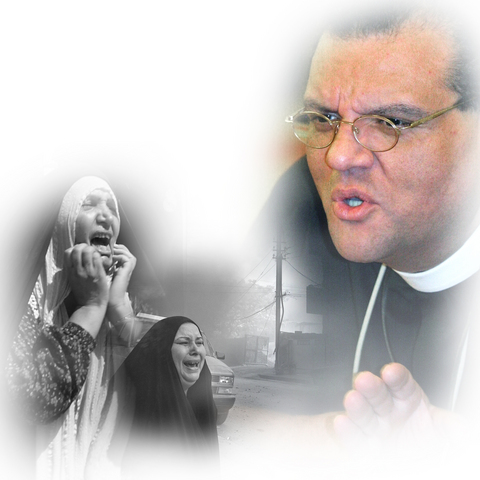
PHOTOS: AGENCIES
Is it really fair that he has to deal not just with Iraq but Israel-Palestine too? “I occasionally wonder why on earth I do this, and why I don't just have a little parish in England somewhere. Then my wife reminds me there's no way I'd cope with a little parish in England, and probably no parish would cope with me either.”
After the Iraq war, before the full extent of the insurgency was clear, he considered bringing his wife Caroline and two young sons out to Baghdad to live with him. She sensibly demurred, and I wonder now how he can bear to be parted from them for so much of the time. “If I stay at home any longer, they complain,” he says.
White is now more diplomat than churchman — the foundation, though it has a Christian ethos, is independent of the Anglican church — but he may be the least diplomatic diplomat in the world. I ask him about one recent remark — “I've got no time for trendy, lefty peaceniks.” He is more than happy to amplify: “I can pretend to like them, but I find it very difficult. You don't get through to problems or understand the situation by standing in front of tanks. Going into a situation that puts British embassy personnel in danger or puts themselves in danger is not the way forward.”
He doesn't like “woolly liberals,” either. When he was parish priest in Clapham, London, in the 1990s, he combined pastoral care with being a Conservative councilor.
He still takes what politicians like to call a robust line with liberals, especially in the church. “I can cope with anything,” he says when I ask him where he stands theologically. “I can cope very well with orthodoxy… . I can cope with Anglo-Catholicism, evangelicalism, charismatics. I just can't cope with the woolly liberal bit in the middle that doesn't believe much.”
It is in Baghdad and Gaza — among the believers — that he clearly feels most at home. “I love the Middle East,” he says. “I love the people, I love the way they express their faith, I love their food. They're not woolly liberals. I have never found any woolly liberals in the Middle East.”
Maybe that explains why they're so fond of blowing each other up, I suggest. He laughs. “I know many of the key ayatollahs and chief rabbis, and these people are not religious bigots,” he says. “Most of the key religious leaders in Iraq, Israel and Palestine are not bigots. The ones that are causing trouble have mainly come in from outside.”
White's independence makes him potentially useful to both sides, but there are dangers, too. The Americans want information. I overhear snatches of his conversation with the State Department. They are planning a conference in Cairo: who should they invite, who are the Palestinians with clout? A lot of his foundation's funding comes from the US; isn't there a danger of becoming an adjunct to American policy?
“There's a danger of being used, yes,” he admits. “But you have to be wise to that.”
He believes his main advantage as a negotiator — he has been a key figure in numerous hostage negotiations — is that he will talk to anyone. “You can't just work with the nice people,” he says. “There's a lot of talk about getting the moderates to say more. But it's not the moderates who cause the problems. So I don't just work with nice people. I work with everyone and treat them all as human beings, even the bad guys.”
White, who was also the vicar in Baghdad under Saddam and once shared an uneasy dinner with his two sons, remains a firm supporter of the war — “Saddam had to be got rid of, and there was no way the Iraqi people could do it themselves” — but he accepts that what followed was a disaster. “The result has been terrible and we have to take some responsibility for everything that has happened. We made three big mistakes. One, we didn't close the borders, so all the insurgents and bad guys got in. Two, we got rid of all the Iraqi security forces — the police, the army, the intelligence. And three, the CPA [Coalition Provisional Authority] ended too soon because of American domestic issues like the presidential election.”
White, who is 42, hails from unexotic Bexley in Kent. His father was an Anglo-Indian whose parents left India after independence because they were deemed to have been part of the colonial structure. After school, he trained to work in an operating theatre, but in his early 20s decided to become a priest. “I was holding the cardiac arrest bleep one night at St. Thomas's hospital, went outside and stood opposite Big Ben to do my evening prayers, and that's when I felt the call.” He studied theology at Cambridge, and Judaism and Islam in Israel.
While his manner can be overwhelming and his attitude hard to read, there is no doubting his largeness of spirit. As well as coping with his own MS — “I take my tablets; I'm very fortunate that it's never been a major issue in my life; I've never had time to allow it to be.”

June 2 to June 8 Taiwan’s woodcutters believe that if they see even one speck of red in their cooked rice, no matter how small, an accident is going to happen. Peng Chin-tian (彭錦田) swears that this has proven to be true at every stop during his decades-long career in the logging industry. Along with mining, timber harvesting was once considered the most dangerous profession in Taiwan. Not only were mishaps common during all stages of processing, it was difficult to transport the injured to get medical treatment. Many died during the arduous journey. Peng recounts some of his accidents in
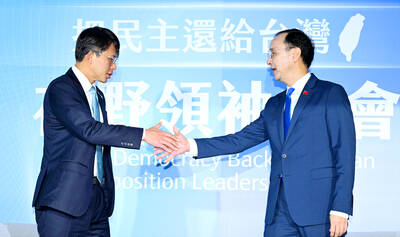
What does the Taiwan People’s Party (TPP) in the Huang Kuo-chang (黃國昌) era stand for? What sets it apart from their allies, the Chinese Nationalist Party (KMT)? With some shifts in tone and emphasis, the KMT’s stances have not changed significantly since the late 2000s and the era of former president Ma Ying-jeou (馬英九). The Democratic Progressive Party’s (DPP) current platform formed in the mid-2010s under the guidance of Tsai Ing-wen (蔡英文), and current President William Lai (賴清德) campaigned on continuity. Though their ideological stances may be a bit stale, they have the advantage of being broadly understood by the voters.
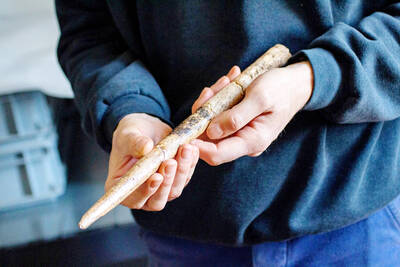
Artifacts found at archeological sites in France and Spain along the Bay of Biscay shoreline show that humans have been crafting tools from whale bones since more than 20,000 years ago, illustrating anew the resourcefulness of prehistoric people. The tools, primarily hunting implements such as projectile points, were fashioned from the bones of at least five species of large whales, the researchers said. Bones from sperm whales were the most abundant, followed by fin whales, gray whales, right or bowhead whales — two species indistinguishable with the analytical method used in the study — and blue whales. With seafaring capabilities by humans
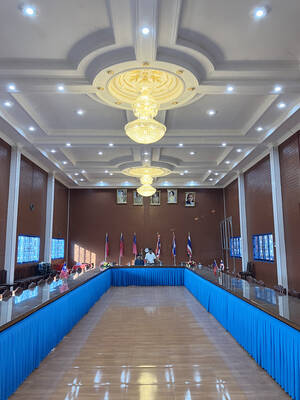
In a high-rise office building in Taipei’s government district, the primary agency for maintaining links to Thailand’s 108 Yunnan villages — which are home to a population of around 200,000 descendants of the Chinese Nationalist Party (KMT) armies stranded in Thailand following the Chinese Civil War — is the Overseas Community Affairs Council (OCAC). Established in China in 1926, the OCAC was born of a mandate to support Chinese education, culture and economic development in far flung Chinese diaspora communities, which, especially in southeast Asia, had underwritten the military insurgencies against the Qing Dynasty that led to the founding of


 RSS
RSS