


Jay Chou (周杰倫)
November's Chopin (十一月的蕭邦)
Sony
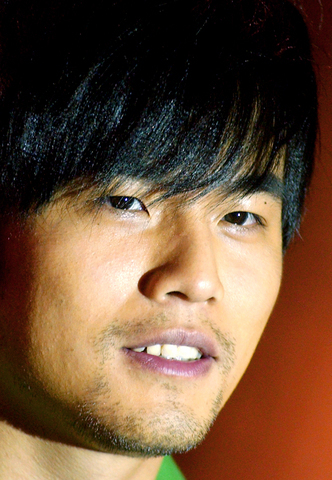
OK, sure, opting to give Taiwan's number one musical son the number one spot in this year's "Best CDs of 2005" review might be construed as favoritism, but when you take into consideration that Jay Chou's (
For the most part the album saw Chou veering away from his tried-and-tested Mando-hip-hop format and instead opting to entertain with moody piano-and guitar-driven ballads.
The album's material might have left those fashion conscience teen-agers expecting more of the same old Chou, but older listeners were wowed by what was without a doubt Chou's most mature and soul-seeking album to date.
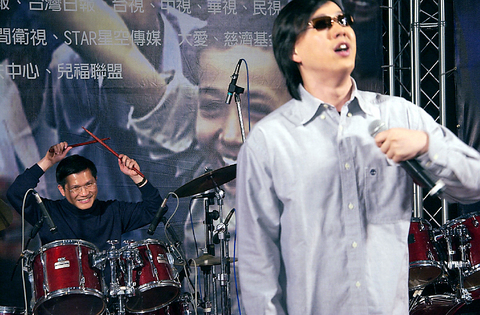
Based on sales alone Chou should easily regain his title as Taiwan's Best Male Singer at next year's Golden Melody Awards.
Jeff and Machi (黃立成 & 麻吉)
Superman (超人)
Warner
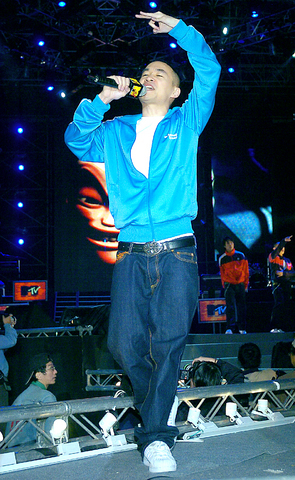
Ex-LA Boy Jeff Huang (
Released in late November, the third album by Jeff and Machi once again saw Huang leading the way and giving voice to a mixed bag of mainstream hip-hop numbers.
While the album included some rather predictable numbers, the combo managed to freshen up its act on more than one occasion by escaping from the generic North American-like hip-hop sound.
By mixing it up with a few differing styles numbers like I Love Chou Hsing Hsing (
Xiao Huang-chi (蕭煌奇)
Black Guitar (黑色吉他)
Axis
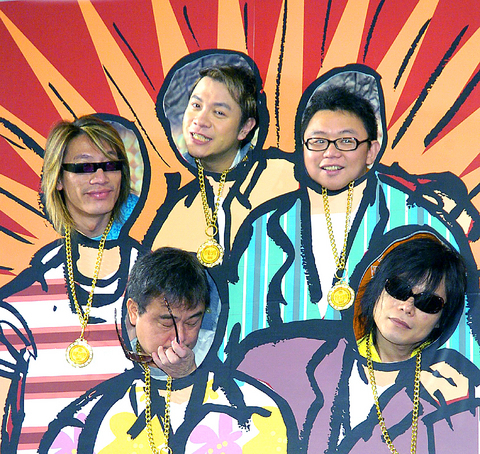
For the past two years blind singer/songwriter Xiao Huang-chi (蕭煌奇) has been nominated for Golden Melody Awards. Sadly he has never been the recipient of one the gaudy golden trophies.
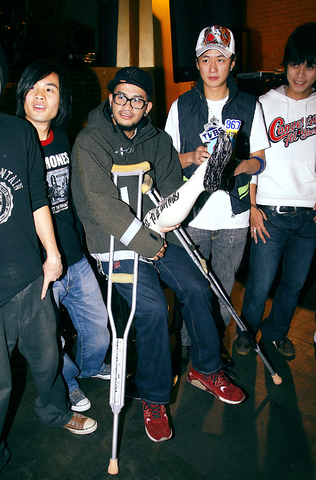
His 2005 release, Black Guitar (
The core of the material was folksy, but Xiao made the time to add an eclectic mix of musical genres to each and every tune. Black Guitar was, and still is, one of those rare albums that has got something for everyone, regardless of ones musical preferences.
From the Latino-vide fueled and lounge-like Disorderly Dance (
Hopefully we'll be seeing Xiao at next years Golden Melody Awards and this time let us hope he actually walks away with a golden trophy rather then simply getting yet another pat on the back and a mildly condescending "well done" from the local music industry.
Wu Bai and China Blue
(伍佰 and China Blue)
Two Faced Man (雙面人)
Avex
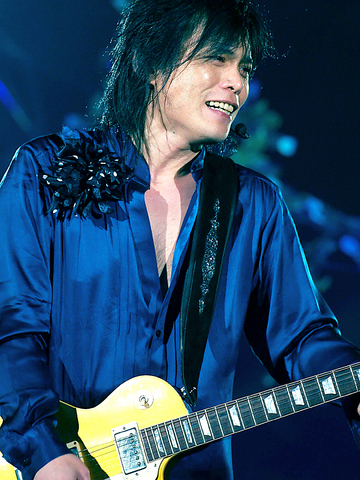
Iconic Taiwanese rocker, Wu Bai (
Out went the tried-and-tested rock/blues format and instead Wu Bai set out to capture the hearts and minds of the electonica/dance crowd with a mixed bag of numbers, nearly all of which came with loops, edits and a host of other dance music-like effects.
It might have looked as if the grand-old-man of Taiwan blues/rock had forsaken his roots, but under the surface of the album's tunes lie a host of well executed guitar-driven numbers.
From the gnarly guitar driven and mildly electronica-based Li Hai (
The Chairman (董事長樂團)
Looking for a New World (找一個新世界) Click
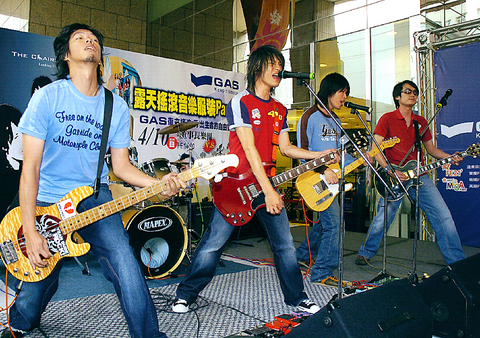
It has been three years since The Chairman (
Breaking away from its punk/rock-based buzzsaw guitar format, The Chairman opted to explore a more sophisticated post-rock oriented style of vibes. The decision to drop what it has excelled at for the past eight years paid dividends. By blending aspects of electronica, downbeat modern folk and post-rock Looking for a New World (
Tunes like the unhurried, hypnotic and stylized Tsunami (
Chicken Rice (雞腿飯)
Lucky 7
Vegetarian Fish
Led by a heavily tattooed ex-punk rocker and starting life as a college punk band almost eight years ago, Chicken Rice (
Released mid-year, the combo's debut album, Lucky 7 had everything from musical oomph to lyrical chutzpah and it was a tight and well-produced piece of work.
Sound and style-wise the three-piece copied from the masters. It took the chaotic sound of the first generation pyschobilly acts such as The Meteors, blended this with more mainstream Brian Setzer-like rockabilly riffs and added a heap of contemporary hooks a la Aussie ska/pyschobilly punksters, The Living End.
And in order to add that extra slice of retro chic the group even employed a couple of female backing singers whose vocal prowess deserves applause and did wonders for the trio's already terrific sound.
The Hohak Band (好客樂隊)
Hohak Carnival (好客戲)
TCM
Formed by ex-members of the award winning contemporary Hakka combo Labor Exchange (
It blended jazz, rock, folk and even classical Chinese/Hakka sounds to create what was possibly one of the most interesting and certainly one of the most creative albums to come out of TCM's studios in 2005.
Although there was a mild contemporary feel to much of the material, the heart of the album was firmly rooted in the past and the tunes were all based on traditional Hakka folk songs. The trumpet-like suona and duel stringed violin-like erhu played a major role in all the album's numbers.
In addition to the more standard crossover material the Hohak Band also took the time to dabble in rap. Destitute Man (
Won Fu (旺福)
The Records of Won Fu (旺福誌)
Forward
The third album by fun-loving four-piece Won Fu ((
Like previous releases, the band mixed it up with a wide range of genres and styles on its The Records of Won Fu (
Be it the bouncy pseudo-country number Ringo, which became the backing track for Agogo's MP3 TV commercial and the gnarly punk-oriented guitar riffs and drum and bass of The Aspirations of Ah-Lang (阿郎的心聲) the album took listeners on a hurdy-gurdy ride that saw the combo poking rhythmical fun at and waxing lyrical about a crazy assortment of subject matter.
With not one dud on the entire album The Records of Won Fu endorsed Won Fu's status as the nation's most singularly distinctive combo and should have put the band in a good position to take top honors in the Best Band category at the 2006 Golden Melody Awards.
Various
TK's Rock Collection (台客搖滾百萬驚險輯)
Rock
Released to coincide with the Taike Rock Concert (
The 28 track double CD featured numbers by Wu Bai (伍佰), potty-mouthed rocker Chang Chen-yue (張震嶽), folk rock combo Baboo, pub crooner and self confessed boozer and ladies man Bobby Chen (陳昇), madcap all-rounder Joy Topper (豬頭皮) and one-time pop star Lim Giong (林強).
None of the material was new, but it did offer listeners an interesting selection of taike tunes. Some of the album's better numbers included Wu Bai's hugely popular The World's First (
Sadly, some great taike moments were omitted and the biggest gaffe was Rock's omission of Baboo's brilliantly haunting Xiaonien Anna (
Coco Lee (李玟)
Exposed
Epic
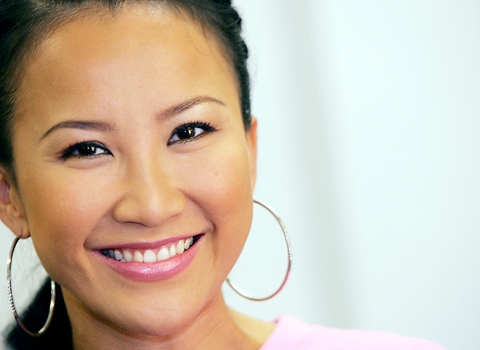
There's always one isn't there and while 2004's blooper of the year went to popular entertainer Chang Fei (
While it had its drawbacks and is not without its many faults, the sound and production of Exposed was much more mature. To ensure that everyone knew she'd grown up the album sleeve was awash with titillating photos of the singer and her "assets." And if this wasn't enough to grab people's attention, then the lyrics certainly did.
Every song involved the topic of sex and featured some classic lyrical moments. Lee weaved her sexual poetry over a fantastic backdrop of mild electronica and slow hip-hop loops, but when the one-time Mando-pop princess sang "lay back and just relax/don't mind the candle wax/with nails upon your back/I'll just do it like that/lust sitting on your face/tongue kisses my inner place/and as I start to shake/a sensual escape," you simply had to laugh.
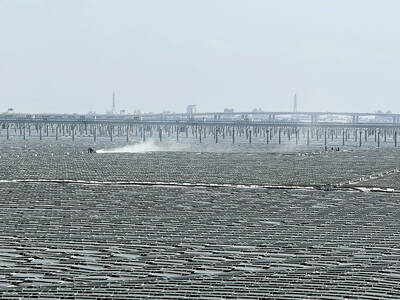
The arithmetic is straightforward and uncomfortable. By the end of 2025, Taiwan had committed itself to a 50-30-20 electricity mix — half natural gas, 30 per cent coal, 20 per cent renewables. The Ministry of Economic Affairs’s (MOEA) own monthly energy reports tell a different story. Natural gas reached 47.8 per cent of generation last year. Coal stood at 35.4 per cent, comfortably above its target ceiling. Renewables came in at 13.1 per cent, well short of the 20 per cent Taipei had pledged a decade earlier. Installed renewable capacity reached roughly half of the 12 gigawatts (GW) the government
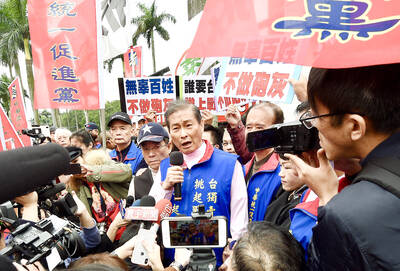
There are shadowy cabals plotting to sell out Taiwan to be annexed by China, by invasion if necessary. Fortunately, they are buffoons. In 2019, former Bamboo Union gangster and founder of the China Unification Promotion Party (CUPP), Chang An-le (張安樂, colorfully known as “White Wolf”), led a protest at the Legislative Yuan against comments made by then-premier Su Tseng-chang (蘇貞昌) that in the event of an attack by China, he would never surrender, but would protect the nation by fighting to the end, even if he only had a broom. Chang had party members bring a wooden casket that they

Taiwan’s drone exports are taking off, fuelled by the war in Ukraine, as Taiwanese companies seek a stake in the fast-growing global market for unmanned aerial vehicles (UAV). Low-cost drones used for reconnaissance and strikes are in high demand as governments around the world boost defense spending in the face of intensifying conflicts. A relative new player in the increasingly competitive industry, Taiwan’s pitch is to be an “Asian hub” for the production of UAVs and components free of Chinese materials, or “non-red.” That means its UAVs can be up to three times more expensive than their Chinese competitors, like the world’s biggest
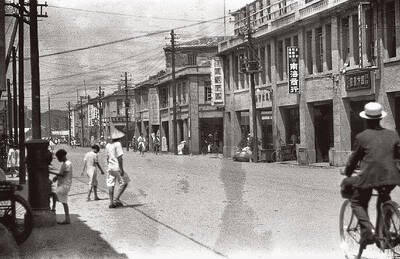
June 1 to June 7 "If all Taiwanese were as afraid of dying as you, then what would happen?” Physician Shih Chiang-nan (施江南) reportedly said this to his wife Chen Chiao-tung (陳焦桐) after she urged him to stop intervening on behalf of Taiwanese soldiers stranded overseas after serving in the Japanese Army during World War II. Shih had clashed with high-ranking officials over the issue, engaged in several heated arguments with Taiwan governor-general Chen Yi (陳儀) and allegedly shouted at general Ko Yuan-fen (柯遠芬), chief of staff of the Taiwan Garrison Command, over


 RSS
RSS