


Every weekend countless tourists take to the winding lanes of Taiwan's northern hilltop community Jioufen (
Once a thriving mining town in the 1940s, Jinguashi is now filled with abandoned shafts and architectural reminders of its Japanese colonial past. A newly constructed and recently opened Gold Ecological Park (
One of the best things about a trip to Jinguashi is that it is easily accessible on foot. Although it is possible to rent bicycles or scooters and even hire a taxi for the day, most of the trails are in the hillside and so walking gives people the opportunity to get off the beaten track.
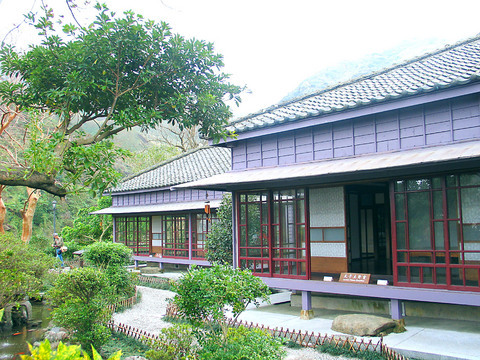
Starting at Jinguashi train station is a cluster of Japanese-style dormitories whose unique location in the countryside provides a popular backdrop for several Taiwanese television series. Ascending the mountain, visitors come to several points of interest with accompanying history written in both English and Chinese. To commemorate the opening of the ecological park, the former residence of a Japanese prince (
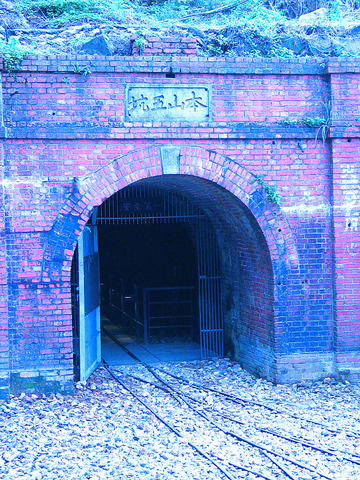
The highlight of the park is the Gold Museum (金礦博物館) and the reconstructed Benshan Fifth Tunnel (本山五坑). The main floor of the museum displays both photographs and a video presentation (with English subtitles) of the changes to the surrounding area. It is while being guided through the tunnel that visitors gain an appreciation of the working conditions in the mines and the difficulties the miners experienced. Along with recreated scenes from an average workday, there is accompanying information in both English and Chinese. Jinguashi was also the site of Kinkaseki (台灣戰俘營故事), one of the worst World War II prisoner of war camps in Taiwan. There is an area reserved in the museum as a memorial to the men who were held at the prison camp.
Near the park's exit are a series of snack shops selling food and beverages, as well as local specialties such as dried fruits and peanut candy. There is also a traditional lunchbox meal (NT$180) that comes packed in a metal box and cloth bag as a souvenir replica of those used by the miners.
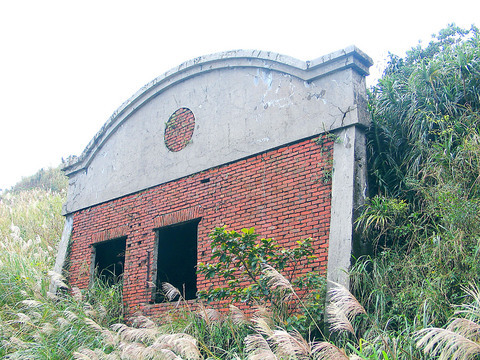
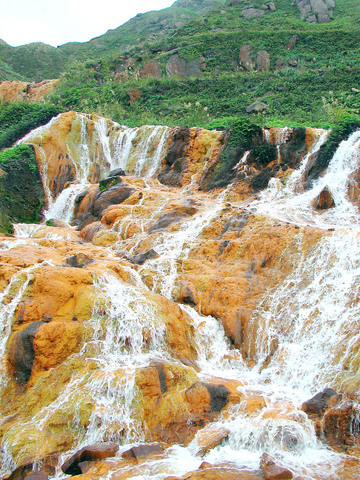
There might not be any gold left in the hills but there are plenty of paths to take for a leisurely stroll with charming views of the sea. One route takes visitors from Gold Waterfall (黃金瀑布) up a 15-minute walk to the rooftop of an enormous 13-level abandoned refinery (十三層舊礦場). From there, visitors can walk down toward the town, sea or or another lookout point which is close to a residential area.
With an early start, it is possible to spend the first part of the day at the ecological park and the afternoon wandering around either Keelung (雞籠山) or Wuerchahu Mountains (無耳茶壺山). From there, visitors can retire to a quaint guesthouse or join the crowds in Jioufen for shopping and tea.
A guide service is available at NT$700, however requests for guided tours must be made two weeks in advance. For more information on how to apply and where to send the request contact the Northeast Coast National Scenic Area Administration.
Most of the guesthouses provide a free breakfast and offer lunch and dinner for NT$200 per person. Jinguashi doesn't boast any particular local specialty foods, but most people don't leave without trying the taro and sweet potato dessert soup (
Overnight
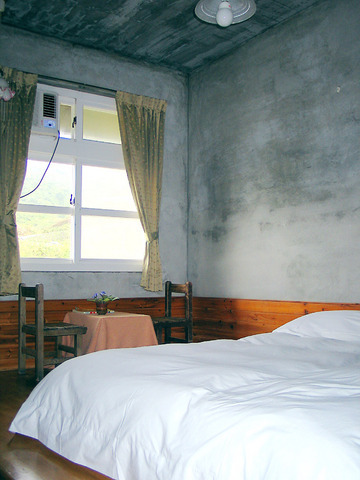
Jinguashi can be done as a day trip or turned into a more relaxed two-day excursion, especially if combined with Jioufen. Guesthouses are springing up in both locations and offer simple lodging for an average of NT$2,000 per double room. Rooms fill up quickly on weekends so it is recommended to reserve in advance.
Cloud Village (
Prices: NT$1,600 room per weekday NT$2,000 on weekend. (Based on double occupancy)
93-1, Ln 13, Sanjin Rd, Jinguashi, Taipei County (
A free shuttle service is provided from the Rueifang train station (
Telephone: (02) 2496 2291.
For pick up service: (0910) 105 148 or
http://www.cloudvillage.net
Getting There
By Rail: Take the Taipei-Hualien line and off at Jinguashi Train Station (
Several trains leave daily from Taipei Main Railway Train Station. Estimated travel time is one-and-a-half hours by express train.
By Car: From Taipei, take Badu or Keelung exits off of the Sun Yat-sen Freeway to connect with the Coastal Highway (Provincial Highway 2) or take the Taipei-Ilan Freeway and exit onto the Coastal Highway.
Further Planning:
Tourist Service Center Hotline: (02) 2499 1115 ext. 221
Northeast Coastal National Scenic Area Administration:
(02) 2499 1115
E-Mail: info@necoast-nsa.gov.tw
(02) 2960 3456
Websites: http://www.tpc.gov.tw
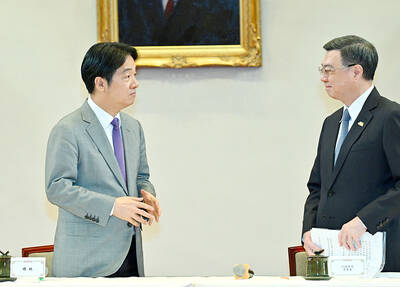
Under pressure, President William Lai (賴清德) has enacted his first cabinet reshuffle. Whether it will be enough to staunch the bleeding remains to be seen. Cabinet members in the Executive Yuan almost always end up as sacrificial lambs, especially those appointed early in a president’s term. When presidents are under pressure, the cabinet is reshuffled. This is not unique to any party or president; this is the custom. This is the case in many democracies, especially parliamentary ones. In Taiwan, constitutionally the president presides over the heads of the five branches of government, each of which is confusingly translated as “president”
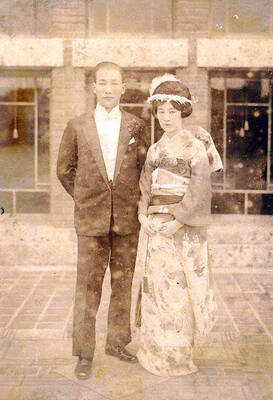
Sept. 1 to Sept. 7 In 1899, Kozaburo Hirai became the first documented Japanese to wed a Taiwanese under colonial rule. The soldier was partly motivated by the government’s policy of assimilating the Taiwanese population through intermarriage. While his friends and family disapproved and even mocked him, the marriage endured. By 1930, when his story appeared in Tales of Virtuous Deeds in Taiwan, Hirai had settled in his wife’s rural Changhua hometown, farming the land and integrating into local society. Similarly, Aiko Fujii, who married into the prominent Wufeng Lin Family (霧峰林家) in 1927, quickly learned Hoklo (commonly known as Taiwanese) and
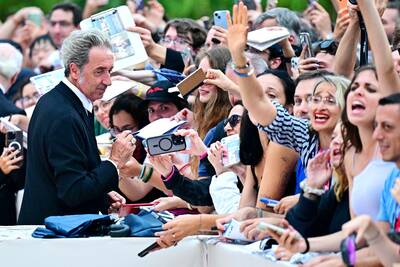
The Venice Film Festival kicked off with the world premiere of Paolo Sorrentino’s La Grazia Wednesday night on the Lido. The opening ceremony of the festival also saw Francis Ford Coppola presenting filmmaker Werner Herzog with a lifetime achievement prize. The 82nd edition of the glamorous international film festival is playing host to many Hollywood stars, including George Clooney, Julia Roberts and Dwayne Johnson, and famed auteurs, from Guillermo del Toro to Kathryn Bigelow, who all have films debuting over the next 10 days. The conflict in Gaza has also already been an everpresent topic both outside the festival’s walls, where
The low voter turnout for the referendum on Aug. 23 shows that many Taiwanese are apathetic about nuclear energy, but there are long-term energy stakes involved that the public needs to grasp Taiwan faces an energy trilemma: soaring AI-driven demand, pressure to cut carbon and reliance on fragile fuel imports. But the nuclear referendum on Aug. 23 showed how little this registered with voters, many of whom neither see the long game nor grasp the stakes. Volunteer referendum worker Vivian Chen (陳薇安) put it bluntly: “I’ve seen many people asking what they’re voting for when they arrive to vote. They cast their vote without even doing any research.” Imagine Taiwanese voters invited to a poker table. The bet looked simple — yes or no — yet most never showed. More than two-thirds of those


 RSS
RSS