


London's streets are no longer paved with gold, they're paved with diamonds.
Fueled in part by style icons like soccer player David Beckham or hip-hopper Missy Elliot, as likely to wear sparklers with sports gear and jeans as they are at awards ceremonies, the increasing popularity of diamonds has turned them from a "nice-to-have" into a "must-have."

PHOTO: REUTERS
Over the last year or two, London's retail jewelry market has come to reflect this trend -- notably with the arrival of new diamond specialists like Wint and Kidd ad DeBeers.
Both on and off Old Bond Street -- London's haute couture and fine gem quartier -- forward-thinking jewelry shops have eliminated the daunting bank-vault doors and mannered velvet-pillow presentation that has long characterized jewelry shopping.
Even established rocks-on-the-block Asprey and Garrard has repositioned as two distinct "luxury lifestyle" destinations -- injecting some much-needed "bling" into the otherwise staid niche it shares with traditional neighbors like Tiffany's, Bulgari and Cartier.
Melanie Flouquet, luxury goods analyst at JP Morgan in London, believes the major force underlying the trend toward making diamonds sexy, youthful and more attainable has been the entry into high-end jewelry by fashion houses such as Chanel, Gucci and LVMH -- with which DeBeers formed the joint venture to launch its retail business.
"I personally believe our shop is a step forward," said Jean-Christophe Gandon, marketing director for DeBeers LV, the first ever retail project for the 115-year-old diamond mining and wholesale powerhouse. "Many jewelry shops are too unapproachable. Luxury in the 21st century does not have to be intimidating."
Across town -- and even farther away in spirit from the bullet-proof glass and security guards of Old Bond Street -- Notting Hill-based Wint and Kidd (named for the James Bond villains Diamonds Are Forever) is a light-filled, chic but low-key boutique. Piles of colored "fancy" diamonds wait to be made into something special.
While a couple of showcases feature ready-to-wear pieces, co-owner Gavin Chengalanee explained that most of the shop's sales are made to order -- a collaboration between the customer and one of the shops stable of in-house designers.
"We are not part of the jewelry elite," he explained. "We don't tell people what they should be wearing. And because we have so little inventory, we aren't `sales-y.' We have the time and patience to help clients get involved in the whole process of creating their own unique piece. Buying jewelry should be like splurging on a great car with lots of options: it should be fun."
This bespoke service enables clients to pick the best possible stone and setting for their budget, even if that budget is about US$27,000 for a small but exceedingly rare pink diamond.
While the majority of diamond sales still comprise engagement rings and gifts bought by men for women, perhaps the most interesting opportunity for retailers is now single women who buy for themselves, accounting for an estimated 48 percent of volume and 40 percent of value of diamonds sold last year.
This trend is perhaps best illustrated by the DTC's ground-breaking US campaign promoting the "right-hand ring," which suggests that while your left hand says "we," your right hand says "me."
English women like Sarah Harrison are part of this segment. Her first purchase was inspired by a painful split with her boyfriend.
"I had thought we were going to get married," said Harrison, 30. "When we didn't, I thought `sod it, I don't need some guy to buy me diamonds, I'll just buy them myself."
Harrison spent over US$3,000 on a ring, cross and earrings from British entrepreneur Gracia Amico, who sells directly to women at fairs and through the Internet (www.graciaamico.co.uk) .
"It was a lot of money at the time, but I wouldn't have cared if it was twice that. It was such a liberating, uplifting experience. Now I'll never have to wait again. Now I'm looking for a nice bracelet."
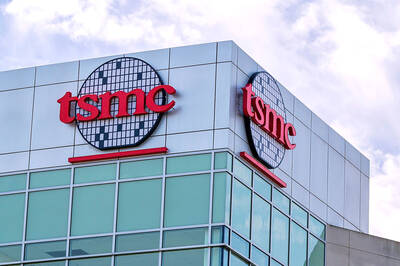
Last week, Viola Zhou published a marvelous deep dive into the culture clash between Taiwanese boss mentality and American labor practices at the Taiwan Semiconductor (TSMC) plant in Arizona in Rest of World. “The American engineers complained of rigid, counterproductive hierarchies at the company,” while the Taiwanese said American workers aren’t dedicated. The article is a delight, but what it is depicting is the clash between a work culture that offers employee autonomy and at least nods at work-life balance, and one that runs on hierarchical discipline enforced by chickenshit. And it runs on chickenshit because chickenshit is a cultural

By far the most jarring of the new appointments for the incoming administration is that of Tseng Wen-tsan (鄭文燦) to head the Straits Exchange Foundation (SEF). That is a huge demotion for one of the most powerful figures in the Democratic Progressive Party (DPP). Tseng has one of the most impressive resumes in the party. He was very active during the Wild Lily Movement and his generation is now the one taking power. He has served in many of the requisite government, party and elected positions to build out a solid political profile. Elected as mayor of Taoyuan as part of the

Moritz Mieg, 22, lay face down in the rubble, the ground shaking violently beneath him. Boulders crashed down around him, some stones hitting his back. “I just hoped that it would be one big hit and over, because I did not want to be hit nearly to death and then have to slowly die,” the student from Germany tells Taipei Times. MORNING WALK Early on April 3, Mieg set out on a scenic hike through Taroko Gorge in Hualien County (花蓮). It was a fine day for it. Little did he know that the complex intersection of tectonic plates Taiwan sits

When picturing Tainan, what typically comes to mind is charming alleyways, Japanese architecture and world-class cuisine. But look beyond the fray, through stained glass windows and sliding bookcases, and there exists a thriving speakeasy subculture, where innovative mixologists ply their trade, serving exquisite concoctions and unique flavor profiles to rival any city in Taiwan. Speakeasies hail from the prohibition era of 1920s America. When alcohol was outlawed, people took their business to hidden establishments; requiring patrons to use hushed tones — speak easy — to conceal their illegal activities. Nowadays legal, speakeasy bars are simply hidden bars, often found behind bookcases


 RSS
RSS