


In the canon of local-boy-does-good stories, Liu Hsing-chin (劉興欽) did the best. He is the godfather of comic books in a nation that can't get enough of comics, and his hometown of Neiwan, Hsinchu County, couldn't do more to honor their local hero short of renaming the town Liuland.
The town has the feel of Disneyland except that, instead of Mickey Mouse and Snow White, Neiwan is plastered with images of Liu's most famous inventions, Big Auntie (大嬸婆) and Ah-San (阿三哥), the country-bumpkin comic strip characters that became Taiwan's favorite and placed Liu, the son of a tea farmer who went to school on the back of a water buffalo, among the nation' s most respected and highest-paid artists.
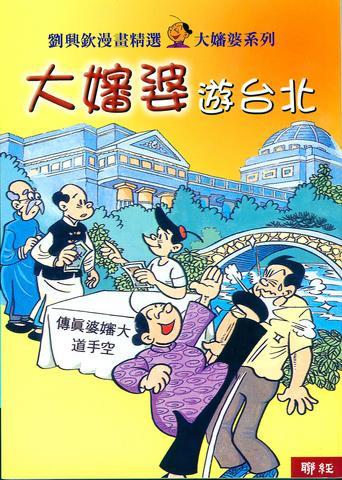
PHOTO COURTESY OF LINKING PUBLISHING
Now the township has opened a permanent exhibition hall housing Liu's works and, with it, opened a new drive to turn Neiwan into a major tourist destination. This drive began in 2001, when Liu agreed to let his cartoon characters be used to promote the town. Life-sized fiberglass statues of Ah-San, who Liu modeled after himself; and Big Auntie, who was modeled after Liu's mother, were placed on street corners, at the train depot, and sit atop billboards throughout the town. Another character popular with children, Robot, can be seen climbing the town's telephone poles.
One of these statues of Big Auntie developed its own urban myth. Each time a baby was born, the child was placed in the statue's arms and had its picture taken. The belief was that Big Auntie would give the child the hard-working Hakka ethic for which she was famous. This happened enough that Big Auntie's arm eventually broke off. Now the township is saving to buy a new one made of bronze.
For the many statues and billboards throughout the town -- and all the restaurants named after his characters -- Liu asked for a jar of dried turnips as compensation, adding immensely to his local-boy likeability despite the fact that he's now local to San Francisco.
It's hard to overestimate the importance Liu's characters -- and indeed Liu's own character -- has in the hearts of Taiwanese. A measure of their popularity was seen when the strip first appeared in the Taiwan Daily News. Subscriptions to the newspaper spiked in the weeks after it began and Liu's comic books didn't make it to the shelves before going out of stock.
Around 1969 he was asked to create a character for children and came up with Robot. When a child confronted him in disbelief that such a thing as Robot could be real, Liu went to work inventing the real thing rather than disappoint the child. Within weeks he created a study aid that clapped when given a correct answer and shook its head when given an incorrect one. The device caught the attention of an American company who licensed the rights to the device, paying Liu tens of thousands of NT dollars every month at a time when he was earning just NT$2,000 a month. Two years later, he was NT$6 million richer. Not surprisingly, the urge to invent overtook Liu and within eight years he had 138 patents to his name, all the while drawing a daily strip and putting out comic books espousing the simplicity of Taiwanese country life.
The irony is that, in the hands of Taiwan's tourism bureau, the pastoral simplicity that drew thousands of visitors to Neiwan on the weekends has been paved over to become something more like a theme park. Natural wetlands banking the Yulo River have become parking lots, barbeque pits and redundant concrete walking trails. Now, if you want to see the countryside that inspired Taiwan's favorite cartoonist, you'll have to read the cartoons.
The new exhibition hall housing Liu's work sits behind the Neiwan train depot and is open seven days week until 5pm.

If a leisurely afternoon of high-end dining and watching the scenery roll by from the comfort of a plush armchair sounds like a good time to you, consider a trip on the Sea Breeze (海風號). This culinary, cultural and scenic experience is the perfect setting for a date, a celebratory outing with a small group of friends or a relaxing solo ride. The price tag is steep, especially if you consider the short distance the train actually covers over the 3.5-hour journey. But what you’re paying for on the Sea Breeze isn’t transportation; it’s the comfort, the service, the exclusivity, the
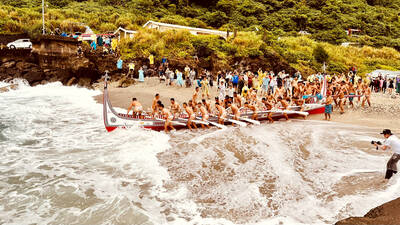
June 15 to June 21 According to legend, a giant from Orchid Island (Lanyu, 蘭嶼) named Si Mangangavang once built a large tatala canoe capable of carrying 16 people. He set sail southward to the Batanes in the Philippines, where he traded with the local Ivatan people. One of the goods they coveted was cowhide, which the Tao people of Orchid Island used to make armor. Through continued trade, the Tao and Ivatan forged close ties, and Si Mangangavang became good friends with a Batanes giant named Si Vakag. This story, collected in a 1998 book by ethnologist Yu Guang-hong (余光弘)
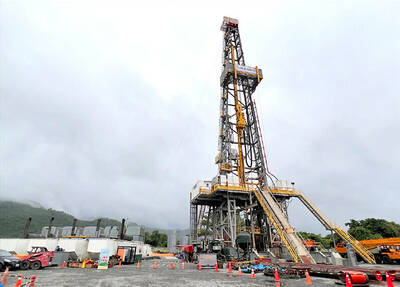
Taiwan’s renewable shortfall is a problem of execution, not resources. Japan’s long-cycle, joined-up energy planning is the model worth studying — but what Taiwan can borrow is the institutional machinery, not the politics. When Nvidia CEO Jensen Huang (黃仁勳) used his visit to Taipei last month to warn that the country needs far more electricity, he was naming a constraint its own planners already know well: Taiwan Power Co (Taipower, 台電) expects demand from the semiconductor and artificial intelligence (AI) sector alone to exceed 5 gigawatts (GW) by 2030. The harder question is not whether to build more capacity but which

One of the wildest things about the reception of Chinese Nationalist Party (KMT) Chair Cheng Li-wun (鄭麗文) in the international media is the way her words are presented without being contextualized, let alone challenged. The Financial Times, for example, interviewing her during her visit to New York, said that she blamed the halt to exchanges between Taiwan and the People’s Republic of China (PRC) for raising tensions. “There has been no dialogue, so you can see that the situation is almost on the brink of war,” the Financial Times quoted her as saying, without any hint that the PRC, not


 RSS
RSS