


For those thinking that Starbucks was the first to popularize coffee in Taiwan, think again. The aromatic beans have been growing in the mountains of southwestern Taiwan since the 17th century. To heighten awareness of the island's caffeine legacy and drum up a bit of tourism at the same time, the Yunlin County government is sponsoring a coffee festival that will go from today through Nov. 2.
The Dutch were the first to bring coffee beans to Taiwan when they first came to the island in 1624, dedicating several hectares of what is now Yunlin County to growing them. But it was the Japanese who made the most of the southern island's excellent coffee-growing environment. During the early part of the last century, there were some 300 hectares of coffee growing in Yunlin's Kukeng Township, Huisun, and in Taichung County's Rueisuei, near Hualien, making it the main agricultural product of Taiwan's Japanese colonial period, according to the Yunlin County Culture Bureau.
The Arabica strain has historically been Taiwanese coffee grower's beans of choice, both because of they grow heartily in on the southern parts of the island and because the beans have long fetched a handsome price at market.
After the 1999 earthquake and a couple of typhoons the following year, Yunlin County government began encouraging growers to change their agricultural model into one that would produce higher profits and to stop growing tea and betel nut, which don't have the market value of Arabica beans (the county government was also betting that more tourists would come to a coffee festival than would come to betel nut festival -- we'll see).
Tourism aside, the increased attention to coffee has resulted in more than 50 new coffee boutiques that have sprung up throughout Yunlin, with 35 in the Huashan community alone. These boutiques, the county government and Janfusun Fantasyworld (劍湖山世界) theme park are betting that Taiwanese will be brimming with excitement about the festival and return in coming years.
Interested festival goers should check out the Yunlin County Web site for more information at http://www.yunlin.gov.tw/chinese/coffee/index.htm or simply drive to Huashan Elementary School, where they can pick up more information on events and activities going on at other venues, buy locally grown coffee beans and, of course, drink a lot of coffee.
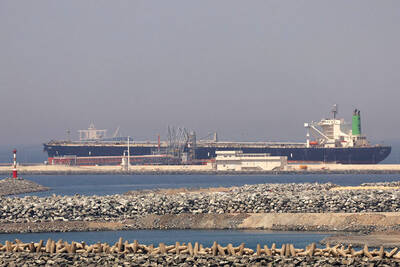
The breakwater stretches out to sea from the sprawling Kaohsiung port in southern Taiwan. Normally, it’s crowded with massive tankers ferrying liquefied natural gas from Qatar to be stored in the bulbous white tanks that dot the shoreline. These are not normal times, though, and not a single shipment from Qatar has docked at the Yongan terminal since early March after the Strait of Hormuz was shuttered. The suspension has provided a realistic preview of a potential Chinese blockade, a move that would throttle an economy anchored by the world’s most advanced and power-hungry semiconductor industry. It is a stark reminder of
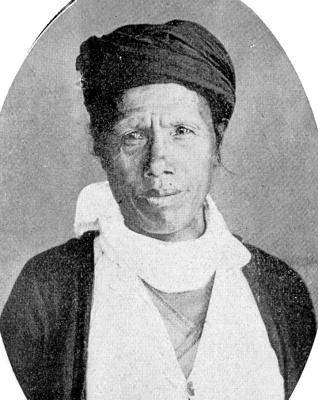
May 11 to May 17 Traversing the southern slopes of the Yushan Range in 1931, Japanese naturalist Tadao Kano knew he was approaching the last swath of Taiwan still beyond colonial control. The “vast, unknown territory,” protected by the “fierce” Bunun headman Dahu Ali, was “filled with an utterly endless jungle that choked the mountains and valleys,” Kano wrote. He noted how the group had “refused to submit to the measures of our authorities and entrenched themselves deep in these mountains … living a free existence spent chasing deer in the morning and seeking serow in the evening,” even describing them as

As a different column was being written, the big news dropped that Chinese Nationalist Party (KMT) caucus whip Fu Kun-chi (傅?萁) announced that negotiations within his caucus, with legislative speaker Han Kuo-yu (韓國瑜) of the KMT, party Chair Cheng Li-wun (鄭麗文), Taichung Mayor Lu Shiow-yen (盧秀燕) and Taiwan People’s Party (TPP) Chair Huang Kuo-chang (黃國昌) had produced a compromise special military budget proposal. On Thursday morning, prior to meeting with Cheng over a lunch of beef noodles, Lu reiterated her support for a budget of NT$800 or NT$900 billion — but refused to comment after the meeting. Right after Fu’s
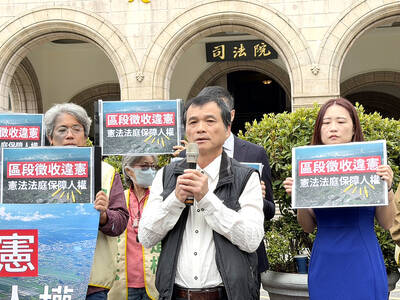
What government project has expropriated the most land in Taiwan? According to local media reports, it is the Taoyuan Aerotropolis, eating 2,500 hectares of land in its first phase, with more to come. Forty thousand people are expected to be displaced by the project. Naturally that enormous land grab is generating powerful pushback. Last week Chen Chien-ho (陳健和), a local resident of Jhuwei Borough (竹圍) in Taoyuan City’s Dayuan District (大園) filed a petition for constitutional review of the project after losing his case at the Taipei Administrative Court. The Administrative Court found in favor of nine other local landowners, but


 RSS
RSS