


Every year during the typhoon season from June to November in Taiwan, the Teruku tribe (德魯固族) in Hualien ask their tribal chief to hold a ritual ceremony by offering pigs, goats and chickens to God for a very special blessing: that He lead each typhoon during the year to their territory and give them storms with towering rains, the heavier the better.
Undoubtedly, this is the only group of people in Taiwan, and perhaps in Asia as well as the world, who adore these tropical storms in a way which is almost beyond comprehension, daring the devilish power of typhoons that inflict incalculable losses on the people of Asia nearly every year. This may seem to be hard to understand, yet the monetary rewards behind it make a lot of sense.
The Teruku were tough and proud warriors in the past and have refused to be identified with the more prominent Ami tribe both for reasons of language and custom. They originated in the Taroko mountains in the Tien-hsian (天祥) area and were forced to migrate down from their ancestral settlements at the turn of the last century by the Japanese colonialists. With a population of around thirty thousand, their tribal groups are now spread across the plains and river valleys of Hualien County.
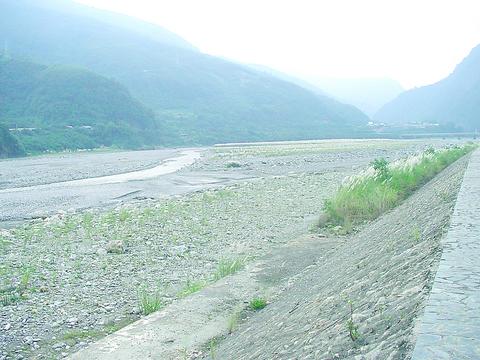
PHOTO: DEREK LEE, TAIPEI TIMES
They live mainly by growing vegetables and fruits in exchange for daily needs. However, what they are lacking -- money in particular -- the Almighty would deliver to them through the "blessing" of typhoons. Whenever one of these treacherous tropical storms, which usually sweep through the Philippines first before hovering down to Taiwan during the summer and fall, lands on Hualien, it brings along heavy winds and torrential rains. Such storms immediately cause massive landslides in the mountain areas and cause the rivers to swell.
A typhoon's horrendous power, with gusty winds and abundant rainfall, carries mountain rocks along with a huge amount of mud from the Chilai mountains (奇萊山), part of the Central Mountain Range in Hualien, to the nearby rivers and flushes the rocks and mud all the way down to the eastern coastal regions. Among these rocks, there is a kind which local people have nicknamed "black skin" (黑皮). These rocks have brought a great deal of wealth to the Teruku tribe and will bring international fame to Hualien in the future.
Diamonds in the rough
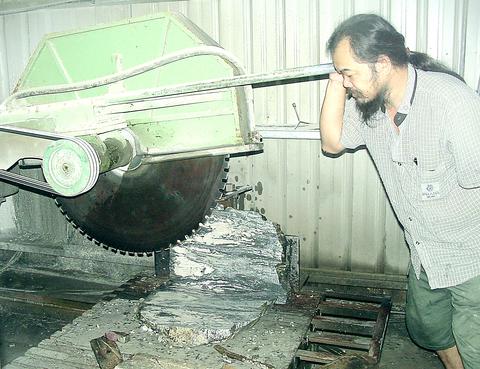
PHOTO: DEREK LEE, TAIPEI TIMES
The Teruku people are blessed with a unique strength that allows them to carry these weighty rocks along the three rivers which happen to be in their territory. No sooner than the weather turns slightly fair and the water levels in the rivers subsides, the Teruku people and other residents of Hualien swarm to the riverbanks along the Mukua Stream (木瓜溪), the Sanchan Stream (三棧溪) and the Liwu Stream (立霧溪) to search for the "black skin" rocks along the winding rivers.
Amazingly, underneath a very thin black layer, these rocks contain some of the most beautiful colors and veins of any rock surface in the world. The rock, after it has been polished by machine as a whole piece or sliced into thin pieces, is called "rose stone" (玫瑰石) by locals. The stone derives this name largely from its color, which resembles pink-red roses, but it is known internationally as rhodonite (薔薇輝石).
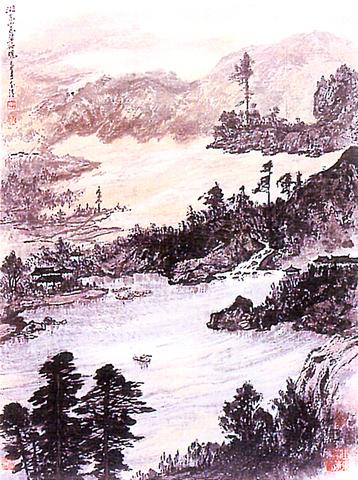
In addition to Hualien, rhodonite is also found the Harz mountains in Germany, Langban in Sweden, the Urals in Russia, in Peru, Brazil, New South Wales in Australia, Colorado and Massachusetts in the US, and some parts of China. Although the rhodonite in most of these countries is renowned for its varied and refined colors, it is generally agreed that the rhodonite found in Taiwan is among the best, and for good reason. Only the rhodonite produced in Taiwan possess a surface that resembles a picturesque natural landscape, with rich and varied colors on a rose-red base. The colors and textures on these rocks have inspired local artists to produce paintings based on the patterns they see in the rocks, both traditional Chinese landscape paintings as well as modern abstract ones.
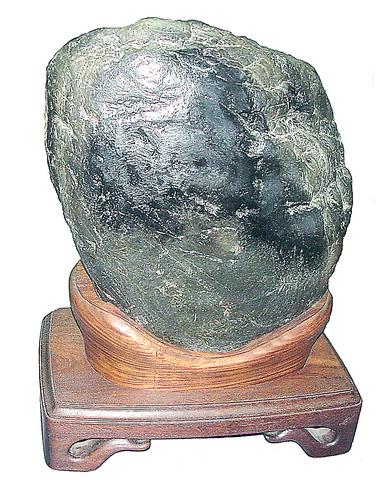
PHOTO: DEREK LEE, TAIPEI TIMES
Geological studies by National Taiwan University professor Lo Hua-ching (羅華清) indicate the rose-red or rose-pink color of these rocks is the result of the presence of rhodonite (MnSiO3) and quartz (SiO2). The black color that forms the veins on the rock -- which often resemble trees, forests, ponds, rivers, clouds, people, farm huts, etc. -- is the ingenious creation of braunite and hausmannite. Other minerals such as garnet, tirodite, albite and celsian are also present, giving the stones incredibly varied colors and shapes.
The black-looking rocks, a result of manganese being oxidized in their outer layers, usually come to weigh around 50kg, and can be easily carried by a Teruku man on his back. At Sanchan Community (三棧社區), situated halfway between Taroko Gorge and Hualien City along Highway No. 9, Yiu Yu-siu (游毓秀), a Teruku lady who married a local Taiwanese, prepared a pot of hot tea to entertain this Taipei Times reporter and shyly stated: "We have to get our friends to help us with anything that weighs 100kg. We make a raft using two rubber inner tubes from truck tires and a wood palette to form a base for the rock to sit on, using steel chains and rope to secure the palette and rock to the inner tubes. We then float the whole contraption downriver like a raft."
Giggling at the thought of how ingenious her tribesmen were she continued: "If it's way over 100kg, what we usually do is break the rock first and let the river carry it to us in the same way. But, you know, it's very dangerous work because someone has to stand on the pallet besides the rock and float in the river with it. Other men run along the riverbank to see that the pallet doesn't get stuck in the river. Also, the tubes may burst on other rocks in the river along the way."
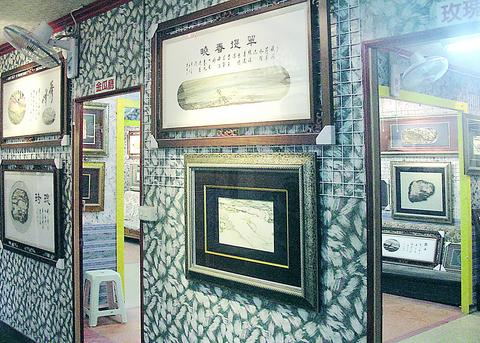
PHOTO: DEREK LEE, TAIPEI TIMES
It is common knowledge among local stone collectors such as Cheng Tai-yuan (曾泰源), a former prosecutor at the Hualien District Court, that rose stones produced in the Sanchan Stream are rose-red in color, while those originating from the Mukua Stream near Tungmen are noted for their picturesque patterns that resemble Chinese paintings. Rose stones from the Liwu Stream, which flows through the entire Taroko Gorge, are more rose-pink in color. Cheng has so many rose stones that they take up most of the space in his apartment.
The price of color
The price of a rock varies depending on its colors and veins. Normally a "good" 50kg rock, that has a potential to come out rose-red and looking like a beautiful landscape, costs about NT$30,000. A seller chips off a tiny portion of the rock's black surface to show the color and veins, and the buyer then has to take a chance by offering a price based on his own experience and intuition. One of the most precious of these rocks is known as the "seven-color rose stone" (七彩玫瑰石) and is prized for its apple-green color.
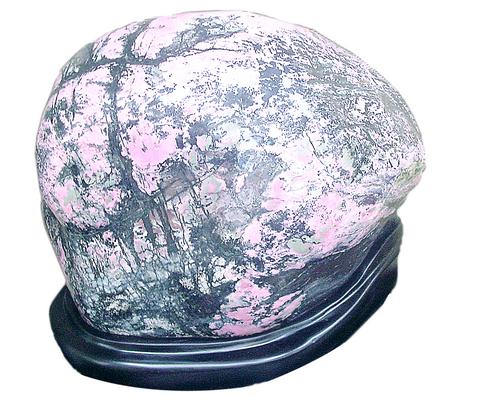
PHOTO: DEREK LEE, TAIPEI TIMESN
Many people have made a fortune dealing in rose stones. A Hualien-based monthly magazine, The East Coast Commentary (東海岸評論), reported in this year's September issue that Liu Hua-shin (劉花新) and his friends found a 200kg rose stone some years ago and sold it for NT$200,000, while someone in the Sanchan community not long ago sold a "seven-color rose stone" for over NT$1 million.
But this bounty has its price.
In 1990 Typhoon Ophelia (歐菲利颱風) brought landslides and floods, devastating the exclusively Terukan village of Tungmen (銅門), where Yu Kuo-chuan (余國權) lived, claiming 18 of his relatives, including some of his sons, grandchildren and uncles. Yu now runs a grocery store with his wife and two of his children who survived the catastrophe.
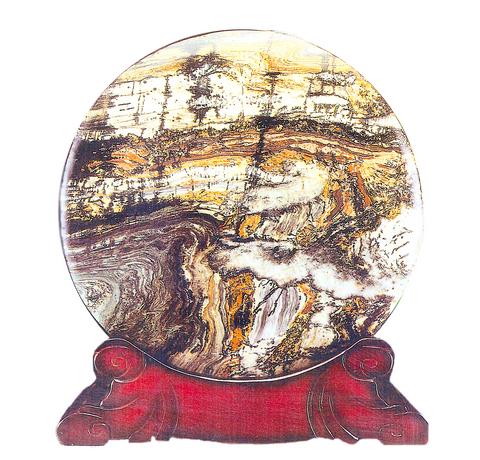
PHOTO COURTESY OF FORTUNE GARDEN
Yu told the Taipei Times that the typhoon brought a bumper crop of rose stones which he picked up from the riverbed of the Mukua Stream. Yu used his newfound wealth to send his son to Chungshan Medical School (中山醫學院) and his daughter to a nursing college.
Yu said he learned how to find the stones from his father who was the first person in the village to start the trade. He proudly pointed out that the other day he saw KMT party chairman Lien Chan (連戰) sitting by his desk on TV. One rose stone stood out rather conspicuously on Lien's desk. It was a gift from Yu to Lien when the then-vice-president visited his family right after the Ophelia disaster.
If there is one thing that makes Yu unhappy, it is that no typhoon has made landfall over Hualien this year and, thus, he cannot sell rose stones to make life for his family more comfortable.
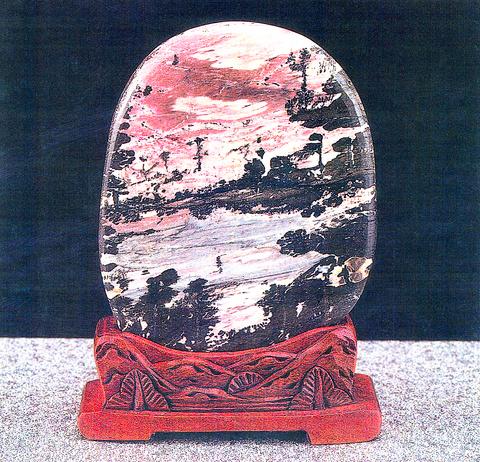
PHOTO COURTESY OF FORTUNE GARDEN
If one asks Taiwanese why house prices are so high or why the nation is so built up or why certain policies cannot be carried out, one common answer is that “Taiwan is too small.” This is actually true, though not in the way people think. The National Property Administration (NPA), responsible for tracking and managing the government’s real estate assets, maintains statistics on how much land the government owns. As of the end of last year, land for official use constituted 293,655 hectares, for public use 1,732,513 hectares, for non-public use 216,972 hectares and for state enterprises 34 hectares, yielding

The small platform at Duoliang Train Station in Taitung County’s Taimali Township (太麻里) served villagers from 1992 to 2006, but was eventually shut down due to lack of use. Just 10 years later, the abandoned train station had become widely known as the most beautiful station in Taiwan, and visitors were so frequent that the village had to start restricting traffic. Nowadays, Duoliang Village (多良) is known as a bit of a tourist trap, with a mandatory, albeit modest, admission fee of NT$10 giving access to a crowded lane of vendors with a mediocre view of the ocean and the trains
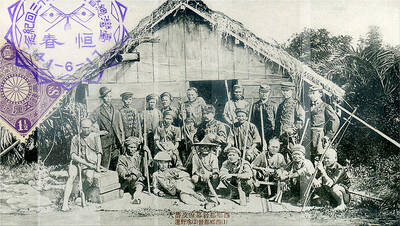
Traditionally, indigenous people in Taiwan’s mountains practice swidden cultivation, or “slash and burn” agriculture, a practice common in human history. According to a 2016 research article in the International Journal of Environmental Sustainability, among the Atayal people, this began with a search for suitable forested slopeland. The trees are burnt for fertilizer and the land cleared of stones. The stones and wood are then piled up to make fences, while both dead and standing trees are retained on the plot. The fences are used to grow climbing crops like squash and beans. The plot itself supports farming for three years.

President William Lai (賴清德) on Nov. 25 last year announced in a Washington Post op-ed that “my government will introduce a historic US$40 billion supplementary defense budget, an investment that underscores our commitment to defending Taiwan’s democracy.” Lai promised “significant new arms acquisitions from the United States” and to “invest in cutting-edge technologies and expand Taiwan’s defense industrial base,” to “bolster deterrence by inserting greater costs and uncertainties into Beijing’s decision-making on the use of force.” Announcing it in the Washington Post was a strategic gamble, both geopolitically and domestically, with Taiwan’s international credibility at stake. But Lai’s message was exactly


 RSS
RSS