


As an island on the Western edge of the Pacific Ocean, Taiwan is vulnerable to tropical cyclones that develop into typhoons, while its position on the Pacific “Ring of Fire” makes earthquakes a frequent occurrence. We cannot avoid natural disasters such as these; we can only respond to them.
What about man-made disasters? Industrial development involves hidden dangers. How serious the risks are depends on how well the government manages industrial growth, as well as the social conscience and responsibility of business leaders. Nuclear power and petrochemicals are particularly risky. They are like bombs that could explode at any time.
The government insists that nuclear power is a necessity for power generation and economic development. It wants to go on building nuclear power plants, no matter how much opposition to their construction there may be. Were it not for the disaster at Japan’s Fukushima Dai-ichi power plant after a massive earthquake and tsunami in the region in March 2011, opposition to nuclear power could not make any difference to official policy. The halt to construction of the Fourth Nuclear Power Plant in New Taipei City’s Gongliao District (貢寮) is only meant to set people’s minds at ease.
The petrochemical industry is another sector that the government often presents as essential to economic prosperity. Taiwan’s six naphtha crackers are all huge sources of pollution, but industrialists want to build even more. Greater Kaohsiung, in particular, has long been a key industrial base where pipelines carrying toxic and dangerous petrochemical gases run through residential neighborhoods
Two weeks ago, huge explosions tore open a section of Kaohsiung’s Kaisyuan Road and adjoining roads and streets. The blasts are thought to have been caused by propene leaking from pipelines owned by LCY Chemical Corp that were laid stealthily and not properly maintained. As a result, 30 people lost their lives and many more were injured. Adjacent roads and buildings also suffered serious damage, adding up to scenes of death and devastation. This calamity highlights the absurdity of having industrial zones mixed in with residential areas.
This industrial disaster has whipped up a political storm. Dangerous gases should never have been piped past homes and stores, and the pipelines were not subject to standard operation and control procedures. The ensuing political storm involves intrigues and power struggles between various parties and factions. Which officials should take the blame? Who will resign and when? There is no rhyme or reason to it.
Many years ago, residents and activists besieged LCY’s factory in Hsinchu County for more than a year because of its poor safety record. LCY is a big corporation with an annual turnover of more than NT$50 billion (US$1.67 billion), but its attitude following the propene blast has been far from admirable. How can companies get away with such poor management and lack of social responsibility? Over and over again, incidents such as these have exposed a sickness in our nation’s mode of development.
We live in an abnormal country, whose government has always trumpeted development and sees everything from the perspective of its seat of power in Taipei.
Beneath the flashy surface lie all kinds of crises and risks. It is a style of politics that prefers power struggles to building reliable systems.
When man-made disasters strike, ordinary people can only tend to their injuries and console one another.
Lee Min-yung is a poet.
Translated by Julian Clegg
Minister of Labor Hung Sun-han (洪申翰) on April 9 said that the first group of Indian workers could arrive as early as this year as part of a memorandum of understanding (MOU) between the Taipei Economic and Cultural Center in India and the India Taipei Association. Signed in February 2024, the MOU stipulates that Taipei would decide the number of migrant workers and which industries would employ them, while New Delhi would manage recruitment and training. Employment would be governed by the laws of both countries. Months after its signing, the two sides agreed that 1,000 migrant workers from India would
In recent weeks, Taiwan has witnessed a surge of public anxiety over the possible introduction of Indian migrant workers. What began as a policy signal from the Ministry of Labor quickly escalated into a broader controversy. Petitions gathered thousands of signatures within days, political figures issued strong warnings, and social media became saturated with concerns about public safety and social stability. At first glance, this appears to be a straightforward policy question: Should Taiwan introduce Indian migrant workers or not? However, this framing is misleading. The current debate is not fundamentally about India. It is about Taiwan’s labor system, its
On March 31, the South Korean Ministry of Foreign Affairs released declassified diplomatic records from 1995 that drew wide domestic media attention. One revelation stood out: North Korea had once raised the possibility of diplomatic relations with Taiwan. In a meeting with visiting Chinese officials in May 1995, as then-Chinese president Jiang Zemin (江澤民) prepared for a visit to South Korea, North Korean officials objected to Beijing’s growing ties with Seoul and raised Taiwan directly. According to the newly released records, North Korean officials asked why Pyongyang should refrain from developing relations with Taiwan while China and South Korea were expanding high-level
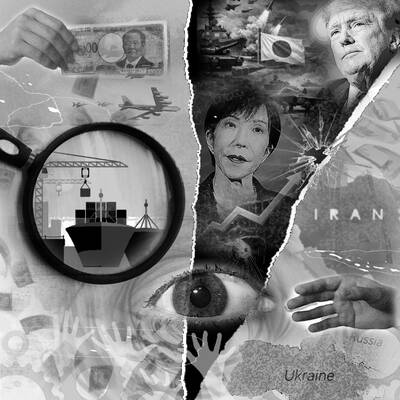
Japan’s imminent easing of arms export rules has sparked strong interest from Warsaw to Manila, Reuters reporting found, as US President Donald Trump wavers on security commitments to allies, and the wars in Iran and Ukraine strain US weapons supplies. Japanese Prime Minister Sanae Takaichi’s ruling party approved the changes this week as she tries to invigorate the pacifist country’s military industrial base. Her government would formally adopt the new rules as soon as this month, three Japanese government officials told Reuters. Despite largely isolating itself from global arms markets since World War II, Japan spends enough on its own


 RSS
RSS