


This year has been a highly changeable and unpredictable period for the nation. Only a few days after Taiwan’s worst airplane crash in a decade took place on Penghu, the most destructive gas pipeline explosion in the nation’s history rocked the streets of Greater Kaohsiung. As well as causing heavy casualties, the blasts left the city’s streets looking like the aftermath of a battle. In the midst of a thriving metropolis, 30 people suddenly lost their lives and 310 were injured. The calamity is almost beyond belief.
On a more positive note, there are signs of a turnaround in the economy after many years of decline. GDP growth this year could reach more than 3 percent, and the stock market index has edged up close to 10,000 points. Consumer confidence has improved considerably with the brighter economic prospects.
Taiwan is by no means the only place where odd things have been happening. Political and economic factors, war, disease and extreme weather are pushing the whole world toward some kind of mutation. Glad tidings are often closely followed by scenes of horror. Geopolitical crises are breaking out all over. East Asia is the scene of disputes over sovereignty in the East China Sea and the South China Sea. These conflicts involve two longstanding enemies — China and Japan — along with newly developed countries such as ASEAN member states, and Taiwan lies at the heart of the conflict zone.
Ukraine is sliding into a civil war and has become a bone of contention between the expanding democratic forces of Europe and the US on the one hand and Russia’s efforts to regain its former glory on the other. Nearly 300 Malaysia Airlines passengers lost their lives while passing over a conflict that had nothing to do with them. The West has imposed sanctions against Russia for the first time since the end of the Cold War. Russia has responded with counter-sanctions, and so the story goes on.
Other regional conflicts are becoming increasingly fierce. Syria has been in a state of civil war for several years, turning it into a hell on Earth. Israelis and Palestinians have started fighting and killing each other once again. Although the majority of world opinion is calling for a humanitarian approach, Israel continues to bomb and shell Gaza, leading to the deaths of large numbers of civilians and children. Afghanistan and Iraq have been ravaged by war for many years, and both countries remain unstable.
In Iraq especially, insurgent forces have been advancing like a hot knife through butter, putting the Iraqi government in imminent danger, and the situation may well threaten global oil supplies.
Africa remains one of the world’s most unstable regions. Poverty, war, corrupt politicians and warlords, along with lethal infectious diseases, prevent Africa from shaking off the image of a “dark continent,” even in the 21st century.
All in all, the international political climate of today involves even more unstable variables than it did 100 years ago in 1914, when a chain of unexpected events set off World War I. The US, Russia, China, Japan and other powers remain entangled in the historical resentments of the last century. One cannot help worrying that any conflict that breaks out between them could lead to another world war.
Just as global politics is beset by instability, economies keep rising and falling. On the surface, it would appear that the global economy has emerged from the shadow of an economic crisis. The US Federal Reserve has been gradually reducing the scope of its debt buying, indicating that quantitative easing, which was vaunted as a miracle emergency remedy for the economy, has had its effect. Now people are waiting for the Fed to raise interest rates to confirm that the economy has really recovered.
However, the economic recovery is still subject to many variables.
For example, although the US unemployment rate has fallen, this is largely because some jobless people who had been looking for work for many years have finally given up searching. This explains the phenomenon of economic growth alongside a falling labor participation rate. The Fed is evidently aware of this phenomenon, and that is why it does not dare to hastily raise interest rates for fear of puncturing the illusion of an economic recovery. However, financial and bulk commodity markets are clearly prospering thanks to the capital injections, and US stock markets have all been striking new highs.
Real-estate prices have also been soaring around the world, creating a heyday for speculative markets. However, the performance of the real economy is nothing to write home about.
When the Fed has gradually withdrawn its capital, the happy party that investors have been having on financial markets is likely to die down as everyone goes home. The Bank for International Settlements has issued repeated warnings about the risk of a bubble economy, calling on central banks not to introduce further measures to stimulate their economies. In view of this, investors should definitely be cautious as to whether the illusory booms built up by capital funding can continue much longer.
It is difficult or impossible for people to guard against either natural disasters or manmade ones like plane crashes and gas explosions, since they usually strike with little or no warning. However, economic storms and bubbles are heralded by warning signs, and those who heed the omens may get through unscathed. Global securities and real-estate markets have been thriving without any supporting fundamental factors.
This is what former US Fed chairman Alan Greenspan called “irrational exuberance.”
Irrational bubbles are sure to burst, but even economists cannot foresee when that will happen.
Political turmoil always has an economic impact. We are now in a time of widespread geopolitical conflict. Economies are exposed to occasional unexpected “black swan events” like Argentina’s debt default, and ill omens are appearing all over the world. The government should do a proper job of watching carefully and heeding the warning signs, even if they are dim ones, to safeguard Taiwan from being ravaged by another financial storm.
Translated by Julian Clegg
Minister of Labor Hung Sun-han (洪申翰) on April 9 said that the first group of Indian workers could arrive as early as this year as part of a memorandum of understanding (MOU) between the Taipei Economic and Cultural Center in India and the India Taipei Association. Signed in February 2024, the MOU stipulates that Taipei would decide the number of migrant workers and which industries would employ them, while New Delhi would manage recruitment and training. Employment would be governed by the laws of both countries. Months after its signing, the two sides agreed that 1,000 migrant workers from India would
In recent weeks, Taiwan has witnessed a surge of public anxiety over the possible introduction of Indian migrant workers. What began as a policy signal from the Ministry of Labor quickly escalated into a broader controversy. Petitions gathered thousands of signatures within days, political figures issued strong warnings, and social media became saturated with concerns about public safety and social stability. At first glance, this appears to be a straightforward policy question: Should Taiwan introduce Indian migrant workers or not? However, this framing is misleading. The current debate is not fundamentally about India. It is about Taiwan’s labor system, its
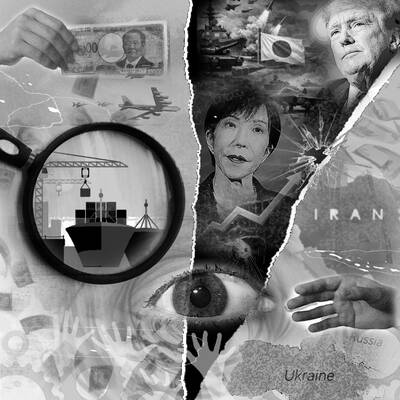
Japan’s imminent easing of arms export rules has sparked strong interest from Warsaw to Manila, Reuters reporting found, as US President Donald Trump wavers on security commitments to allies, and the wars in Iran and Ukraine strain US weapons supplies. Japanese Prime Minister Sanae Takaichi’s ruling party approved the changes this week as she tries to invigorate the pacifist country’s military industrial base. Her government would formally adopt the new rules as soon as this month, three Japanese government officials told Reuters. Despite largely isolating itself from global arms markets since World War II, Japan spends enough on its own
On March 31, the South Korean Ministry of Foreign Affairs released declassified diplomatic records from 1995 that drew wide domestic media attention. One revelation stood out: North Korea had once raised the possibility of diplomatic relations with Taiwan. In a meeting with visiting Chinese officials in May 1995, as then-Chinese president Jiang Zemin (江澤民) prepared for a visit to South Korea, North Korean officials objected to Beijing’s growing ties with Seoul and raised Taiwan directly. According to the newly released records, North Korean officials asked why Pyongyang should refrain from developing relations with Taiwan while China and South Korea were expanding high-level


 RSS
RSS