


The gas pipeline explosions on July 31 and Aug. 1 in Greater Kaohsiung that killed 30 people, injured 310 and left a neighborhood devastated was a tragedy, but a press conference held by President Ma Ying-jeou (馬英九) discussing the disaster was also tragic.
Since the Chinese Nationalist Party (KMT) regime relocated to Taiwan, economic development has been industry-driven, with the creation of labor-intensive manufacturing zones, the “homes as factories” policy, petrochemical industrial zones, science parks and industrial parks.
The development strategy succeeded in boosting the economy, creating Taiwan’s so-called “economic miracle.”
However, the “miracle” was not a miracle at all. The economic success was achieved at the expense of the environment, the agricultural sector, self-sustainability in food and the public’s health and safety.
With economic achievement as the paramount goal, factories quickly took over farmland, either through regular purchases or expropriation. Government authorities turned a blind eye to factories releasing unprocessed waste and to industrial use of water being given priority over agricultural or residential use. Exceptions would, from time to time, be made on environmental or labor regulations for industrial development, forcing workers or residents near industrial plants to suffer from pollution and disease.
The explosions in Greater Kaohsiung are the latest example of how the government’s focus on economic development has sacrificed lives.
Yet during his press conference, Ma only briefly spoke about a desire to see the public and politicians of all parties stand together to deal with the aftermath of the blasts and reconstruction, and find out who is responsible to prevent similar accidents. He then stressed the importance of economic development, promoting further economic liberalization, and urged support from the public and from the legislature on the cross-strait service trade agreement and the free economic pilot zones project.
It was a highly inappropriate response to an industrial disaster, because Ma failed to re-examine the government’s economic development strategy. Instead, he insisted on pushing forward his plans — which have already been questioned by many and were a trigger of the Sunflower movement in March this year.
For a small nation with few resources, international trade is essential and it might also be beneficial for Taipei and its trade partners to mutually lift trade barriers.
However, for Taiwan to do so without being fully prepared, as it is at present, is dangerous.
A copy of the service trade agreement released by the government shows many restrictions for Taiwanese businesses wanting to invest in China, yet almost no restrictions at all for Chinese businesses planning to invest in Taiwan.
So, what would Taiwanese businesses do if Chinese firms dominated the local market, while Taiwanese businesses suffered from trade barriers when investing in China? The government says that Taiwanese companies should be confident, promising that the agreement would be beneficial and that the government would serve as a gatekeeper.
The government did not give concrete answers to the public’s doubts decades ago, and it turns out that Taiwanese are suffering the consequences of industrial development.
Today, the public is skeptical about cross-strait trade development and trade liberalization, and the government is again not giving concrete answers to questions.
This is why so many people worry about what might happen a few decades from now.
Minister of Labor Hung Sun-han (洪申翰) on April 9 said that the first group of Indian workers could arrive as early as this year as part of a memorandum of understanding (MOU) between the Taipei Economic and Cultural Center in India and the India Taipei Association. Signed in February 2024, the MOU stipulates that Taipei would decide the number of migrant workers and which industries would employ them, while New Delhi would manage recruitment and training. Employment would be governed by the laws of both countries. Months after its signing, the two sides agreed that 1,000 migrant workers from India would
On March 31, the South Korean Ministry of Foreign Affairs released declassified diplomatic records from 1995 that drew wide domestic media attention. One revelation stood out: North Korea had once raised the possibility of diplomatic relations with Taiwan. In a meeting with visiting Chinese officials in May 1995, as then-Chinese president Jiang Zemin (江澤民) prepared for a visit to South Korea, North Korean officials objected to Beijing’s growing ties with Seoul and raised Taiwan directly. According to the newly released records, North Korean officials asked why Pyongyang should refrain from developing relations with Taiwan while China and South Korea were expanding high-level
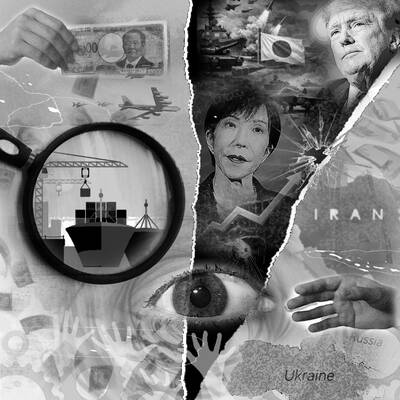
Japan’s imminent easing of arms export rules has sparked strong interest from Warsaw to Manila, Reuters reporting found, as US President Donald Trump wavers on security commitments to allies, and the wars in Iran and Ukraine strain US weapons supplies. Japanese Prime Minister Sanae Takaichi’s ruling party approved the changes this week as she tries to invigorate the pacifist country’s military industrial base. Her government would formally adopt the new rules as soon as this month, three Japanese government officials told Reuters. Despite largely isolating itself from global arms markets since World War II, Japan spends enough on its own
When 17,000 troops from the US, the Philippines, Australia, Japan, Canada, France and New Zealand spread across the Philippine archipelago for the Balikatan military exercise, running from tomorrow through May 8, the official language would be about interoperability, readiness and regional peace. However, the strategic subtext is becoming harder to ignore: The exercises are increasingly about the military geography around Taiwan. Balikatan has always carried political weight. This year, however, the exercise looks different in ways that matter not only to Manila and Washington, but also to Taipei. What began in 2023 as a shift toward a more serious deterrence posture


 RSS
RSS