


The latest US-Africa Leaders Summit in Washington was of great importance because it signaled the determination of US President Barack Obama’s administration to re-engage the continent after a decade of antiterrorism efforts focused on Central Asia and the Middle East.
As the US considers China to be a strategic competitor in geopolitics, it sets out to propagate the Euro-American ideas of democratization and technology-driven economic development.
Over the past two decades, many leaders in Africa have been drawn to China’s principles of non-intervention and development through labor.
First, China’s century-long experience of anti-imperialist struggle and nation-building, wherein the country started its modernization from a position inferior to that of the West and Meiji Japan, attests to its successful modernization as an only recent phenomenon.
Hence, African states can model themselves on Chinese labor-intensive economic development, with the painful process of governance change a positive result of, not a wishful precondition for, development.
Second, with Chinese contributions to technology transfer, including not only upgrades of infrastructure projects previously funded by Mao Zedong (毛澤東) but also recently the creation of development zones and agro-technical centers, African nations can generate employment opportunities and improve their formal economic sectors.
For example, the China-Africa Development Fund, with a budget of US$5 billion, is designed to finance joint ventures.
In contrast with the West’s continual emphasis on democratization, poverty reduction and individual empowerment, China’s macro-level development approach has been hailed as a successful model of rapid economic growth and relative political stability because it puts collective interests ahead of any hasty impulse to liberalize the country.
Several years ago, US diplomatic cables revealed by WikiLeaks indicated heavy pressure from China to poach the remaining allies of Taiwan.
China’s economic clout and international prestige presented an irresistible attraction to Taiwan’s few allies in Africa and Latin America.
From 2005 to last year, African countries such as Senegal, Chad, Malawi and the Gambia severed diplomatic ties with Taiwan and established normal relations with China.
China handed out huge amounts of financial assistance that Taiwan simply could not match.
By 2012, bilateral trade between China and Malawi had reached US$297 million, between Senegal and China it was US$845 million and between China and Costa Rica it totaled US$6.17 billion.
However, with a vast array of possible allies in Africa all is not lost for Taiwan.
The recent US pivot toward Africa presents Taiwan an opportunity to position itself as a model of democratic transformation and technology-driven modernization for the developing world and gives the nation the autonomy to reset its international agenda.
There is no doubt, given the results of China’s relentless actions, and the recent US movements to re-engage, that Africa offers great opportunities for Taiwan to boost its growing economy through investment.
It is now time for Taiwan to expand economic aid and cultural exchange programs on the African continent and forge new alliances against a rising China.
Joseph Lee is professor of history and co-director of Global Asia studies program at Pace University in New York.
Minister of Labor Hung Sun-han (洪申翰) on April 9 said that the first group of Indian workers could arrive as early as this year as part of a memorandum of understanding (MOU) between the Taipei Economic and Cultural Center in India and the India Taipei Association. Signed in February 2024, the MOU stipulates that Taipei would decide the number of migrant workers and which industries would employ them, while New Delhi would manage recruitment and training. Employment would be governed by the laws of both countries. Months after its signing, the two sides agreed that 1,000 migrant workers from India would
On March 31, the South Korean Ministry of Foreign Affairs released declassified diplomatic records from 1995 that drew wide domestic media attention. One revelation stood out: North Korea had once raised the possibility of diplomatic relations with Taiwan. In a meeting with visiting Chinese officials in May 1995, as then-Chinese president Jiang Zemin (江澤民) prepared for a visit to South Korea, North Korean officials objected to Beijing’s growing ties with Seoul and raised Taiwan directly. According to the newly released records, North Korean officials asked why Pyongyang should refrain from developing relations with Taiwan while China and South Korea were expanding high-level
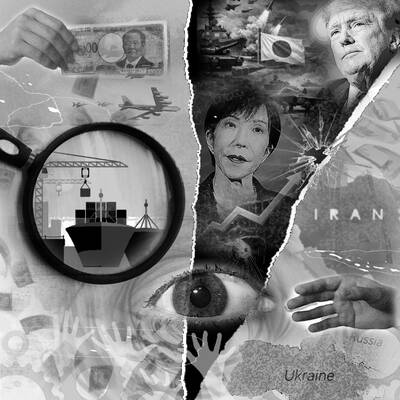
Japan’s imminent easing of arms export rules has sparked strong interest from Warsaw to Manila, Reuters reporting found, as US President Donald Trump wavers on security commitments to allies, and the wars in Iran and Ukraine strain US weapons supplies. Japanese Prime Minister Sanae Takaichi’s ruling party approved the changes this week as she tries to invigorate the pacifist country’s military industrial base. Her government would formally adopt the new rules as soon as this month, three Japanese government officials told Reuters. Despite largely isolating itself from global arms markets since World War II, Japan spends enough on its own
When 17,000 troops from the US, the Philippines, Australia, Japan, Canada, France and New Zealand spread across the Philippine archipelago for the Balikatan military exercise, running from tomorrow through May 8, the official language would be about interoperability, readiness and regional peace. However, the strategic subtext is becoming harder to ignore: The exercises are increasingly about the military geography around Taiwan. Balikatan has always carried political weight. This year, however, the exercise looks different in ways that matter not only to Manila and Washington, but also to Taipei. What began in 2023 as a shift toward a more serious deterrence posture


 RSS
RSS