


New Zealand and South Korea said yesterday they are investigating more suspected cases of swine flu, as hastily arranged measures designed to contain the disease’s spread in Asia are put to the test.
The region, which has had no deaths so far, has tightened already stringent screening at airports and transport hubs since the beginning of the week after the virus first showed up in Mexico before spreading to Europe and beyond.
With the WHO warning of a significant increase in the risk of pandemic and Mexico reporting a likely death toll of 159 — there have been no deaths elsewhere — Asia, like the rest of the world, is on full alert.
New Zealand, the only country in the region with confirmed cases, announced three more likely ones yesterday, taking the country’s total of probable and confirmed infections to 14.
With dozens of others in isolation or under investigation, New Zealand’s health ministry said all three new cases were people who had traveled to Mexico or other areas in North America recently.
“Because of their travel history ... we need to assume that this is swine flu,” said Julia Peters, of the regional public health service in Auckland.
In Seoul, the health ministry said yesterday it was investigating five suspected swine flu infections in addition to a “probable” case announced on Tuesday.
The Korea Centers for Disease Control and Prevention said the people with suspected infections had recently returned from trips to Mexico or the US and showed flu-like symptoms such as coughing and fever.
South Korea on Tuesday designated Mexico as a “travel restricted area,” urging its citizens to cancel or delay trips there.
Mindful of the increasing numbers of confirmed or suspected infections across the world, Australia introduced new powers to isolate and detain suspected sufferers, officials there said yesterday.
Health Minister Nicola Roxon said that the new measures, ranging from extreme steps such as detaining or isolating for surveillance suspected carriers to disinfecting aircraft after they arrive from overseas, were so far purely precautionary.
“It means that we can act nationally, we can act quickly,” she told the Australian Broadcasting Corporation yesterday.
Some 91 people displaying flu symptoms were being tested for the potentially deadly virus in Australia, but there are no confirmed cases of swine flu so far, Roxon’s office said.
Australian Olympic diving champion Matthew Mitcham, 21, is among those caught up the panic sweeping through worst-hit Mexico.
Holed up in a Mexican coastal resort town, he and diving partner Alexandra Croak, who took part in a diving event in Mexico City last weekend, have been ordered home by Australian sports authorities.
Six nations other than Mexico and New Zealand have declared confirmed cases of swine flu, but there have been numerous scares and tests throughout Asia, which still has bitter memories of the SARS epidemic in 2003.
China, heavily criticized for initially covering up the SARS epidemic, went on full alert on Tuesday but has no confirmed cases to date and has vowed full reporting should there be any.
There were scenes reminiscent of the SARS epidemic in Hong Kong, which killed close to 300 people, with lines forming outside pharmacies as people scrambled to stock up on medical supplies and face masks.
Hong Kong, which already has some of the world’s toughest health security measures as a result of SARS, has stepped up its surveillance of visitors for signs of flu.
Although there are no swine flu cases there, authorities have made the illness a “notifiable disease,” meaning anyone who has come into contact with a suspected patient can now be quarantined.
Most countries in the region have increased airport checks to screen passengers arriving from affected areas and advised against non-essential travel to Mexico.
Thermal scanners have been a common feature in many Asian airports since SARS, despite suggestions they have only limited ability to catch such illnesses.
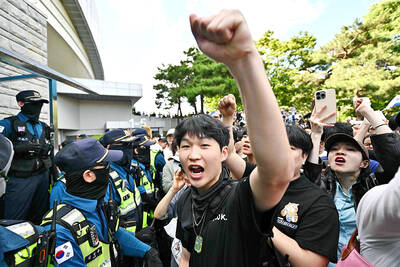
‘ABSURD MISTAKE’: The election commission said that there had been a failure to anticipate turnout after 14 polling stations ran short of ballot papers South Korean riot police yesterday cleared protesters from a Seoul polling station after a 35-hour blockade sparked by a shortage of ballot papers during local elections earlier this week. Wednesday’s election was the first nationwide vote since South Korean President Lee Jae-myung took office following the ouster of Yoon Suk-yeol over his short-lived martial law declaration. Lee’s ruling Democratic Party swept most races, but failed to flip the crucial Seoul mayoral seat. The South Korean National Election Commission apologized, blaming a failure to anticipate turnout after 14 polling stations in Seoul ran short of ballot papers. Some polling stations stayed open until 10pm to

France experienced its hottest spring on record, the French weather service said on Tuesday, after an exceptional early heat wave that also broke highs for the season in England and Wales. Meteo-France said the average nationwide temperature over March to May was 13.8°C — about 1.7°C above the norm, and surpassing records set in 2011 and 2020. “The warmest spring since records began in 1900,” it said in a bulletin. All three months were warmer than average, but the onset of an “unprecedented heatwave” late last month pushed the mercury to highs typically seen at the height of the summer. “Our country had never
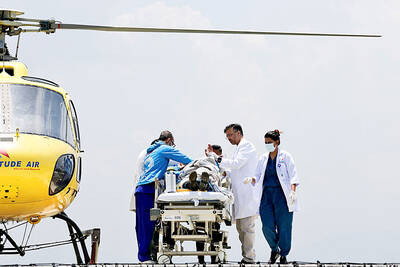
A Sherpa guide was found crawling to base camp on Mount Everest a week after he went missing and was reunited with his family, who had given up hope he would return. Dawa Sherpa was last seen on Friday last week descending the mountain, but he did not reach base camp even though his client did. The pair were among the last climbers on the mountain as the climbing season came to an end and the route was dismantled. Dawa was located by a cleaning crew on Thursday morning as he was crawling down the snowy slopes around the Khumbu Icefall, just above
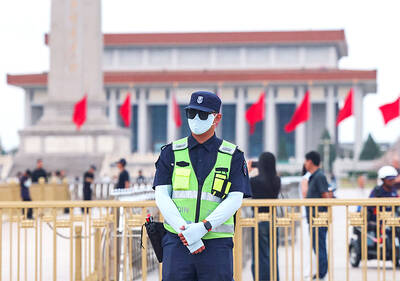
Chinese authorities are snuffing out any remembrance of the deadly 1989 military crackdown on student-led pro-democracy protests in Tiananmen Square, which happened 37 years ago yesterday, in a further tightening of a years-long campaign to erase what happened from public memory. Police told relatives of the victims they would not be allowed to visit a cemetery in Beijing on the anniversary of the crackdown, a person with knowledge of the matter said. Relatives of the victims visited the cemetery on the anniversary for more than 30 years to read memorial statements with police keeping watch, Amnesty International said. Hundreds of people,


 RSS
RSS