


The subprime crisis caused by the burst of the US housing bubble has had a significant impact on the world economy. Many economists and researchers did not see it coming. The downturn is affecting real GDP growth this year and will likely extend into next year.
Like all other countries, Taiwan has been trying hard to cope with the economic slowdown caused by the global financial crisis. The government has adopted various fiscal policies in addition to the central bank’s looser monetary operations. The objective is to stimulate internal demand and attract capital back to the markets.
In addition to individual economic policies, Taiwan can seek to work with neighboring countries and trading partners on improving multilateral monitoring systems embedded in financial structures, strengthening capital markets, promoting sound corporate governance and enhancing transparency with adequate risk management. These are not new concepts, but are worth revisiting at this critical time.
It is not easy for Taiwan to launch intergovernmental cooperation to improve borderless financial systems given its special international status. Nevertheless, Taiwan is a member of APEC, so using APEC as a platform to conduct joint actions and address the financial crisis could be feasible.
APEC has experienced several crises since its formation as an Asia-Pacific intergovernmental entity, and those crises not only tested the organization’s capacity but also its resilience. Given its non-binding nature, APEC does not function like the IMF — trying to bail out economies in trouble. However, it is an organization that can gather wisdom and practicable ideas from around the region.
The APEC meetings were concluded last month. The outcome of those meetings suggested the need for regional economies to collaborate on empowering existing regulatory and supervisory frameworks by paying extra attention to transparency, risk management as well as the role of credit ratings. It also recommended enhancing the quality of financial regulations instead of creating more regulations.
The APEC Business Advisory Council (ABAC) proposed that financial regulations be activity-based rather than entity-based. It said that APEC economies could work together to create a set of guidelines as a reference for individual economies to regulate borderless, high-leveraged and high-risk financial commodities. In short, promoting transparency and improving financial regulatory structure might be the key to prevent the financial crisis from becoming a financial disaster.
The “Report of the Financial Stability Forum on Enhancing Market and Institutional Resilience” issued in April also provided several feasible paradigms. First, the report recommended strengthening capital markets with adequate risk management. Second, it focused on enhancing transparency and valuation. Third, it stressed the importance of the role and uses of crediting ratings to provide investors accurate information. Fourth, it was written to help strengthen authorities’ responsiveness to risks and further help them deal with stress in the financial system. Those paradigms are what we need to resolve the current anomaly caused by the financial crisis.
The most important lesson we have learned from the global financial crisis is that the burst of an industrial bubble could yield financial instability, and financial instability could seriously imperil economic sustainability. It is a cliché that people usually attempt to address an industrial bubble by creating another bubble. And the fundamental reason for doing so is that we tend to target our short-term objectives and ignore long-term goals. We should never forget that quick remedies could lead to unwanted side effects.
The 1997-1998 Asian financial crisis highlighted the need to adopt sound corporate governance to prevent a recurrence of the crisis. Corporate governance is about equal-basis operations, transparency in information sharing and creditable accounting instruments. APEC, ABAC and the Pacific Economic Cooperation Council have done a lot to promote good corporate governance. It is a good time now to transform relevant concepts into concrete actions.
On the subject of promoting sound corporate governance, we can seek to reach an APEC consensus on regulatory architecture to make sure that all institutions that access lenders are on the same page. In the meantime, we might also want to review our current approaches to ratings agencies and market accounting. Potential investors deserve more sufficient and reliable information.
Darson Chiu is an associate research fellow at the Taiwan Institute of Economic Research.
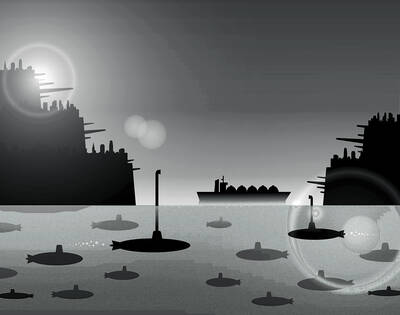
In the event of a war with China, Taiwan has some surprisingly tough defenses that could make it as difficult to tackle as a porcupine: A shoreline dotted with swamps, rocks and concrete barriers; conscription for all adult men; highways and airports that are built to double as hardened combat facilities. This porcupine has a soft underbelly, though, and the war in Iran is exposing it: energy. About 39,000 ships dock at Taiwan’s ports each year, more than the 30,000 that transit the Strait of Hormuz. About one-fifth of their inbound tonnage is coal, oil, refined fuels and liquefied natural gas (LNG),
To counter the CCP’s escalating threats, Taiwan must build a national consensus and demonstrate the capability and the will to fight. The Chinese Communist Party (CCP) often leans on a seductive mantra to soften its threats, such as “Chinese do not kill Chinese.” The slogan is designed to frame territorial conquest (annexation) as a domestic family matter. A look at the historical ledger reveals a different truth. For the CCP, being labeled “family” has never been a guarantee of safety; it has been the primary prerequisite for state-sanctioned slaughter. From the forced starvation of 150,000 civilians at the Siege of Changchun
The two major opposition parties, the Chinese Nationalist Party (KMT) and the Taiwan People’s Party (TPP), jointly announced on Tuesday last week that former TPP lawmaker Chang Chi-kai (張啟楷) would be their joint candidate for Chiayi mayor, following polling conducted earlier this month. It is the first case of blue-white (KMT-TPP) cooperation in selecting a joint candidate under an agreement signed by their chairpersons last month. KMT and TPP supporters have blamed their 2024 presidential election loss on failing to decide on a joint candidate, which ended in a dramatic breakdown with participants pointing fingers, calling polls unfair, sobbing and walking
In recent weeks, Taiwan has witnessed a surge of public anxiety over the possible introduction of Indian migrant workers. What began as a policy signal from the Ministry of Labor quickly escalated into a broader controversy. Petitions gathered thousands of signatures within days, political figures issued strong warnings, and social media became saturated with concerns about public safety and social stability. At first glance, this appears to be a straightforward policy question: Should Taiwan introduce Indian migrant workers or not? However, this framing is misleading. The current debate is not fundamentally about India. It is about Taiwan’s labor system, its


 RSS
RSS