


The establishment of a comprehensive food safety inspection mechanism for imports from China will be high on the agenda of a new round of cross-strait negotiations scheduled for late next month or early November, Mainland Affairs Council (MAC) Vice Chairman Liu Teh-hsun (劉德勳) said.
Liu made the remarks on Thursday after the disclosure that 25 tonnes of tainted milk powder were imported from China on June 23 caused a panic over the weekend.
As China and Taiwan have different standard operating procedures for food inspection, Liu said, the two sides should negotiate common standards under the existing communication channels.
“At present, one urgent task for the Ministry of Economic Affairs is to integrate the food ingredient inspection regulations used by central and local government agencies,” Liu said. “We need to have unified and comprehensive food safety control standards before launching talks with China on the topic.”
Liu said the MAC, which coordinates the government’s policy toward China, had ordered its officials to immediately inform government agencies if they discover any similar incident in their research on the latest developments in China.
The directive was given in response to criticism that the MAC had failed to play an active role in helping other government agencies, such as the Department of Health and the ministry, to monitor the safety of food imports from China.
Taiwan did not begin to track tainted milk powder from China until after the Straits Exchange Foundation (SEF) received notice of the shipment from its Chinese counterpart, the Association for Relations Across the Taiwan Strait (ARATS).
“From now on, the MAC will seek detailed information from China about any suspected food poisoning or contamination cases reported there through the existing SEF-ARATS communication channels, in order to better protect public health,” Liu said.
In related news, Taipei-based President Chain Store Corp (統一超商) — the firm in charge of Seattle, Washington-based Starbucks operations in Taiwan, said yesterday that none of the 220 Starbucks outlets in Taiwan were serving drinks containing milk imported from China.
The milk served in the local stores all comes from either local dairy farms or New Zealand, the company said in the wake of reports that Starbucks cafes in China had stopped serving drinks containing milk.
ADDITIONAL REPORTING BY AFP
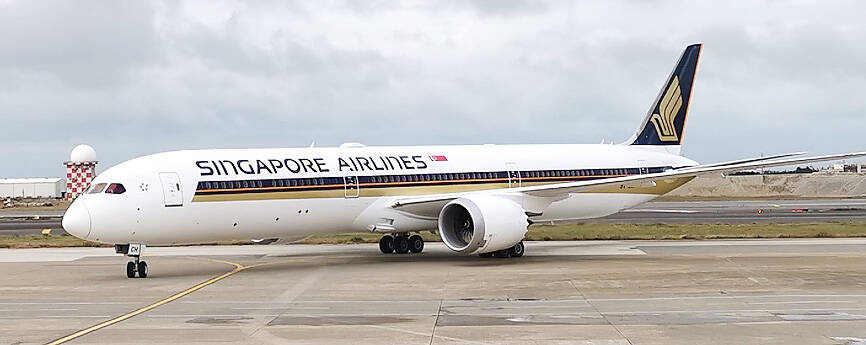
INCREASED CAPACITY: The flights on Mondays, Wednesdays, Fridays and Sundays would leave Singapore in the morning and Taipei in the afternoon Singapore Airlines is adding four supplementary flights to Taipei per week until May to meet increased tourist and business travel demand, the carrier said on Friday. The addition would raise the number of weekly flights it operates to Taipei to 18, Singapore Airlines Taiwan general manager Timothy Ouyang (歐陽漢源) said. The airline has recorded a steady rise in tourist and business travel to and from Taipei, and aims to provide more flexible travel arrangements for passengers, said Ouyang, who assumed the post in July last year. From now until Saturday next week, four additional flights would depart from Singapore on Monday, Wednesday, Friday
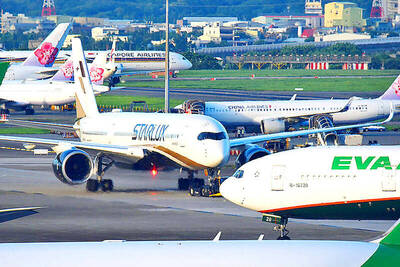
Taiwan’s three major international carriers are increasing booking fees, with EVA Airways having already increased the charge to US$28 per flight segment from US$25, while China Airlines (CAL) and Starlux Airlines are set to follow suit. Booking fees are charged by airlines through a global distribution system (GDS) and passed on to passengers. Carriers that apply the fees include CAL, EVA, Starlux and Tigerair Taiwan. A GDS is a computerized network operated by a company that connects airlines with travel agents and ticketing platforms, allowing reservations to be made and processed in real time. Major players include Amadeus, Sabre and Travelport. EVA Air began
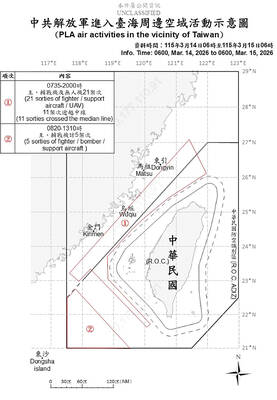
The Ministry of National Defense yesterday reported the return of large-scale Chinese air force activities after their unexplained absence for more than two weeks, which had prompted speculation regarding Beijing’s motives. China usually sends fighter jets, drones and other military aircraft around the nation on a daily basis. Interruptions to such routine are generally caused by bad weather. The Ministry of National Defense said it had detected 26 Chinese military aircraft in the Taiwan Strait over the previous 24 hours. It last reported that many aircraft on Feb. 25, when it spotted 30 aircraft, saying Beijing was carrying out another “joint combat
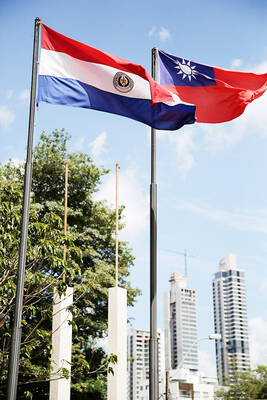
When Paraguayan opposition lawmaker Leidy Galeano returned from an all-expenses-paid tour of six Chinese cities late last year, she was convinced Paraguay risked missing out on major economic gains by sticking with longtime ally Taipei over Beijing — a message that participants on the trip heard repeatedly from Chinese officials. “Everything I saw there, I wanted for my country,” said Galeano, a member of the newly-formed Yo Creo party whose senior figures have spoken favorably about China. This trip and others like it — which people familiar with the visits said were at the invitation of the Chinese consulate in Sao Paulo


 RSS
RSS