


Brightly-lit and splashed in day-glo colors, new supermarkets sprout each month in India's capital in a sign of rapid economic change that appears to be leading shoppers to shun small, traditional and family-run shops.
By the time New Delhi hosts the 2010 Commonwealth Games, a retail consultancy estimates, there will be one supermarket every kilometer in the sprawling city of 14 million -- compared to about five supermarkets in 2004.
Kriti Pallav, a married working woman, said she switched from her local grocer to the new Big Apple supermarket chain because the outlets were air-conditioned and open until late.
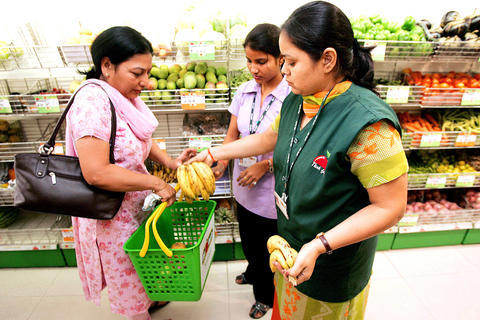
PHOTO: AFP
"This shopping experience is new and welcome. I don't have to haggle for prices here as I have to with the local vendor. The quality is good and overall there is great hygiene in the store," she said as she waited to pay through a computerized system.
Big Apple, owned by Express Retail Services, has opened 22 outlets in New Delhi in the past two years and says it plans a five-fold increase by the end of this year, offering everything from groceries to cosmetics.
"We have 22 operational stores in Delhi at the moment but plan to open 100 outlets this year for which we have earmarked an investment of around 1 billion rupees [US$25 million]," Express Retail managing director Munish Hemrajani said.
The trend is not confined to New Delhi.
The retail consulting and research agency KSA-Technopak predicted in a report last month that by 2010 annual retail sales by chain stores will reach US$21.5 billion, from US$7.5 billion now.
But there are also pockets of unhappiness about the impact that the advent of modern supermarket shopping is having on traditional shopping habits.
Earlier this month, thousands of irate street vendors attacked stores set up by Indian giant Reliance Industries in eastern India, saying the new nationwide chain threatened their livelihoods.
Some 5,000 vegetable sellers vandalized three Reliance Fresh stores in Ranchi in the first violence against the firm's plans to build a local version of US retail giant Wal-Mart, police said.
In nearby Marxist-ruled West Bengal a powerful communist leader last week threatened similar protests against Reliance.
The small stores are facing an aggressive push by newer stores like Big Apple to cut them out by buying directly from farmers.
Companies such as Reliance have the advantage of being able to negotiate bulk deals and then offer low prices to lure people away from the small shops as, Hemrajani said, bargains were the only way to break the public's affinity for the estimated 15 million small retailers in New Delhi.
Extended hours for stores like Big Apple are hard for family-run shops, he said, adding that 7am to 11pm opening hours meant that "more than 50 percent of our daily sales" take place after smaller outlets had closed.
US-based Wal-Mart is expected to open mega stores in India by the middle of next year after reaching a deal with India's Bharti group.
Bharti, the country's largest publicly-listed phone company, has a wholly owned front-end retailing venture, Bharti Retail that plans to spend US$2.5 billion by 2015 to set up hypermarkets, supermarkets and other stores across India.
French retail giant Carrefour has put on hold plans to invest in India due to concerns over political opposition to multinational retailers entering the market. The world's second-largest retailer, Carrefour wants to see how Wal-Mart fares before it steps in.
India does not allow foreign direct investment in the retail sector except for single-brand stores, so foreign companies must sign franchise deals with local companies to gain access.
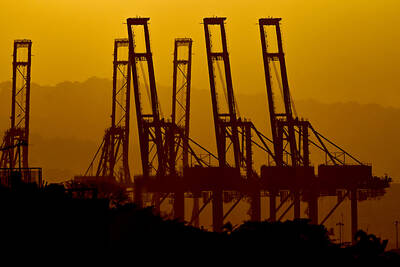
A subsidiary of a Hong Kong-based company that has lost control of two critical ports on the Panama Canal said it is seeking US$2 billion of compensation in damages from Panama over its “illegal” takeover of the ports. Panama Ports Co, a unit of Hong Kong’s CK Hutchison Holdings (長江和記實業), on Friday said in a statement that it is demanding the sum under international arbitration proceedings that it had already started. The Panamanian government last week seized control of the Balboa and Cristobal ports on each end of the Panama Canal, after the country’s Supreme Court declared earlier that a concession allowing
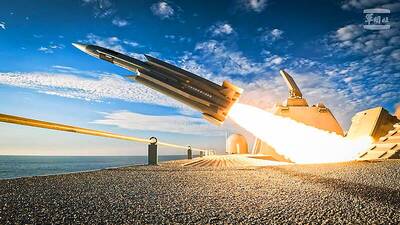
DETERRENCE: With 1,000 indigenous Hsiung Feng II and III missiles and 400 Harpoon missiles, the nation would boast the highest anti-ship missile density in the world With Taiwan wrapping up mass production of Hsiung Feng II and III missiles by December and an influx of Harpoon missiles from the US, Taiwan would have the highest density of anti-ship missiles in the world, a source said yesterday. Taiwan is to wrap up mass production of the indigenous anti-ship missiles by the end of year, as the Chungshan Institute of Science and Technology has been meeting production targets ahead of schedule, a defense official with knowledge of the matter said. Combined with the 400 Harpoon anti-ship missiles Taiwan expects to receive from the US by 2028, the nation would have

POSSIBILITIES EMERGE: With Taiwan’s victory and Japan’s narrow win over Australia, Taiwan now have a chance to advance if South Korea also beat the Aussies Taiwan has high hopes that the national baseball team would advance to the World Baseball Classic (WBC) quarter-finals after clinching a crucial 5-4 victory over South Korea in a nail-biting extra-inning game at the Tokyo Dome yesterday. Boosted by three home runs — two solo shots by Yu Chang (張育成) and Cheng Tsung-che (鄭宗哲) and a two-run homer by Stuart Fairchild — the triumph gave Taiwan a much-needed second victory in the five-team Pool C, where only the top two finishers would advance to the knockout stage in Miami, Florida. Entering extra innings with the game tied at four apiece, Taiwan scored
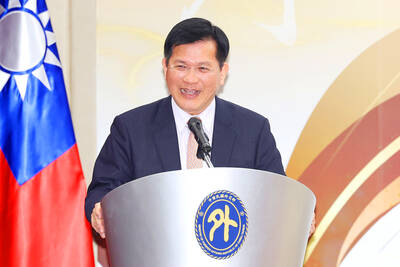
MISSION OF PEACE: The foreign minister urged Beijing to respect Taiwan’s existence as an independent nation, and work together to ensure peace and stability in the region Minister of Foreign Affairs Lin Chia-lung (林佳龍) yesterday rejected Chinese Minister of Foreign Affairs Wang Yi’s (王毅) comments about Taiwan, criticizing China as a “troublemaker” in the international community and a disruptor of cross-strait peace. Speaking at a news conference on the sidelines of the Chinese National People’s Congress, Wang said that Taiwan has always been a territory of China and that it would be impossible for it to become its own country. The “return” of Taiwan to China was the natural outcome of the Chinese people’s resistance against Japan in World War II, and that any pursuit of independence was “doomed


 RSS
RSS