


Delta Air Lines' new low-fare airline won't reduce costs by leasing storage space in overhead bins, nor will it rent them pillows and exit maps.
Editorial cartoonists and stand-up comics have been having a grand time satirizing low-fare, low-cost airlines. The high-fare network carriers aren't laughing; they are copying the upstarts with deadly seriousness.
"Song," Delta's new domestic subsidiary announced Jan. 29, will charge for in-flight meals, snacks and movies. All tickets will be one-way and cost from US$79 to US$299.
Song also hopes to minimize distribution costs by selling as much as 70 percent of its tickets through its Web site and agents, though it will pay commissions to independent travel agents.
"I can't be building an airline based on a cost structure that's unsustainable," explained John Selvaggio, president of Song. He had been Delta's senior vice president of customer service.
Hats off to Delta for effort, though I wouldn't bet my 401(K) on the airline's chances of creating a self-sustaining, low-cost airline inside a high-cost one.
To cite one potential landmine, pilots' wage rates at Song will be similar -- that is, too high, in terms of market competition -- compared with pilots at low-cost competitors. While pilots will be getting relatively high rates of pay, they'll also be flying more hours on average than Delta colleagues.
General Motors Corp tried a similar fight-fire-with-fire ploy against Japanese automakers Honda Motor Co and Toyota Motor Corp when it created its Saturn unit in 1985. Saturn was supposed to be more streamlined, efficient and lower cost -- featuring a special labor agreement with the United Auto Workers union. Today Saturn has evolved into another GM vehicle brand, with roughly the same costs and culture as Buick or Chevrolet.
Fight for life
Like other major air carriers, Delta is being eaten alive -- slowly but steadily -- by smaller, lower cost companies such as Southwest Airlines Co, JetBlue Airways Corp and AirTran Holdings Inc. In 2002 Delta posted a net loss of US$1.27 billion; Southwest, whose net sales are less than half of Delta's, earned US$240.9 million.
Song is Delta's second stab at creating a low-cost alternative. Its cut-rate Delta Express unit, opened in 1996, closed last August because, Selvaggio said, it couldn't keep costs low.
The brand-confused public, moreover, saw the Delta name with Express and didn't always understand that they were getting lower fares in return for fewer frills. That's why the name Song has no connection to Delta.
Delta Express's cancellation shocked no one, since other network carriers in the US and Europe have been trying to operate low-cost subsidiaries and failing. Two exceptions, says aviation consultant David Treitel, may be Tango and Jazz, low-cost units belonging to Air Canada: "They seem to be working pretty well." Unless network carriers discover how to compete against the low-cost world, many if not most could be out of business. United Airlines parent UAL Corp and US Airways Group Inc, both operating under chapter 11 bankruptcy protection, are in imminent danger unless they can restructure with lower costs.
If at first...
Hence, United Airlines said it would try once more to operate a low-fare unit, having failed once with Shuttle by United. Last week KLM Royal Dutch Airline NV -- which lost 156 million euros (US$168 million) in 2002 -- sold its Buzz low-cost unit to Dublin-based, low-cost Ryanair Holdings Plc for US$25.7 million.
Ryanair has emerged as the Continent's largest airline in terms of market value. Its success has been great news for Boeing Co. Last week Ryanair said it would increase orders for Boeing 737-800s to 125 from 103.
John Walsh, an aviation and aerospace consultant based in Annapolis, Maryland, described the trend to create low-cost subsidiaries as "monkey-see, monkey do." "I'm struggling with it," he said. "My sense is these tactics are purely defensive, but they haven't said that." Song spokeswoman Stacy Geagan countered: "We think of Song as an offensive strategy."
Song will initially have four flights and build to 144 by October 2003. It will fly along the East Coast between Boston, New York City, Washington, and Florida locations such as Tampa and West Palm Beach, quite dense routes in terms of air traffic.
Taking a page from playbooks of JetBlue and Southwest, the seats will be upholstered in leather and each will be equipped with satellite TV and digital audio. "Eventually we'll have online shopping," Geagan said.
"Delta Express used inefficient 737-200s," said Song's Selvaggio. "What Delta Express did well was to drive additional passenger traffic. If you believe you can do that with a low-cost carrier, why not optimize rather than dabble?" Selvaggio might start praying that his low-cost gospel will spread quickly throughout Delta. Otherwise, Song likely will be too little and too late to be more than a Band-Aid over a gaping wound.
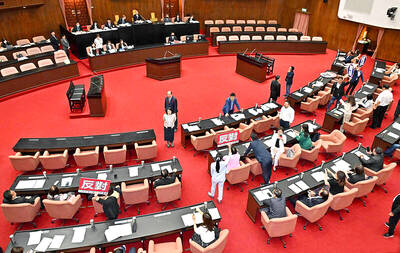
STATE OF THE NATION: The legislature should invite the president to deliver an address every year, the TPP said, adding that Lai should also have to answer legislators’ questions The Chinese Nationalist Party (KMT) yesterday proposed inviting president-elect William Lai (賴清德) to make a historic first state of the nation address at the legislature following his inauguration on May 20. Lai is expected to face many domestic and international challenges, and should clarify his intended policies with the public’s representatives, KMT caucus secretary-general Hung Meng-kai (洪孟楷) said when making the proposal at a meeting of the legislature’s Procedure Committee. The committee voted to add the item to the agenda for Friday, along with another similar proposal put forward by the Taiwan People’s Party (TPP). The invitation is in line with Article 15-2

PLAN: Nations would receive US$5m a year if they could advance Taiwan’s international participation, diversify supply chains away from China or counter Beijing’s influence The US House of Representatives Select Committee on Strategic Competition Between the US and the Chinese Communist Party (CCP) on Friday introduced a bill that would approve US$120 million to be spent on supporting Taiwan’s international space and tackling coercion by China. The bipartisan legislation — the Taiwan Allies Fund Act — was proposed ahead of the inauguration of president-elect William Lai (賴清德) of the Democratic Progressive Party (DPP) on May 20. The committee said in a statement that the bill “strengthens Taiwan’s global network of friends by authorizing [US]$120 million over three years for the State Department and USAID [US Agency
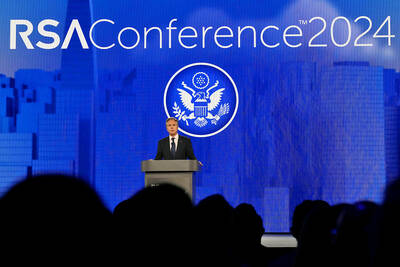
‘DIGITAL SOLIDARITY’: Taiwan, the US, Japan, Australia and New Zealand are to install and operate a cable that would connect up to 100,000 people in the Pacific Islands Taiwan, the US, Japan, Australia and New Zealand are working together to install undersea cables as a demonstration of digital solidarity, US Secretary of State Antony Blinken said on Monday. Blinken talked about the cooperation in a speech he delivered at the RSA Conference in San Francisco. He said that the US International Cyberspace and Digital Strategy launched by the US Department of State “treats digital solidarity as our North Star.” “Solidarity informs our approach not only to digital technologies, but to all key foundational technologies,” Blinken said. Under the strategy, the US is to work with international partners “to shape the design, development,
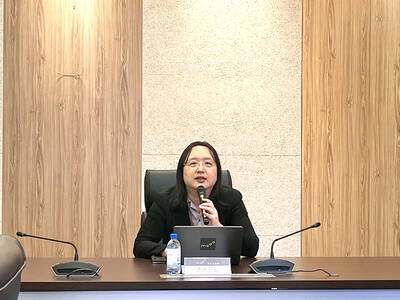
POSSIBLE SOLUTION: The government needs to convey regulations to advertising platforms based overseas and access to the offenders could be restricted, Minister said The government is considering asking TikTok and other large digital advertising platforms to have agents based in Taiwan in accordance with the draft act on the prevention and control of fraud and crime, which is scheduled to be reviewed at an Executive Yuan meeting today, the Ministry of Digital Affairs said yesterday. The draft act is one of the legislative measures being introduced by the government to tackle scams, including the draft technology investigation and security act, and amendments to the Money Laundering Control Act (洗錢防制法) and the Communication Security and Surveillance Act (通訊保障及監察法). They are also to be reviewed


 RSS
RSS