


Calls from laid-off Cathay Pacific Airways Ltd (國泰航空) pilots began arriving at OKAY Property Agency Ltd (屋企) not long after the Hong Kong airline announced one of the biggest job cuts in global aviation.
The cull that affected more than 5,000 Cathay employees on Wednesday has forced some to find cheaper housing or leave Hong Kong altogether. It is a painful blow for one of the territory’s biggest workforces, and yet another hit for a property market under pressure from political turmoil and a COVID-19 pandemic-induced recession.
Vacancies for apartments priced at HK$65,000 (US$8,396) a month or more had already been rising in Discovery Bay, a neighborhood about 30 minutes from the airport that is home to many pilots, said Nina Schulte-Mattler, a senior manager in the residential division of OKAY Property.
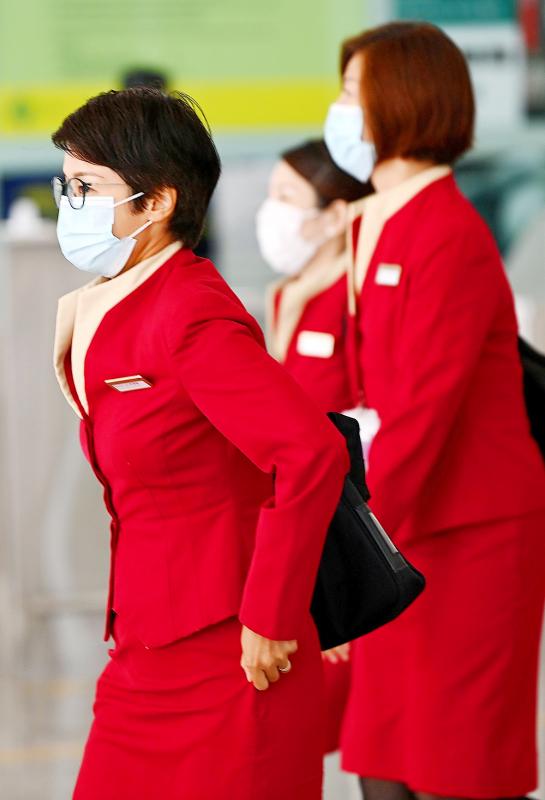
Photo: AFP
In Tung Chung, another area popular among Cathay employees, about 60 renters have surrendered their leases over the past three months, said Joe Lee (李錦榮), a senior area sales manager at Midland Realty Ltd (美聯物業).
“I’ve never seen so many people giving up their rented apartments in my career,” Lee said. “Local crew members who were let go or had their salaries cut are terminating their leases.”
Rental prices in Tung Chung have slid 5 percent since the start of the year and might fall another 3 percent next quarter, Lee said.
The majority of rental demand in the neighborhood comes from airline crew members, employees with logistics companies, and other professionals related to aviation.
The industry is also well represented in Discovery Bay, popular for its tree-lined streets and waterfront apartments.
Some landlords in the area are now happy to find takers at HK$85,000 for properties previously going for HK$110,000, Schulte-Mattler said.
A few pilots who used to lease those high-end units have left Hong Kong for jobs elsewhere or retired early, she said.
Other landlords have downsized to the HK$40,000 to HK$60,000 price range, where demand is more stable, she said.
Senior employees of Cathay Pacific or its subsidiary Cathay Dragon (國泰港龍) can receive HK$60,000 to HK$100,000 in monthly housing allowances, said Rickie So (蘇志強), a property agent with Century 21 Newcourt Realty (世紀21新域地產) in Discovery Bay.
He has seen about 50 properties in that price range drop their rent by 15 to 20 percent in the past two months in anticipation of layoffs.
Further price cuts could start emerging in a couple of months, So said.

SECOND-RATE: Models distilled from US products do not perform the same as the original and undo measures that ensure the systems are neutral, the US’ cable said The US Department of State has ordered a global push to bring attention to what it said are widespread efforts by Chinese companies, including artificial intelligence (AI) start-up DeepSeek (深度求索), to steal intellectual property from US AI labs, according to a diplomatic cable. The cable, dated Friday and sent to diplomatic and consular posts around the world, instructs diplomatic staff to speak to their foreign counterparts about “concerns over adversaries’ extraction and distillation of US AI models.” Distillation is the process of training smaller AI models using output from larger, more expensive ones to lower the costs of training a powerful new

Singapore-based ride-hailing and delivery giant Grab Holdings’ planned acquisition of Foodpanda’s Taiwan operations has yet to enter the formal review stage, as regulators await supplementary documents, the Fair Trade Commission (FTC) said yesterday. Acting FTC Chairman Chen Chih-min (陳志民) told the legislature’s Economics Committee that although Grab submitted its application on March 27, the case has not been officially accepted because required materials remain incomplete. Once the filing is finalized, the FTC would launch a formal probe into the deal, focusing on issues such as cross-shareholding and potential restrictions on market competition, Chen told lawmakers. Grab last month announced that it would acquire

The artificial intelligence (AI) boom has triggered a seismic reshuffling of global equity markets, with Taiwan and South Korea muscling past European nations one by one. With its stock market now valued at nearly US$4.3 trillion, Taiwan surpassed the UK, Europe’s biggest market, earlier this month, data compiled by Bloomberg showed. South Korea is about US$140 billion away from doing the same. The tech-heavy Asian markets have shot past Germany and France in the past seven months. The shift is largely down to massive gains in shares of three companies that provide essential hardware for AI: Taiwan Semiconductor Manufacturing Co (TSMC, 台積電),
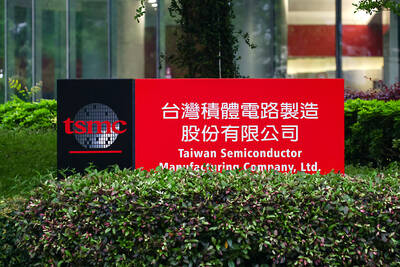
Shares of Taiwan Semiconductor Manufacturing Co (TSMC, 台積電) have repeatedly hit new highs, but an equity analyst said the stock’s valuation remains within a reasonable range and any pullback would likely be technical. The contract chipmaker’s historical price-to-earnings (P/E) ratio has ranged between 20 and 30, Cathay Futures Consultant Co (國泰證期) analyst Tsai Ming-han (蔡明翰) told Central News Agency. With market consensus projecting that TSMC would post earnings per share of about NT$100 (US$3.17) this year, supported by strong global demand for artificial intelligence (AI) applications, and the stock currently trading at a P/E ratio of below 25, Tsai said the valuation


 RSS
RSS