


The Thai baht was Asia’s best-performing currency last year, while this year’s winner looks to have been already decided: the Indonesian rupiah.
The currency of Southeast Asia’s most populous nation has rallied for seven straight weeks as the bumper yields offered by local government bonds enticed carry traders and the central bank said it would allow further gains.
Indonesia’s local-currency bonds offer yields of between 5 and 8 percent, an alluring prospect for investors looking to place carry trades, which seek to capitalize on the difference in interest rates between two nations.
If they are brave enough to execute the trades without hedging the currencies, investors stand to reap even greater rewards if the rupiah keeps rising.
MONETARY POLICY
Just as important as the yield allure has been the tolerant attitude of the Indonesian central bank.
Whereas policymakers generally seek to limit currency gains to support exports, Bank Indonesia on Jan. 10 said that it would refrain from limiting the rupiah’s strength as long as it reflected the improving economy and volatility remained manageable.
That is not to say the rupiah is a one-way bet.
Indonesian President Joko Widodo last week said that rapid gains in the currency could hurt exports and undermine efforts to rein in the nation’s current-account deficit.
“If the rupiah appreciates too quickly, we should be cautious,” Widodo said.
A possible hiccup also awaits this week in the form of a central bank policy decision.
While 24 of 27 economists surveyed by Bloomberg predicted that Bank Indonesia would leave interest rates on hold, three are forecasting a 25 basis-point cut to 4.75 percent.
An easing, or a hint in that direction, would help restrain further rupiah gains.
CHINA’S YEAR
Meanwhile, Gavekal Capital says that the Year of the Rat, which begins next week, is lining up to be a strong year for the yuan and Chinese government bonds.
Gavekal Capital, a fund manager with about US$1.5 billion of equities and bonds under management, forecast that bonds of the world’s second-largest economy would deliver a 10 percent return this year, given both the strengthening yuan and the relatively high yields.
“Where else in the world can you get 10 percent return on a fairly minimal risk government bond market?” Gavekal Capital chief executive officer Louis-Vincent Gave said in an interview while on a visit to the Norwegian capital, Oslo.
Part of that return would be driven by the strengthening yuan, which is to be stoked by both easing trade tensions and the fallout from the unrest in Hong Kong.
The yuan has appreciated about 4 percent against the US dollar since hitting a low in September last year.
‘PHASE ONE’ DEAL
Part of the “phase one” trade deal signed last week in Washington includes commitments by both nations to avoid competitive currency devaluations.
While the two-page currency chapter was met with skepticism, Gave said that the signals out of China are that it is content with a stronger currency.
As the nation also opens up its US$45 trillion market this year and Hong Kong unrest persists, China would take further steps to promote its financial centers, Gave said.
This year will “be a very strong renminbi [yuan] year,” he said. “With the Chinese not only pushing up the renminbi, but also opening up capital controls at the same time in a bid to promote Shanghai relative to Hong Kong.”
Signs that inflation is moderating in China could also give the central bank scope to add stimulus this year to cushion an economic slowdown, he added.
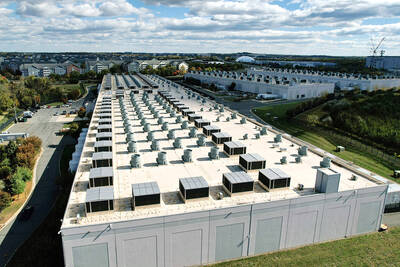
The demise of the coal industry left the US’ Appalachian region in tatters, with lost jobs, spoiled water and countless kilometers of abandoned underground mines. Now entrepreneurs are eyeing the rural region with ambitious visions to rebuild its economy by converting old mines into solar power systems and data centers that could help fuel the increasing power demands of the artificial intelligence (AI) boom. One such project is underway by a non-profit team calling itself Energy DELTA (Discovery, Education, Learning and Technology Accelerator) Lab, which is looking to develop energy sources on about 26,305 hectares of old coal land in
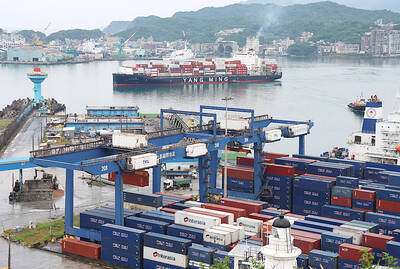
Taiwan’s exports soared 56 percent year-on-year to an all-time high of US$64.05 billion last month, propelled by surging global demand for artificial intelligence (AI), high-performance computing and cloud service infrastructure, the Ministry of Finance said yesterday. Department of Statistics Director-General Beatrice Tsai (蔡美娜) called the figure an unexpected upside surprise, citing a wave of technology orders from overseas customers alongside the usual year-end shopping season for technology products. Growth is likely to remain strong this month, she said, projecting a 40 percent to 45 percent expansion on an annual basis. The outperformance could prompt the Directorate-General of Budget, Accounting and

Netflix on Friday faced fierce criticism over its blockbuster deal to acquire Warner Bros Discovery. The streaming giant is already viewed as a pariah in some Hollywood circles, largely due to its reluctance to release content in theaters and its disruption of traditional industry practices. As Netflix emerged as the likely winning bidder for Warner Bros — the studio behind Casablanca, the Harry Potter movies and Friends — Hollywood’s elite launched an aggressive campaign against the acquisition. Titanic director James Cameron called the buyout a “disaster,” while a group of prominent producers are lobbying US Congress to oppose the deal,

Two Chinese chipmakers are attracting strong retail investor demand, buoyed by industry peer Moore Threads Technology Co’s (摩爾線程) stellar debut. The retail portion of MetaX Integrated Circuits (Shanghai) Co’s (上海沐曦) upcoming initial public offering (IPO) was 2,986 times oversubscribed on Friday, according to a filing. Meanwhile, Beijing Onmicro Electronics Co (北京昂瑞微), which makes radio frequency chips, was 2,899 times oversubscribed on Friday, its filing showed. The bids coincided with Moore Threads’ trading debut, which surged 425 percent on Friday after raising 8 billion yuan (US$1.13 billion) on bets that the company could emerge as a viable local competitor to Nvidia


 RSS
RSS