


A group of Amazon.com Inc employees who pushed the company to combat climate change that say Amazon has threatened to fire some of them if they continue to speak out about their employer’s internal affairs.
Two were threatened with termination, a spokesperson for Amazon Employees for Climate Justice said, and a total of four were told in meetings that they were in violation of the company’s policies on workers speaking to the press and on social media.
Maren Costa, a user experience designer, was threatened with termination after speaking to the Washington Post, according to a statement from the group.
“This is not the time to shoot the messengers,” Costa said in the release. “This is not the time to silence those who are speaking out.”
The Washington Post is owned by Amazon chief executive officer Jeff Bezos.
Jaci Anderson, an Amazon spokesperson, said in an e-mailed statement that the company’s external communications policy is not new.
Employees are “encouraged to work within their teams,” and may suggest “improvements to how we operate through those internal channels,” Anderson said.
The tech industry has been roiled by employee activism in the past couple of years. After Google workers raised concerns about bidding on military contracts, the Alphabet Inc search giant backed out of a US Department of Defense drone program and did not bid on a contract to build cloud services for the Pentagon.
Employees at Microsoft Corp and Salesforce.com Inc have pressed executives about their companies’ dealings with US Immigration and Customs Enforcement.
In late 2018, the Amazon Employees for Climate Justice began discussing ways to persuade its employer to curb its contributions to climate change. The e-commerce company to that point had committed to powering some of its infrastructure with renewable energy sources, but stopped short of the bigger commitments and transparency promised by some other large technology and logistics companies.
The group put forward a shareholder resolution, backed by thousands of employees in an open letter, that called on Amazon to write a report detailing preparations for climate-related disruptions and plans to reduce use of the fossil fuels. Shareholders rejected the proposal at Amazon’s annual meeting in May.
Amazon made much of the employees’ climate proposal a few months later, when Bezos in September last year announced aims to power Amazon’s operations entirely with renewable energy by 2030 and be carbon neutral by 2040. The announcement came a day before hundreds of employees held a rally at its Seattle headquarters to start a march with other climate activists in the city and around the world.
The employees say Amazon changed its policy on workers speaking to the media after the September walkout was announced.
The updated policy requires employees to seek approval before speaking about Amazon in any public forum in which they are identified as an Amazon employee, the employee group said.
Anderson said work on that updated policy began in the spring of last year and was designed to make it easier to manage approvals for employee engagements.
“I encourage you to review the policy again and in the future any time you may consider speaking about Amazon’s business in a public forum,” Eric Sjoding, an employee in Amazon’s human resources group, wrote to Costa in an e-mail on Nov. 22 last year.
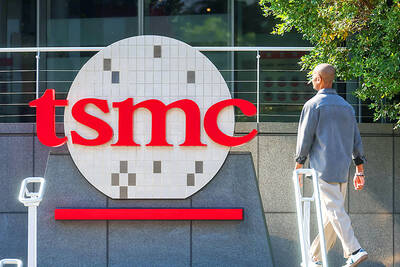
Shares of contract chipmaker Taiwan Semiconductor Manufacturing Co (TSMC, 台積電) came under pressure yesterday after a report that Apple Inc is looking to shift some orders from the Taiwanese company to Intel Corp. TSMC shares fell NT$55, or 2.4 percent, to close at NT$2,235 on the local main board, Taiwan Stock Exchange data showed. Despite the losses, TSMC is expected to continue to benefit from sound fundamentals, as it maintains a lead over its peers in high-end process development, analysts said. “The selling was a knee-jerk reaction to an Intel-Apple report over the weekend,” Mega International Investment Services Corp (兆豐國際投顧) analyst Alex Huang
Taiwan Semiconductor Manufacturing Co (TSMC, 台積電) is expected to remain Apple Inc’s primary chip manufacturing partner despite reports that Apple could shift some orders to Intel Corp, industry experts said yesterday. The comments came after The Wall Street Journal reported on Friday that Apple and Intel had reached a preliminary agreement following more than a year of negotiations for Intel to manufacture some chips for Apple devices. Taiwan Institute of Economic Research (台灣經濟研究院) economist Arisa Liu (劉佩真) said TSMC’s advanced packaging technologies, including integrated fan-out and chip-on-wafer-on-substrate, remain critical to the performance of Apple’s A-series and M-series chips. She said Intel and Samsung
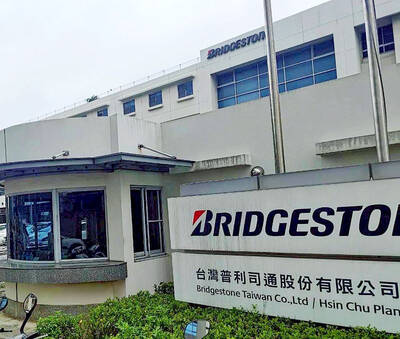
TRANSITION: With the closure, the company would reorganize its Taiwanese unit to a sales and service-focused model, Bridgestone said Bridgestone Corp yesterday announced it would cease manufacturing operations at its tire plant in Hsinchu County’s Hukou Township (湖口), affecting more than 500 workers. Bridgestone Taiwan Co (台灣普利司通) said in a statement that the decision was based on the Tokyo-based tire maker’s adjustments to its global operational strategy and long-term market development considerations. The Taiwanese unit would be reorganized as part of the closure, effective yesterday, and all related production activities would be concluded, the statement said. Under the plan, Bridgestone would continue to deepen its presence in the Taiwanese market, while transitioning to a sales and service-focused business model, it added. The Hsinchu
Taiwan Semiconductor Manufacturing Co (TSMC, 台積電) has approved a capital budget of US$31.28 billion for production expansion to meet long-term development needs during the artificial intelligence (AI) boom. The company’s board meeting yesterday approved the capital appropriation plan for purposes such as the installation of advanced technology capacity and fab construction, the world’s largest contract chipmaker said in a statement. At an earnings conference last month, TSMC forecast that its capital expenditure for this year would be at the higher end of the US$52 billion to US$56 billion range it forecast in January in response to robust demand for 5G, AI and


 RSS
RSS