


The government of one of China’s top technology hubs is dispatching officials to 100 local corporations, including e-commerce giant Alibaba Group Holding Ltd (阿里巴巴), the latest effort to exert greater influence over the nation’s massive private sector.
The city government in Hangzhou, Zhejiang Province, is assigning government affairs representatives to facilitate communication and expedite projects, it said on its Web site.
Chinese beverage giant Hangzhou Wahaha Group Co (杭州娃哈哈集團) and automaker Zhejiang Geely Holding Group Co (浙江吉利控股集團) are among the other companies based in the prosperous region that have been singled out, state media reports said.
The initiative is aimed at smoothing work flow between officials and China’s high-tech companies and manufacturers, the city government said.
However, the move could be perceived also as an effort to keep tabs on a non state-owned sector that is gaining clout as a prime driver of the world’s No. 2 economy.
Representatives of the nation’s public security system are already embedded within China’s largest Internet companies, responsible for crime prevention and stamping out false rumors.
Government agencies may also be heightening their monitoring of the vast private sector at a time the Chinese economy is decelerating — raising the prospect of destabilizing job cuts as enterprises try to protect bottom lines.
Alibaba is hosting its annual investors’ conference this week in Hangzhou against the backdrop of a worsening outlook for the country.
“They might be checking whether the [Chinese] Communist Party [CCP] units are working effectively within the companies,” said Paul Gillis, a professor at Peking University’s Guanghua School of Management.
“While China legitimized capitalism, the level of government influence was never intended to disappear. Occasionally private entrepreneurs forget about this and are reminded of it,” Gillis added.
Zhejiang is considered the cradle of modern Chinese private enterprise, home to a generation of self-made billionaires from Alibaba’s Jack Ma (馬雲) and Geely founder Li Shufu (李書福) to Wahaha’s Zong Qinghou (宗慶后).
The CCP accepted so-called “red capitalists” or private entrepreneurs into the party in 2001, allowing them to become part of the nation’s legislature a year later.
Still, the relationship between Beijing and well-known businesspeople remains sensitive.
The government has been seen to try and step up an official presence within non-state firms, by among other things mandating that private companies of scale set up and maintain a party branch.
It was not clear whether the 100 Zhejiang-based companies included foreign enterprises.
“We understand this initiative from the Hangzhou City Government aims to foster a better business environment in support of Hangzhou-based enterprises. The government representative will function as a bridge to the private sector and will not interfere with the company’s operations,” Alibaba said in a text statement.
Representatives for Wahaha and Geely did not immediately respond to requests for comment.
The Hangzhou initiative also underscores how the government is trying to arrest a slowdown in the economy brought on by the trade war, Kaiyuan Capital Ltd (開源資本) managing director Brock Silvers said.
He expects similar policies to soon follow for other manufacturing-intensive areas.


Taiwanese firms have increased investment in the Philippines in recent years as Manila’s ties with Washington deepen and global supply chains continue to shift away from China, an expert at the Chung-Hua Institution for Economic Research (CIER, 中華經濟研究院) said yesterday. The Philippines had not been among Taiwanese investors’ top choices in Southeast Asia, CIER Taiwan ASEAN Studies Center director Kristy Hsu (徐遵慈) said at a seminar in Taipei. However, Taiwan’s investment in the country has grown significantly since the COVID-19 pandemic, reaching US $257 million last year, a high in recent years, she said. Although Taiwan’s total investment in the Philippines still lags
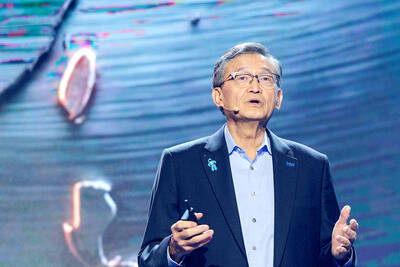
Intel Corp regards Taiwan Semiconductor Manufacturing Co (TSMC, 台積電) as a longstanding partner, as the US chipmaker would continue outsourcing production of advanced chips to TSMC, Intel chief executive officer Lip-Bu Tan (陳立武) said yesterday. “I don’t look at people as competitors. I look at the collaboration... Nvidia is also, you know, a good friend,” Tan told a news conference following his keynote speech at the Computex trade show in Taipei. “It’s a very trusted partnership for us... We are a big, top customer for them, and we’re going to continue doing that,” he said, referring to TSMC, the world’s largest foundry
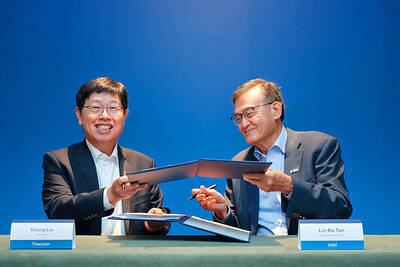
Hon Hai Precision Industry Co (鴻海精密) yesterday said it would work with US chipmaker Intel Corp to jointly develop and deploy next-generation artificial intelligence (AI) infrastructure and intelligent computing platforms in a move to capture booming demand for AI computing systems. Hon Hai, also known as Foxconn Technology Group (富士康), said in a statement that the partnership would combine its global manufacturing scale, system integration expertise and AI data center deployment capabilities with Intel’s strengths in processor architecture, silicon technologies and software ecosystem. The companies said they plan to work on equipment used in AI data centers, including server racks powered by
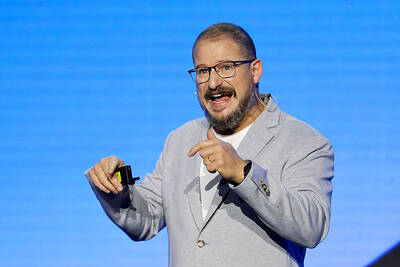
Artificial intelligence (AI) agents would supplant smartphones as the center of people’s digital lives, fundamentally reshaping personal devices and driving a major computing upgrade cycle, Qualcomm Inc CEO Cristiano Amon said yesterday. In his keynote speech for this year’s Computex trade show in Taipei, Amon said that the rise of "agentic AI" — AI systems capable of reasoning, planning and carrying out tasks autonomously — would transform how people interact with technology across phones, PCs, vehicles and wearable devices. Describing the technology as the next major evolution in computing, Amon said that "2026 is the year of agents.” For decades, smartphones have sat


 RSS
RSS