


Asustek Computer Inc (華碩) co-CEO S.Y. Hsu (許先越) yesterday said he is upbeat about the company’s outlook, as its new Asus ROG Phone II has received “better-than-expected” feedback from the gaming community.
The positive comment came despite the company’s mobile phone business incurring a loss of NT$1.09 billion (US$34.60 million) last quarter.
“We have received pre-orders for more than 2 million units,” Hsu told an investors’ conference in Taipei.
The ROG Phone II, developed in cooperation with Tencent Holdings Ltd (騰訊), partly owes its success to gaming features designed specifically by the Chinese Internet giant, he said.
“We are still in the early stages of the [gaming phone] market ... which we aim to expand and dominate,” Hsu said.
While Asustek is looking to expand its mobile business, it has not neglected its core PC business, with the company’s net profit excluding mobile phones edging up 1.2 percent on a quarterly basis to NT$2.77 billion last quarter, while operating margin improved from 2.1 percent to 3.1 percent.
“We are leading the Southeast Asian markets in terms of laptops and motherboards,” co-CEO Samson Hu (胡書賓) told investors, adding that the company holds an average 40 percent share of the gaming laptop market across the region.
The company reported 40 percent year-on-year growth in shipments of ultra-light consumer PCs for the first six months of this year, which contributed to 57 percent of overall sales in the period, Hu said.
Asustek is equally focused on promoting laptops designed for content creators and enterprise clients, Hu said, implying that new products from these categories would soon hit the markets.
Facing investors’ concerns over the US-China trade dispute, which caused the company’s revenue to drop 15 percent sequentially to NT$71.27 billion last quarter, Hu said the company has two to three months of stock in the US to handle an additional 10 percent US tariffs on Chinese goods.
“We expect this [dispute] to last even longer,” Hu said.
Asustek has negotiated with its suppliers to relocate production plants to avoid more tariffs, Hu said.
“This would inevitably generate higher production costs,” he said.
In the April-to-June quarter, net profit dropped 23 percent on a quarterly basis to NT$1.68 billion, which translates into earnings per share of NT$3.07.
Operating margin improved slightly from 1.1 percent to 1.4 percent on the back of lower component prices and product mix adjustments, but the figure remained low when compared with 3.5 percent in the same period last year.
“We are aiming to raise our operating margin to 3 percent this quarter,” Asustek chief financial officer Nick Wu (吳長榮) said.
The company’s board of directors pledged to distribute cash dividends of at least NT$10 per share over the next three years to restore investors’ confidence in the company.
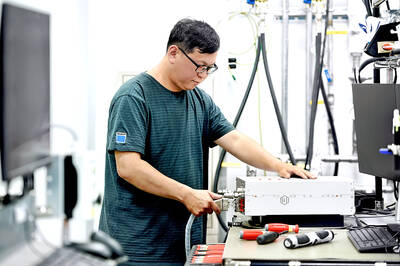
SEMICONDUCTORS: The German laser and plasma generator company will expand its local services as its specialized offerings support Taiwan’s semiconductor industries Trumpf SE + Co KG, a global leader in supplying laser technology and plasma generators used in chip production, is expanding its investments in Taiwan in an effort to deeply integrate into the global semiconductor supply chain in the pursuit of growth. The company, headquartered in Ditzingen, Germany, has invested significantly in a newly inaugurated regional technical center for plasma generators in Taoyuan, its latest expansion in Taiwan after being engaged in various industries for more than 25 years. The center, the first of its kind Trumpf built outside Germany, aims to serve customers from Taiwan, Japan, Southeast Asia and South Korea,

Gasoline and diesel prices at domestic fuel stations are to fall NT$0.2 per liter this week, down for a second consecutive week, CPC Corp, Taiwan (台灣中油) and Formosa Petrochemical Corp (台塑石化) announced yesterday. Effective today, gasoline prices at CPC and Formosa stations are to drop to NT$26.4, NT$27.9 and NT$29.9 per liter for 92, 95 and 98-octane unleaded gasoline respectively, the companies said in separate statements. The price of premium diesel is to fall to NT$24.8 per liter at CPC stations and NT$24.6 at Formosa pumps, they said. The price adjustments came even as international crude oil prices rose last week, as traders
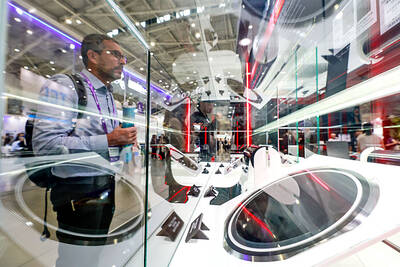
SIZE MATTERS: TSMC started phasing out 8-inch wafer production last year, while Samsung is more aggressively retiring 8-inch capacity, TrendForce said Chipmakers are expected to raise prices of 8-inch wafers by up to 20 percent this year on concern over supply constraints as major contract chipmakers Taiwan Semiconductor Manufacturing Co (TSMC, 台積電) and Samsung Electronics Co gradually retire less advanced wafer capacity, TrendForce Corp (集邦科技) said yesterday. It is the first significant across-the-board price hike since a global semiconductor correction in 2023, the Taipei-based market researcher said in a report. Global 8-inch wafer capacity slid 0.3 percent year-on-year last year, although 8-inch wafer prices still hovered at relatively stable levels throughout the year, TrendForce said. The downward trend is expected to continue this year,
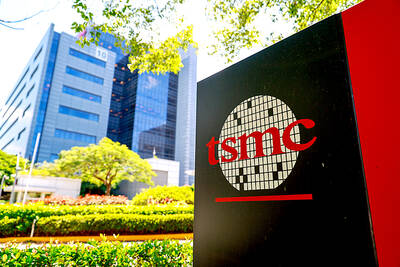
Taiwan Semiconductor Manufacturing Co (TSMC, 台積電), which supplies advanced chips to Nvidia Corp and Apple Inc, yesterday reported NT$1.046 trillion (US$33.1 billion) in revenue for last quarter, driven by constantly strong demand for artificial intelligence (AI) chips, falling in the upper end of its forecast. Based on TSMC’s financial guidance, revenue would expand about 22 percent sequentially to the range from US$32.2 billion to US$33.4 billion during the final quarter of 2024, it told investors in October last year. Last year in total, revenue jumped 31.61 percent to NT$3.81 trillion, compared with NT$2.89 trillion generated in the year before, according to


 RSS
RSS