


The nation’s economy last quarter expanded 2.41 percent annually, beating the government’s May estimate of 1.78 percent on the back of better-than-expected private investment and exports, the Directorate-General of Budget, Accounting and Statistics (DGBAS) said yesterday.
“Exports and private investment fared stronger than our expectations, thanks to order transfers and capital repatriation,” DGBAS Senior Executive Officer Huang Wei-jie (黃偉傑) told a media briefing in Taipei.
External demand contributed 0.72 percentage points to GDP growth during the April-to-June period, versus a drag three months earlier, as the decline in exports tapered to 2.58 percent. The agency had forecast a 3.43 percent decline.
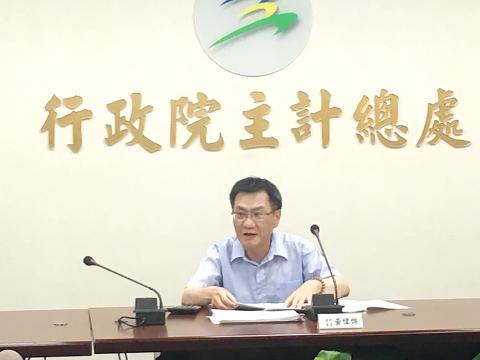
Photo: Cheng Chi-fang, Taipei Times
Demand for semiconductors and electronics, the mainstay of Taiwanese exports, started to pick up, although most other categories continued to disappoint, Huang said.
As several firms have shifted part of their manufacturing capacity back home amid a trade dispute between China and the US, exports of information and communications products increased 20.15 percent, the agency said.
Exports are likely to gain more momentum after returning to growth in June, thanks to the arrival of a peak season for technology products, the Ministry of Finance said last month.
Major technology firms gave positive guidance in recent earnings conferences, but were wary of headwinds at home and abroad.
Exports of goods and services would grow 4.11 percent annually if excluding a price decline of 5.57 percent in US dollar terms, Huang said.
Capital formation proved the biggest growth driver with a 6.04 percent increase from a year earlier, contributing 1.23 percentage points to GDP growth, the agency said.
The showing beat the agency’s May forecast of a 5.3 percent gain.
“The pace of capital repatriation is much faster than the government’s expectations,” Huang said.
Imports of capital equipment rose 15.95 percent in US dollar terms, as firms raised capital expenditure to maintain technology leadership and seize 5G business opportunities, DGBAS said.
Consumer spending rose 1.57 percent, slower than a projection of 1.76 percent, the agency said.
Meanwhile, daily stock turnover shrank 21.17 percent from a year earlier, subduing the benefits of modest growth in retail, wholesale and dining businesses, it said.
Washington’s tariff hikes on Chinese goods in May unnerved investors, but the sentiment has recovered considerably after the two sides agreed on a truce in June and resumed trade negotiations this week.
In the first two quarters, Taiwan’s economy grew 2.07 percent and is expected to continue growing in the coming quarters.
The agency is to announce its new growth forecast on Aug. 16.

POWERING UP: PSUs for AI servers made up about 50% of Delta’s total server PSU revenue during the first three quarters of last year, the company said Power supply and electronic components maker Delta Electronics Inc (台達電) reported record-high revenue of NT$161.61 billion (US$5.11 billion) for last quarter and said it remains positive about this quarter. Last quarter’s figure was up 7.6 percent from the previous quarter and 41.51 percent higher than a year earlier, and largely in line with Yuanta Securities Investment Consulting Co’s (元大投顧) forecast of NT$160 billion. Delta’s annual revenue last year rose 31.76 percent year-on-year to NT$554.89 billion, also a record high for the company. Its strong performance reflected continued demand for high-performance power solutions and advanced liquid-cooling products used in artificial intelligence (AI) data centers,
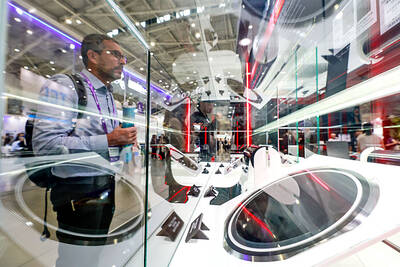
SIZE MATTERS: TSMC started phasing out 8-inch wafer production last year, while Samsung is more aggressively retiring 8-inch capacity, TrendForce said Chipmakers are expected to raise prices of 8-inch wafers by up to 20 percent this year on concern over supply constraints as major contract chipmakers Taiwan Semiconductor Manufacturing Co (TSMC, 台積電) and Samsung Electronics Co gradually retire less advanced wafer capacity, TrendForce Corp (集邦科技) said yesterday. It is the first significant across-the-board price hike since a global semiconductor correction in 2023, the Taipei-based market researcher said in a report. Global 8-inch wafer capacity slid 0.3 percent year-on-year last year, although 8-inch wafer prices still hovered at relatively stable levels throughout the year, TrendForce said. The downward trend is expected to continue this year,
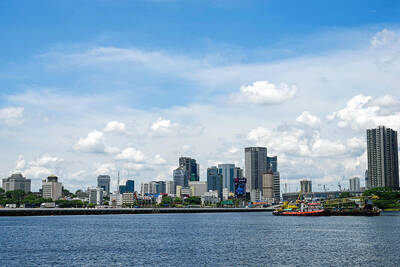
Vincent Wei led fellow Singaporean farmers around an empty Malaysian plot, laying out plans for a greenhouse and rows of leafy vegetables. What he pitched was not just space for crops, but a lifeline for growers struggling to make ends meet in a city-state with high prices and little vacant land. The future agriculture hub is part of a joint special economic zone launched last year by the two neighbors, expected to cost US$123 million and produce 10,000 tonnes of fresh produce annually. It is attracting Singaporean farmers with promises of cheaper land, labor and energy just over the border.

US actor Matthew McConaughey has filed recordings of his image and voice with US patent authorities to protect them from unauthorized usage by artificial intelligence (AI) platforms, a representative said earlier this week. Several video clips and audio recordings were registered by the commercial arm of the Just Keep Livin’ Foundation, a non-profit created by the Oscar-winning actor and his wife, Camila, according to the US Patent and Trademark Office database. Many artists are increasingly concerned about the uncontrolled use of their image via generative AI since the rollout of ChatGPT and other AI-powered tools. Several US states have adopted


 RSS
RSS