


Shares of Kura Sushi Asia Co Ltd (亞洲藏壽司) soared on its debut on the Taipei Exchange’s Emerging Stock Board on Friday. It is the first Japanese conveyor-belt sushi chain to trade its shares on the exchange.
The stock surged 218.75 percent to an intraday high of NT$102 before settling at NT$94 at the close of the day’s session, compared with its initial public offering (IPO) price of NT$32.
The company is a local subsidiary of Osaka-based Kura Sushi Inc, which is the second-largest low-priced conveyor-belt sushi chain in Japan, with a total of 433 stores.
Established in 2014, Kura Sushi Asia operates 18 outlets in Taiwan with a flagship store on Taipei’s Guanquian Road.
The company plans to open five to 10 stores per year and up to 50 outlets in Taiwan in the mid to long-term, its prospectus shows.
Thus far, two other major Japanese sushi chains, Hama Sushi and Akindo Sushiro, have launched seven and four outlets respectively in Taiwan since 2016 and last year.
“Kura Sushi Asia will accelerate the pace of its store expansion in Taiwan after its IPO, as it will then have the capital and talent needed,” Yuanta Securities Investment Consulting Co (元大投顧) said in a note on Friday. “Given that the waiting time for lunch or dinner is still about 120 minutes on average during peak hours, we believe demand is sufficient to support store expansion.”
Due to a steady increase in wages and more people eating out on a regular basis, Taiwan’s foodservice industry has reported a compound annual growth rate (CAGR) of 3.4 percent in revenue from 2013 to last year, with restaurant sales also seeing a CAGR of 3.4 percent over the five-year period, Directorate-General of Budget, Accounting and Statistics data showed.
This year, the nation’s food and beverage industry remains resilient despite slowing economic growth, with combined revenue rising 5 percent annually to NT$336.4 billion (US$10.83 billion) in the first five months, the Ministry of Economic Affairs reported on Monday last week.
“The low-priced conveyor-belt sushi restaurants are more resilient in economic cycles, which is evidenced by the stable single-store-sales [SSS] growth and continued store expansion among Kura and major Japanese sushi chain peers in past years,” Yuanta said.
“However, we note that SSS growth might not be the best indicator of whether Kura’s Taiwan business would be resilient in the face of economic cycle changes, as it is still in the early stages of expansion, when store traffic is typically higher before normalizing,” the consulting firm said.
With paid-in capital of NT$379 million, Kura Sushi Asia reported revenue of NT$1.44 billion last year, up 70.12 percent year-on-year, thanks to each person spending NT$300 to NT$350 on average and a high turnover rate.
Net income increased 83.51 percent to NT$107 million last year, with earnings per share of NT$3.4 and gross margin of 62.02 percent, company data showed.
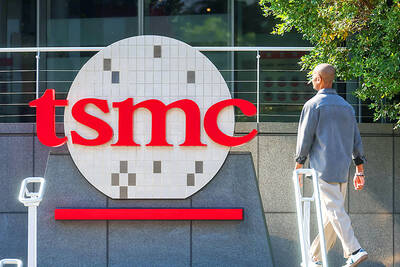
Shares of contract chipmaker Taiwan Semiconductor Manufacturing Co (TSMC, 台積電) came under pressure yesterday after a report that Apple Inc is looking to shift some orders from the Taiwanese company to Intel Corp. TSMC shares fell NT$55, or 2.4 percent, to close at NT$2,235 on the local main board, Taiwan Stock Exchange data showed. Despite the losses, TSMC is expected to continue to benefit from sound fundamentals, as it maintains a lead over its peers in high-end process development, analysts said. “The selling was a knee-jerk reaction to an Intel-Apple report over the weekend,” Mega International Investment Services Corp (兆豐國際投顧) analyst Alex Huang
Taiwan Semiconductor Manufacturing Co (TSMC, 台積電) is expected to remain Apple Inc’s primary chip manufacturing partner despite reports that Apple could shift some orders to Intel Corp, industry experts said yesterday. The comments came after The Wall Street Journal reported on Friday that Apple and Intel had reached a preliminary agreement following more than a year of negotiations for Intel to manufacture some chips for Apple devices. Taiwan Institute of Economic Research (台灣經濟研究院) economist Arisa Liu (劉佩真) said TSMC’s advanced packaging technologies, including integrated fan-out and chip-on-wafer-on-substrate, remain critical to the performance of Apple’s A-series and M-series chips. She said Intel and Samsung
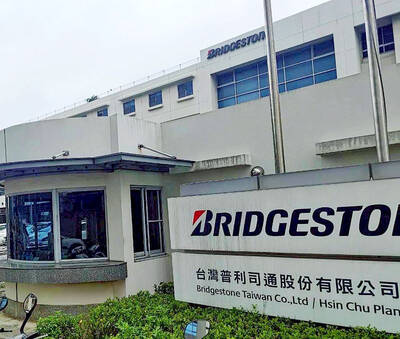
TRANSITION: With the closure, the company would reorganize its Taiwanese unit to a sales and service-focused model, Bridgestone said Bridgestone Corp yesterday announced it would cease manufacturing operations at its tire plant in Hsinchu County’s Hukou Township (湖口), affecting more than 500 workers. Bridgestone Taiwan Co (台灣普利司通) said in a statement that the decision was based on the Tokyo-based tire maker’s adjustments to its global operational strategy and long-term market development considerations. The Taiwanese unit would be reorganized as part of the closure, effective yesterday, and all related production activities would be concluded, the statement said. Under the plan, Bridgestone would continue to deepen its presence in the Taiwanese market, while transitioning to a sales and service-focused business model, it added. The Hsinchu
Taiwan Semiconductor Manufacturing Co (TSMC, 台積電) has approved a capital budget of US$31.28 billion for production expansion to meet long-term development needs during the artificial intelligence (AI) boom. The company’s board meeting yesterday approved the capital appropriation plan for purposes such as the installation of advanced technology capacity and fab construction, the world’s largest contract chipmaker said in a statement. At an earnings conference last month, TSMC forecast that its capital expenditure for this year would be at the higher end of the US$52 billion to US$56 billion range it forecast in January in response to robust demand for 5G, AI and


 RSS
RSS