


Facebook Inc chief executive Mark Zuckerberg on Wednesday said that his social media company took too long to flag as false an altered video of US House of Representatives Speaker Nancy Pelosi that appeared to show her slurring and tripping through a speech.
Zuckerberg, speaking at a conference in Aspen, Colorado, said that the slow response was “an execution mistake on our side.”
The video, a type of realistic alteration known as a “deepfake,” was slowed to make Pelosi’s speech seem slurred and edited to make it appear that she repeatedly stumbled over her words.
After the video surfaced last month, it was widely shared on Facebook, Twitter and Alphabet Inc’s YouTube.
YouTube took down the video, citing policy violations, but Facebook did not remove the clip, only limiting its distribution and telling users trying to share it that it might be misleading.
“It took a while for our system to flag the video and for our fact-checkers to rate it as false ... and during that time it got more distribution than our policies should have allowed,” Zuckerberg said.
Pelosi criticized Facebook’s refusal to remove the video and said that the incident had convinced her the company knowingly enabled Russian election interference.
Misinformation through altered videos is a rising concern in the run-up to next year’s US presidential election, especially as artificial intelligence (AI) is being used to produce clips that look genuine and realistically appear to show people saying words they have not spoken.
After the Pelosi video, Zuckerberg himself was portrayed in a spoof deepfake video on Instagram in which he appears to say “whoever controls the data controls the future.”
Facebook, which owns Instagram, did not to take down the video.
Zuckerberg said that Facebook is considering developing a specific policy on deepfakes.
“This is a little bit of sausage-making here, because we are going through the policy process of thinking through what the deepfake policy should be,” he said. “This is certainly an important area as the AI technology gets better.”
However, Zuckerberg said that a lack of action by US authorities on fake political content on the platform after the 2016 US election helped pave the way for a subsequent avalanche of online disinformation.
He also called on governments to further regulate private data and political advertising, and step up efforts to prevent state actors from interfering in US elections.
“As a private company we don’t have the tools to make the Russian government stop... Our government is the one that has the tools to apply pressure to Russia,” he said.
Additional reporting by AFP

CHIP RACE: Three years of overbroad export controls drove foreign competitors to pursue their own AI chips, and ‘cost US taxpayers billions of dollars,’ Nvidia said China has figured out the US strategy for allowing it to buy Nvidia Corp’s H200s and is rejecting the artificial intelligence (AI) chip in favor of domestically developed semiconductors, White House AI adviser David Sacks said, citing news reports. US President Donald Trump on Monday said that he would allow shipments of Nvidia’s H200 chips to China, part of an administration effort backed by Sacks to challenge Chinese tech champions such as Huawei Technologies Co (華為) by bringing US competition to their home market. On Friday, Sacks signaled that he was uncertain about whether that approach would work. “They’re rejecting our chips,” Sacks

NATIONAL SECURITY: Intel’s testing of ACM tools despite US government control ‘highlights egregious gaps in US technology protection policies,’ a former official said Chipmaker Intel Corp has tested chipmaking tools this year from a toolmaker with deep roots in China and two overseas units that were targeted by US sanctions, according to two sources with direct knowledge of the matter. Intel, which fended off calls for its CEO’s resignation from US President Donald Trump in August over his alleged ties to China, got the tools from ACM Research Inc, a Fremont, California-based producer of chipmaking equipment. Two of ACM’s units, based in Shanghai and South Korea, were among a number of firms barred last year from receiving US technology over claims they have

It is challenging to build infrastructure in much of Europe. Constrained budgets and polarized politics tend to undermine long-term projects, forcing officials to react to emergencies rather than plan for the future. Not in Austria. Today, the country is to officially open its Koralmbahn tunnel, the 5.9 billion euro (US$6.9 billion) centerpiece of a groundbreaking new railway that will eventually run from Poland’s Baltic coast to the Adriatic Sea, transforming travel within Austria and positioning the Alpine nation at the forefront of logistics in Europe. “It is Austria’s biggest socio-economic experiment in over a century,” said Eric Kirschner, an economist at Graz-based Joanneum
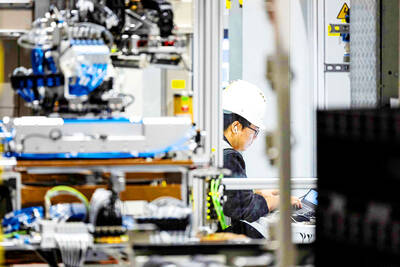
France is developing domestic production of electric vehicle (EV) batteries with an eye on industrial independence, but Asian experts are proving key in launching operations. In the Verkor factory outside the northern city of Dunkirk, which was inaugurated on Thursday, foreign specialists, notably from South Korea and Malaysia, are training the local staff. Verkor is the third battery gigafactory to open in northern France in a region that has become known as “Battery Valley.” At the Automotive Energy Supply Corp (AESC) factory near the city of Douai, where production has been under way for several months, Chinese engineers and technicians supervise French recruits. “They


 RSS
RSS