


Hundreds of orange robots zoomed and whizzed back and forth like miniature bumper cars — but instead of colliding, they were following a carefully plotted path to transport thousands of items ordered from online giant Amazon.com Inc.
A young woman fitted out in a red safety vest, with pouches full of sensors and radio transmitters on her belt and a tablet in hand, moved through their complicated choreography.
This robot ballet took place at the new Amazon order fulfillment center that opened on Staten Island in New York in September last year.
In an 80,000m2 space filled with the whirring sounds of machinery, the Seattle-based e-commerce titan has deployed some of the most advanced instruments in the rapidly growing field of robots capable of collaborating with humans.
The high-tech vest, worn at Amazon warehouses since last year, is key to the whole operation — it allows 21-year-old Deasahni Bernard to safely enter the robot area to pick up an object that has fallen off its automated host, for example, or check if a battery needs replacing.
Bernard only has to press a button and the robots stop or slow or readjust their dance to accommodate her.
Amazon counts more than 25 robotic centers, which Amazon Robotics chief technologist Tye Brady said have changed the way the company operates.
“What used to take more than a day now takes less than an hour,” he said, adding that they are able to fit about 40 percent more goods inside the same footprint.
For some, these fulfillment centers are a perfect illustration of the looming risk of humans being pushed out of certain business equations in favor of artificial intelligence.
However, Brady said that robot-human collaboration at the Staten Island facility, which employs more than 2,000 people, has given them a “beautiful edge” over the competition.
Bernard, who was a supermarket cashier before starting at Amazon, agreed.
“I like this a lot better than my previous jobs,” she told reporters as Brady looked on approvingly.
What role do Amazon employees play in what Brady calls the human-robot “symphony?”
In Staten Island, on top of tech-vest wearers like Bernard, there are “stowers,” “pickers” and “packers” who respectively load up products, match up products meant for the same customers and build shipping boxes — all with the help of screens and scanners.
At every stage, the goal is to “extend people’s capabilities” so that the humans can focus on problem-solving and intervene if necessary, Brady said.
He is convinced that the use of “collaborative robots” is the key to future human productivity — and job growth.
Since Amazon went all-in on robotics with the 2012 acquisition of logistics robot maker Kiva, gains have been indisputable, Brady said.
They have created 300,000 new jobs, bringing the total number of worldwide Amazon employees up to 645,000, not counting seasonal jobs.
“It’s a myth that robotics and automation kills jobs, it’s just a myth,” Brady said.
“The data really can’t be denied on this: The more robots we add to our fulfillment centers, the more jobs we are creating,” he said, without mentioning the potential for lost jobs at traditional stores.
For Brady, the ideal example of human-robot collaboration is the relationship between R2D2 and Luke Skywalker from Star Wars.
Their partnership, in which R2D2 is always ready to use its computing powers to pull people out of desperate situations “is a great example of how humans and robots can work together,” he said.
However, for Kevin Lynch, an expert in robotics from Northwestern University near Chicago, the development of collaborative robots is “inevitable” and will indeed eventually eliminate certain jobs, such as the final stage of packing at Amazon.
Shares of contract chipmaker Taiwan Semiconductor Manufacturing Co (TSMC, 台積電) came under pressure yesterday after a report that Apple Inc is looking to shift some orders from the Taiwanese company to Intel Corp. TSMC shares fell NT$55, or 2.4 percent, to close at NT$2,235 on the local main board, Taiwan Stock Exchange data showed. Despite the losses, TSMC is expected to continue to benefit from sound fundamentals, as it maintains a lead over its peers in high-end process development, analysts said. “The selling was a knee-jerk reaction to an Intel-Apple report over the weekend,” Mega International Investment Services Corp (兆豐國際投顧) analyst Alex Huang
Taiwan Semiconductor Manufacturing Co (TSMC, 台積電) is expected to remain Apple Inc’s primary chip manufacturing partner despite reports that Apple could shift some orders to Intel Corp, industry experts said yesterday. The comments came after The Wall Street Journal reported on Friday that Apple and Intel had reached a preliminary agreement following more than a year of negotiations for Intel to manufacture some chips for Apple devices. Taiwan Institute of Economic Research (台灣經濟研究院) economist Arisa Liu (劉佩真) said TSMC’s advanced packaging technologies, including integrated fan-out and chip-on-wafer-on-substrate, remain critical to the performance of Apple’s A-series and M-series chips. She said Intel and Samsung
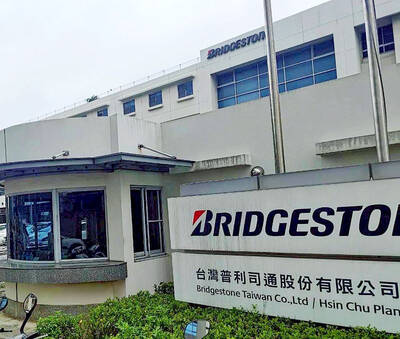
TRANSITION: With the closure, the company would reorganize its Taiwanese unit to a sales and service-focused model, Bridgestone said Bridgestone Corp yesterday announced it would cease manufacturing operations at its tire plant in Hsinchu County’s Hukou Township (湖口), affecting more than 500 workers. Bridgestone Taiwan Co (台灣普利司通) said in a statement that the decision was based on the Tokyo-based tire maker’s adjustments to its global operational strategy and long-term market development considerations. The Taiwanese unit would be reorganized as part of the closure, effective yesterday, and all related production activities would be concluded, the statement said. Under the plan, Bridgestone would continue to deepen its presence in the Taiwanese market, while transitioning to a sales and service-focused business model, it added. The Hsinchu
Taiwan Semiconductor Manufacturing Co (TSMC, 台積電) has approved a capital budget of US$31.28 billion for production expansion to meet long-term development needs during the artificial intelligence (AI) boom. The company’s board meeting yesterday approved the capital appropriation plan for purposes such as the installation of advanced technology capacity and fab construction, the world’s largest contract chipmaker said in a statement. At an earnings conference last month, TSMC forecast that its capital expenditure for this year would be at the higher end of the US$52 billion to US$56 billion range it forecast in January in response to robust demand for 5G, AI and


 RSS
RSS