


As of last week, the value of urban renewal projects in Taipei and New Taipei City totaled NT$85.3 billion (US$2.77 billion) for the year and the figure is bound to exceed NT$100 billion for the year as the projects become a main source of new construction, despite long construction times, the Chinese-language Housing Monthly (住展雜誌) said yesterday.
As of Wednesday last week, there were 39 urban renewal projects in the two cities, up from 31 in all of last year, the magazine said.
“The rest of the year might see an additional NT$25 billion worth of renewal projects, raising the overall volume for the year to NT$110 billion, with the Diamond Tower project on the site of a former public housing complex among those not yet included,” Housing Monthly research manager Ho Shih-chang (何世昌) said.
The volume will soar if Sanyuan Group (三圓建設) and Lung Ling Development Co (龍麟建設), which won bidding for the Diamond Tower contract, launch the project by the end of this year as planned, Ho said.
The Diamond Tower project is for two high-rise, mixed-use buildings on 1,545 ping (5,107m2) of land near the Zhongxiao-Fuxing MRT Station in Taipei.
The Ministry of Finance, which owns 37.36 percent of the land, would own one building and set an example of how the government can guide private money to public construction without spending a dime, ministry officials have said.
Renewal projects have gained force since 2013, with their value more than doubling in 2016 and rising above NT$100 billion last year, Ho said.
The pace might continue to increase due to a lack of undeveloped land in Taipei, which is why the capital accounts for more than 30 percent of renewal projects nationwide, he said.
Taipei’s Zhongshan District (中山) has seen the most investment, with projects there having a combined value of NT$16.2 billion, followed by Zhongcheng District (中正) with NT$11.1 billion, Beitou District (北投) with NT$8.9 billion and Wanhua District (萬華) with NT$8.4 billion, the magazine said.
New Taipei City’s Jhonghe District (中和) is next with NT$7.6 billion, it said.
Beitou, Wanhua and Jhonghe are not considered central or popular and are therefore easier to integrate, Ho said, adding that it took 22 years to overcome resistance among residents over the Diamond Tower project.
Apartments in renewal projects tend to have higher asking prices, leading to a decline in transactions in recent years, Ho said.
The situation has shown improvement this year after builders shifted focus from big to small apartments and cut prices to facilitate transactions, he said.
A stable economy and low interest rates lend support to the property market, he said.
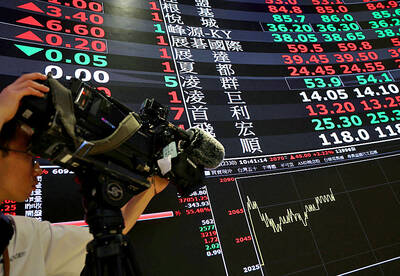
After several years flying high as Asia’s best Nvidia Corp proxy, Taiwan Semiconductor Manufacturing Co (TSMC, 台積電) is increasingly vying with other artificial intelligence (AI) stocks for investor attention. Stock traders are chasing a wider array of beneficiaries as mainstream usage of AI creates demand for hardware beyond the most-advanced chips TSMC makes for Nvidia. Subthemes from the deepening memory crunch to advances in robotics are also luring bids. At the same time, investment caps on single stocks are pushing funds to diversify, while retail investors long familiar with TSMC through its US depositary receipts are being offered a broader set of
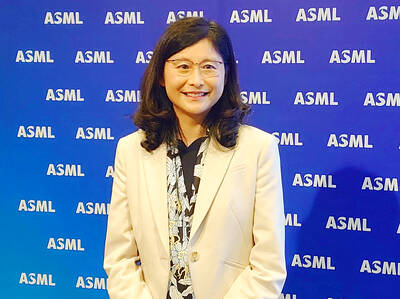
Netherlands-based semiconductor equipment supplier ASML Holding NV yesterday said that it is planning to hire an additional 1,000 people in Taiwan this year in response to growing demand from clients. ASML had previously planned to recruit 600 people this year, but that the plan has been adjusted upward, ASML vice president and ASML Taiwan general manager Grace Wang (汪佳慧) told reporters. ASML has a workforce of more than 4,500 in Taiwan, accounting for about 10 percent of its global total, Wang said. This year’s recruitment campaign would focus on adding people in the customer support, manufacturing and supply chain domains to assist ASML

UNDER MICROSCOPE: Taiwan detained three people who allegedly conspired to buy servers in Taiwan and export them using fraudulent documentation, prosecutors said Nvidia Corp chief executive officer Jensen Huang (黃仁勳) on Saturday urged Super Micro Computer Inc to tighten up on compliance after Taiwan detained three people this week for allegedly making fraudulent declarations about artificial intelligence (AI) servers made by its US partner. The development marked the nation’s first crackdown on semiconductor smuggling, which grew after the US slapped restrictions on exports of high-end chips such as Nvidia AI accelerators to China. Nvidia is “rigorous” in explaining regulations to all of its partners, Huang told reporters after arriving in Taipei. “Ultimately Super Micro has to run their own company,” he said in response to
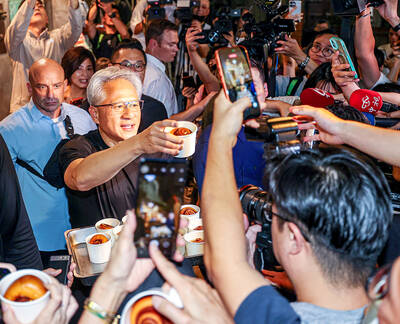
Nvidia Corp yesterday announced that CEO Jensen Huang (黃仁勳) would attend an employee meeting in Taipei tomorrow to celebrate the launch of the company’s Taiwan headquarters project. Huang would attend a gathering at the site of Nvidia’s planned headquarters in Beitou Shilin Technology Park (北投士林科技園區), the company said in a statement. After arriving in Taiwan on Saturday last week, Huang told reporters that he plans to meet with Quanta Computer Inc (廣達) chairman Barry Lam (林百里) and Taiwan Semiconductor Manufacturing Co (TSMC, 台積電) chairman C.C. Wei (魏哲家), and would attend the groundbreaking ceremony for Nvidia’s Taiwan headquarters tomorrow. Nvidia has not yet applied


 RSS
RSS