


Pegatron Corp (和碩) yesterday said that it would continue vertical integration efforts to reduce costs after the its earnings and profitability took a hit in the past quarter.
The the second-biggest assembler of Apple iPhones reported that net income in the second quarter of the year dropped 26.2 percent annually to NT$2.72 billion (US$88.81 million), with revenue rising 12.8 percent annually to NT$271.26 billion.
Earnings per share fell to NT$1.12 last quarter from NT$1.34 in the same period last year.
The revenue contribution from consumer electronics in the April-to-June quarter surged 44 percent annually, benefiting from new customers’ launches of products, including Internet of Things devices and smart watches, the company said.
A weaker New Taiwan dollar also brought in NT$1 billion in foreign exchange gains, the company said.
However, the company saw its gross margin dip to 3.2 percent, from 4.6 percent in the same period last year.
Operating income fell 62.7 percent annually to NT$1.61 billion, down from NT$4.39 billion, while operating margin tumbled 1.2 percentage points to 0.6 percent, from 1.8 percent.
Pegatron blamed a lower capacity utilization rate following a wave of expansion at its subsidiaries in the second half of last year, as well as higher inventories, for the contraction in profitability.
Intensifying competition from Chinese rivals and rising wages at the company’s Chinese production bases also dragged on profitability, it added.
Amid widening losses at its subsidiaries, the company would stay the course on vertical integration, which would keep it competitive, Pegatron chief executive S.J. Liao (廖賜政) said yesterday during an earnings teleconference.
“In the past, delayed shipments from our partners have put our production lines on halt, and we hope that a more vertically integrated approach would prevent such issues in the future,” Liao said.
Looking ahead, the company expects to see notebook shipments rise 15 to 20 percent sequentially this quarter, while desktop computer shipments will continue to decline about 10 percent, it said.
The company’s top line is expected to see stable quarterly growth during the traditional peak season in the second half, Liao said.
Based on last year’s experience, the company might see 100 percent capacity utilization during the peak season, but it is difficult to predict how long the hot streak would last, Liao said.
“The peak season could last between one and four months,” he said.
Components makers and assemblers would be better prepared to weather the persisting shortage of passive components in the second half, he said, adding that during the first half, the global supply chain was caught off-guard by sudden production cuts announced by Japanese manufacturer Murata Manufacturing Co.
The company is also prepared to use production capacity at its plants in Mexico, Taiwan, Southeast Asia and India to mitigate impacts from the escalating US-China trade war.

SECOND-RATE: Models distilled from US products do not perform the same as the original and undo measures that ensure the systems are neutral, the US’ cable said The US Department of State has ordered a global push to bring attention to what it said are widespread efforts by Chinese companies, including artificial intelligence (AI) start-up DeepSeek (深度求索), to steal intellectual property from US AI labs, according to a diplomatic cable. The cable, dated Friday and sent to diplomatic and consular posts around the world, instructs diplomatic staff to speak to their foreign counterparts about “concerns over adversaries’ extraction and distillation of US AI models.” Distillation is the process of training smaller AI models using output from larger, more expensive ones to lower the costs of training a powerful new

Micron Technology Inc is a driving force pushing the US Congress to pass legislation that would put new export restrictions on equipment its Chinese competitors use to make their chips, according to people familiar with the matter. A US House of Representatives panel yesterday was to vote on the “MATCH Act,” a bill designed to close gaps in restrictions on chipmaking equipment. It would also pressure foreign companies that sell equipment to Chinese chipmaking facilities to align with export curbs on US companies like Lam Research Corp and Applied Materials Inc. The bill targets facilities operated by China’s ChangXin Memory Technologies Inc

Singapore-based ride-hailing and delivery giant Grab Holdings’ planned acquisition of Foodpanda’s Taiwan operations has yet to enter the formal review stage, as regulators await supplementary documents, the Fair Trade Commission (FTC) said yesterday. Acting FTC Chairman Chen Chih-min (陳志民) told the legislature’s Economics Committee that although Grab submitted its application on March 27, the case has not been officially accepted because required materials remain incomplete. Once the filing is finalized, the FTC would launch a formal probe into the deal, focusing on issues such as cross-shareholding and potential restrictions on market competition, Chen told lawmakers. Grab last month announced that it would acquire
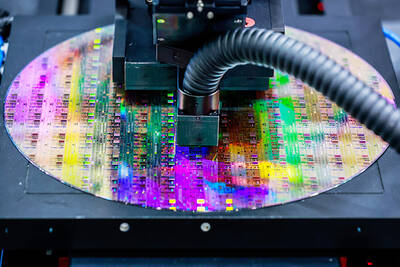
The artificial intelligence (AI) boom has triggered a seismic reshuffling of global equity markets, with Taiwan and South Korea muscling past European nations one by one. With its stock market now valued at nearly US$4.3 trillion, Taiwan surpassed the UK, Europe’s biggest market, earlier this month, data compiled by Bloomberg showed. South Korea is about US$140 billion away from doing the same. The tech-heavy Asian markets have shot past Germany and France in the past seven months. The shift is largely down to massive gains in shares of three companies that provide essential hardware for AI: Taiwan Semiconductor Manufacturing Co (TSMC, 台積電),


 RSS
RSS