


ENTERTAINMENT
M17 to make NYSE debut
M17 Entertainment Ltd (M17娛樂集團), the parent company of live music streaming platform 17 Media, is scheduled to make its US debut on the New York Stock Exchange (NYSE) on Wednesday next week. The Taipei-based company aims to raise US$95 million by offering 7.51 million American depositary receipts at US$10 to US$12, according to the terms of its initial public offering. M17 Entertainment, founded by Jeffrey Huang (黃立成), provides live music streaming and dating app services, mainly in Asia.
ELECTRONICS
Team Group revenue to rise
Team Group Inc (十銓科技), a supplier of memory modules and electronics, yesterday said revenue for this year could rise up to 40 percent from last year, driven by demand for embedded-related, gaming and industrial control products. The Taipei-based company said it plans to in September apply with the Taiwan Stock Exchange for an initial public offering before making a local debut by the end of this year. It reported net profit of NT$242 million (US$8.1 million) for last year, up 84 percent year-on-year, with earnings per share of NT$4.79.
MANUFACTURING
Sentiment up in April: TIER
Sentiment regarding the local manufacturing sector improved in April as exports grew at a double-digit percentage from a year ago, the Taiwan Institute of Economic Research (TIER, 台灣經濟研究院) said in a report yesterday. The composite index for the manufacturing sector rose 1.25 from a month earlier to 11.7, ending two straight months of declines, the institute said. The general business climate, pricing and demand — three of the five factors that make up the composite index for the sector — moved higher, the institute said.
PETROLEUM
CPC to increase LNG prices
State-run refiner CPC Corp, Taiwan (CPC, 台灣中油) yesterday said it has decided to increase prices for liquefied natural gas (LNG) products this month, while keeping the prices for liquefied petroleum gas products unchanged. From today, average prices for LNG products are to increase by NT$0.31 per cubic meter, or 2.99 percent, from last month, CPC said. As a result, an average LNG consumption of between 30m3 and 45m3 per month would mean increased costs of between NT$9.3 and NT$13.95 per household, it said.
MOBILE
Ichia revenue falls 6 percent
Handset keypad maker Ichia Technologies Inc (毅嘉科技) yesterday reported revenue of NT$637 million for last month, down 6 percent from a year earlier and 10 percent from April, as orders from clients began to pick up steam. Last month’s revenue included about NT$509 million in sales of flexible printed circuit integrated components and about NT$130 million from mechanical integrated components, Ichia said in a filing with the Taiwan Stock Exchange.
FINANCE
Assets of OBUs drop 2.3%
The 60 offshore banking units (OBUs) of financial institutions operating in Taiwan had assets totaling US$203.92 billion as of the end of April, down US$4.746 billion, or 2.3 percent, from March, the central bank said on Thursday. The OBUs of 37 local banks held US$181.128 billion in assets, while foreign banks’ 23 OBUs held US$22.792 billion, it said. At the end of April, the primary uses of all OBUs’ funds were discounts and loans, amounting to US$80.678 billion, or 39.6 percent of total assets, it added.

SECOND-RATE: Models distilled from US products do not perform the same as the original and undo measures that ensure the systems are neutral, the US’ cable said The US Department of State has ordered a global push to bring attention to what it said are widespread efforts by Chinese companies, including artificial intelligence (AI) start-up DeepSeek (深度求索), to steal intellectual property from US AI labs, according to a diplomatic cable. The cable, dated Friday and sent to diplomatic and consular posts around the world, instructs diplomatic staff to speak to their foreign counterparts about “concerns over adversaries’ extraction and distillation of US AI models.” Distillation is the process of training smaller AI models using output from larger, more expensive ones to lower the costs of training a powerful new
Micron Technology Inc is a driving force pushing the US Congress to pass legislation that would put new export restrictions on equipment its Chinese competitors use to make their chips, according to people familiar with the matter. A US House of Representatives panel yesterday was to vote on the “MATCH Act,” a bill designed to close gaps in restrictions on chipmaking equipment. It would also pressure foreign companies that sell equipment to Chinese chipmaking facilities to align with export curbs on US companies like Lam Research Corp and Applied Materials Inc. The bill targets facilities operated by China’s ChangXin Memory Technologies Inc

Singapore-based ride-hailing and delivery giant Grab Holdings’ planned acquisition of Foodpanda’s Taiwan operations has yet to enter the formal review stage, as regulators await supplementary documents, the Fair Trade Commission (FTC) said yesterday. Acting FTC Chairman Chen Chih-min (陳志民) told the legislature’s Economics Committee that although Grab submitted its application on March 27, the case has not been officially accepted because required materials remain incomplete. Once the filing is finalized, the FTC would launch a formal probe into the deal, focusing on issues such as cross-shareholding and potential restrictions on market competition, Chen told lawmakers. Grab last month announced that it would acquire
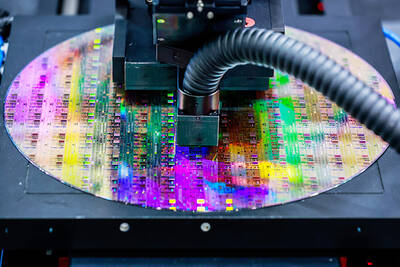
The artificial intelligence (AI) boom has triggered a seismic reshuffling of global equity markets, with Taiwan and South Korea muscling past European nations one by one. With its stock market now valued at nearly US$4.3 trillion, Taiwan surpassed the UK, Europe’s biggest market, earlier this month, data compiled by Bloomberg showed. South Korea is about US$140 billion away from doing the same. The tech-heavy Asian markets have shot past Germany and France in the past seven months. The shift is largely down to massive gains in shares of three companies that provide essential hardware for AI: Taiwan Semiconductor Manufacturing Co (TSMC, 台積電),


 RSS
RSS