


Taiwan this year fell three places to 17th in a global competitiveness ranking by Lausanne, Switzerland-based International Institute for Management Development (IMD).
It was the lowest ranking since 2009, after Taiwan lost points in the areas of economic performance, foreign investment and the labor market, the business school said in its annual report.
The result placed Taiwan behind major trade rivals Hong Kong, Singapore and China, although it managed to stay ahead of South Korea and Japan.
The school graded 63 economies in terms of economic performance, government and business efficiency and infrastructure.
Taiwan’s economic showing dropped two places, dragged by a serious retreat in foreign investment, the report said, as corporate managers voiced concern that the global industrial realignment might dim its economic outlook.
Persistent overconcentration on a few export destinations and products weighed on the nation’s international trade ranking, even though account surpluses continued to support GDP growth, the school said.
Electronic components, especially semiconductors, underpinned the nation’s outbound shipments to major trading partners, with China taking a 40 percent share, government data showed.
Nations at the top of the ranking share an above-par performance across all competitiveness factors, despite a varied competitiveness mix, IMD World Competitiveness Center director Arturo Bris said.
Asian nations that have fallen in the ranking this year show a need to improve their tangible and scientific infrastructure, Bris added.
However, Taiwan is the exception, the school said on its Web site.
Taiwan’s business efficiency fell five positions to 20th, while the labor market score fell sharply, the report showed.
Labor rules that require higher overtime pay and shorter working hours have estranged corporate managers, the National Development Council said.
“The retreat is an alarm signaling an economic downturn. The government will press ahead with the pursuit of an inclusive economic growth model that will benefit all participants,” council Minister Chen Mei-ling (陳美伶) told a news conference.
It is not surprising that China outpaces Taiwan in competitiveness, because it has spent more money on enhancing infrastructure, Chen said.
The government has been removing regulatory barriers and introducing measures to attract foreign investment and talent, she said. “It might take more time for foreign research institutes to observe positive changes.”
Foreign investments and tourist numbers have showed signs of growth this year, while the government is considering relaxing immigration rules, she said, after IMD warned that the brain drain problem might hurt Taiwan if left unaddressed.
The nation’s competitiveness has stagnated, while other nations have gained headway, Taiwan Institute of Economic Research (台灣經濟研究院) economist Gordon Sun (孫明德) said.
Firms in China and elsewhere are recruiting skilled labor from Taiwan with better compensation offers, Sun said, adding that the issue merits more attention from policymakers and firms.
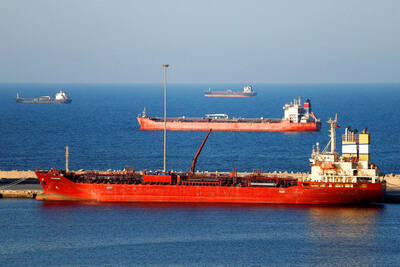
HORMUZ ISSUE: The US president said he expected crude prices to drop at the end of the war, which he called a ‘minor excursion’ that could continue ‘for a little while’ The United Arab Emirates (UAE) and Kuwait started reducing oil production, as the near-closure of the crucial Strait of Hormuz ripples through energy markets and affects global supply. Abu Dhabi National Oil Co (ADNOC) is “managing offshore production levels to address storage requirements,” the company said in a statement, without giving details. Kuwait Petroleum Corp said it was lowering production at its oil fields and refineries after “Iranian threats against safe passage of ships through the Strait of Hormuz.” The war in the Middle East has all but closed Hormuz, the narrow waterway linking the Persian Gulf to the open seas,
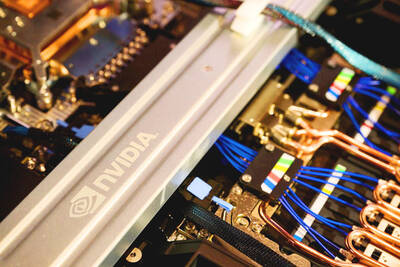
RATIONING: The proposal would give the Trump administration ample leverage to negotiate investments in the US as it decides how many chips to give each country US officials are debating a new regulatory framework for exporting artificial intelligence (AI) chips and are considering requiring foreign nations to invest in US AI data centers or security guarantees as a condition for granting exports of 200,000 chips or more, according to a document seen by Reuters. The rules are not yet final and could change. They would be the first attempt to regulate the flow of AI chips to US allies and partners since US President Donald Trump’s administration said it rescinded its predecessor’s so-called AI diffusion rules. Those rules sought to keep a significant amount of AI

Apple Inc increased iPhone production in India by about 53 percent last year and now makes a quarter of its marquee devices there, reflecting the US company’s efforts to avoid tariffs on China. The company assembled about 55 million iPhones in India last year, up from 36 million a year earlier, people familiar with the matter said, asking not to be named because the numbers aren’t public. Apple makes about 220 million to 230 million iPhones a year globally, with India’s share of the total increasing rapidly. Apple has accelerated its expansion in the world’s most populous country in recent years, bolstered

HEADWINDS: The company said it expects its computer business, as well as consumer electronics and communications segments to see revenue declines due to seasonality Pegatron Corp (和碩) yesterday said it aims to grow its artificial intelligence (AI) server revenue more than 10-fold this year from last year, driven by orders from neocloud solutions clients and large cloud service providers. The electronics manufacturing service provider said AI server revenue growth would be driven primarily by the Nvidia Corp GB300 server platform. Server shipments are expected to increase each quarter this year, with the second half likely to outperform the first half, it said. The AI server market is expected to broaden this year as more inference applications emerge, which would drive demand for system-on-chip, application-specific integrated circuits


 RSS
RSS