

Hon Hai Precision Industry Co (鴻海精密) on Saturday confirmed that its Internet-focused subsidiary, Foxconn Industrial Internet Co Ltd (FII, 富士康工業互聯網), has received official authorization for an initial public offering (IPO) in Shanghai.
After the China Securities Regulatory Commission granted its official approval, FII was expected to consult with its financial advisers and underwriters to set an exact date and publish a prospectus for the listing.
FII is expected to launch an IPO on the Shanghai Stock Exchange at the end of this month or early next month to take advantage of an inclusion of yuan-denominated A-shares into global index provider MSCI Inc’s Emerging Markets Index later next month, analysts said.
The index is being closely watched by foreign institutional investors who are planning investments in emerging markets such as Shanghai.
FII is likely to set the listing price at 13.8 yuan, market sources said.
The company’s IPO application was submitted on Feb. 1 to the commission, which processed it on March 8 and granted its approval after only 36 days, catching the market off-guard, as the process usually takes about a year.
The quick review was an indication of China’s plan to lure high-tech firms, as it prepares to develop its technology and innovation sectors, dealers said.
However, the commission did not issue its official approval for the listing until Friday last week, because the IPO would absorb too much funding from the market based on FII’s original plan to raise 27.25 billion yuan (US$4.3 billion), Chinese media said on Saturday.
Reporters said it was possible that FII would agree to lower its goal in order to obtain official approval.
Hon Hai is expected to retain a 85 percent stake in FII after the IPO, the original prospectus showed.
FII’s investment in China is to focus on a wide range of new technologies, such as cloud-based computing, high-performance computing, 5G Internet communication solutions for industry, data centers and smartphone-related applications, Hon Hai said.
The listing would allow FII to tap the rapid growth of the Internet communication and cloud-based computing industries in China, Hon Hai said.
FII posted 15.87 billion yuan in net profit for last year, up 10.45 percent from a year earlier, while its sales grew 30 percent year-on-year to 354.54 billion yuan.
Its prospectus shows that its major clients include Amazon.com Inc, Apple Inc, Dell Inc, Arris International PLC, Huawei Technologies Co (華為) and Lenovo Group Ltd (聯想).
The top five clients accounted for more than 70 percent of FII’s revenue, the prospectus showed.
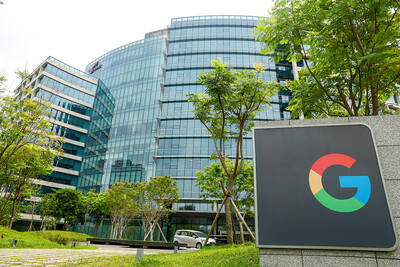
READJUSTMENT? Despite the rumors, a senior Google official said that the company plans to expand its AI research center in Taipei’s Shilin District Google Taiwan is reducing its workforce as the company continues to adjust operations to improve efficiency and focus resources on core goals, the Chinese-language Liberty Times (sister paper of the Taipei Times) reported yesterday. The Alphabet Inc unit said the organizational adjustments have begun and would continue, even though it did not put a figure on the number of potential job cuts or specify the affected departments in its Taiwan operations. The company’s response came after rumors circulated on social media about major job cuts at Google Taiwan. Some posts said the downsizing would target the company’s consumer electronics-related departments

Taiwan Semiconductor Manufacturing Co (TSMC, 台積電) is accelerating capacity expansion fivefold this year, but it is still unable to keep up with the booming demand for artificial intelligence (AI), TSMC deputy cochief operating officer Cliff Hou (侯永清) said yesterday. This year alone, the company is building 25 chip manufacturing fabs and advanced packaging facilities worldwide, including 13 plants in Taiwan, which is unprecedented, Hou said at a CEO Summit fireside chat at Semicon Taiwan in Taipei. In the past, the company was able to build five or six factories a year, said Hou, who is also chairman of the Taiwan Semiconductor Industry
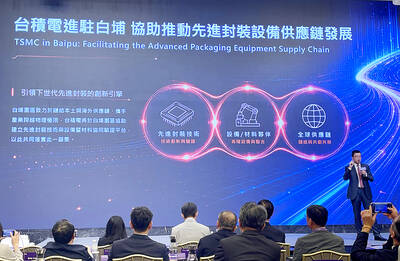
EXPANSION: The 3-hectare site would include small clean rooms and laboratories as well as a world-class training base for advanced packaging talent, the company said Taiwan Semiconductor Manufacturing Co (TSMC, 台積電) is to establish a presence in the Baipu Industrial Park (白埔產業園區) in Kaohsiung to accelerate the testing and validation of semiconductor materials and equipment, a company executive said on Tuesday. The company is working with the Ministry of Economic Affairs and the Kaohsiung City Government on the plan, which is expected to improve validation efficiency by 25 to 50 percent, TSMC vice president of advanced packaging technology and service Jun He (何軍) said at a 3D IC global summit held ahead of the Semicon Taiwan trade show, which opened in Taipei yesterday. TSMC would also conduct
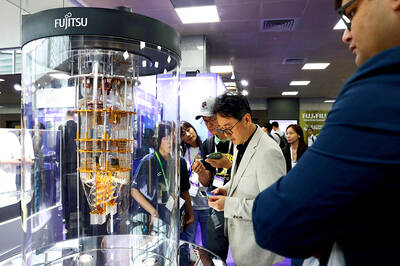
Visitors look at a 64-qubit superconducting quantum computer on display at the Fujitsu booth at the Semicon Taiwan trade show in Taipei yesterday.


 RSS
RSS