


Most Taiwanese businesses are incapable of making industrial robots, computing technology supplier Adlink Technology Inc (凌華科技) chairman Jim Liu (劉鈞) told a forum in Taipei yesterday.
However, local businesses have filled niche markets for service robots and automatic guided vehicles (AGVs), he said.
Liu made what he called “annoying remarks” at a forum in the Taipei World Trade Center, which is one of the side events at the three-day Future Tech exposition that ends today.
It is difficult for other Taiwanese manufacturers to tap into the market of robots as most of the market share was seized by the top robot makers two to three decades ago, Liu said.
About 40 percent of the world’s computers for industrial robots are made by Adlink, he said.
Nonetheless, the development of robots has entered a third generation, which highlights “connectivity” and relies on the high reliability, low latency and wireless communication within the technological infrastructure, he said.
Most manufacturers of industrial robotic arms are less familiar with communications technology, which could become a niche market for Taiwanese businesses, Liu said.
Local businesses hoping to enter the robot manufacturing market should think about two things: How to have access to real-time data connectivity and how to build artificial intelligence applications into robots, he said.
As the nation has good communications infrastructure, domestic manufacturers could start by making mobile robots such as AGVs and service robots for use in medical and long-term care services, he said.
Forum speaker Huang Chun-ju (黃俊儒), a professor at National Chung Cheng University, said society needs to improve promotion of technological knowledge.
Most of Taiwan’s good scientific news reports appear around the time when Nobel laureates of scientific awards are announced, but those at other times are more concerned about celebrity gossip or report incorrect information, Huang said.
One example was of a doctor in a local TV drama series who placed electrocardiography patches on a patient’s forehead instead of on the patient’s chest, he said.
Seeing movies — such as An Inconvenient Truth and Interstella — can inspire discussions about science, he said, adding that Taiwanese should create better narratives, which present correct information and scenarios that are closer to real life.
Organized by the Ministry of Science and Technology and the Taipei Computer Association, the exposition is to announce the most popular technological award among 109 showcased technologies today.
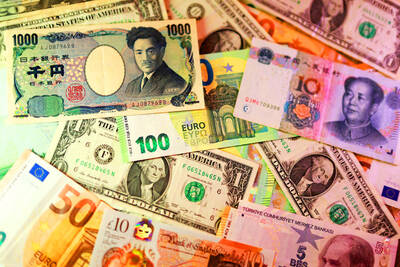
Taiwan’s foreign exchange reserves fell below the US$600 billion mark at the end of last month, with the central bank reporting a total of US$596.89 billion — a decline of US$8.6 billion from February — ending a three-month streak of increases. The central bank attributed the drop to a combination of factors such as outflows by foreign institutional investors, currency fluctuations and its own market interventions. “The large-scale outflows disrupted the balance of supply and demand in the foreign exchange market, prompting the central bank to intervene repeatedly by selling US dollars to stabilize the local currency,” Department of Foreign

ENERGY ISSUES: The TSIA urged the government to increase natural gas and helium reserves to reduce the impact of the Middle East war on semiconductor supply stability Chip testing and packaging service provider ASE Technology Holding Co (日月光投控) yesterday said it planned to invest more than NT$100 billion (US$3.15 billion) in building a new advanced chip testing facility in Kaohsiung to keep up with customer demand driven by the artificial intelligence (AI) boom. That would be included in the company’s capital expenditure budget next year, ASE said. There is also room to raise this year’s capital spending budget from a record-high US$7 billion estimated three months ago, it added. ASE would have six factories under construction this year, another record-breaking number, ASE chief operating officer Tien Wu
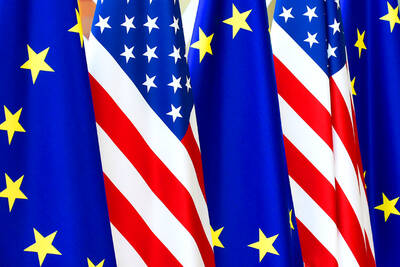
The EU and US are nearing an agreement to coordinate on producing and securing critical minerals, part of a push to break reliance on Chinese supplies. The potential deal would create incentives, such as minimum prices, that could advantage non-Chinese suppliers, according to a draft of an “action plan” seen by Bloomberg. The EU and US would also cooperate on standards, investments and joint projects, as well as coordinate on any supply disruptions by countries like China. The two sides are additionally seeking other “like-minded partners” to join a multicountry accord to help create these new critical mineral supply chains, which feed into

For weeks now, the global tech industry has been waiting for a major artificial intelligence (AI) launch from DeepSeek (深度求索), seen as a benchmark for China’s progress in the fast-moving field. More than a year has passed since the start-up put Chinese AI on the map in early last year with a low-cost chatbot that performed at a similar level to US rivals. However, despite reports and rumors about its imminent release, DeepSeek’s next-generation “V4” model is nowhere in sight. Speculation is also swirling over the geopolitical implications of which computer chips were chosen to train and power the new


 RSS
RSS