


The Taiwan Bicycle Exporters’ Association yesterday voiced optimism about the outlook of the nation’s bicycle manufacturing industry next year, given an upward trend in the average selling price of bike exports.
In the first 10 months of this year, the average selling price of an exported bicycle was US$540.76, a 10.5 percent increase from US$489.53 in the same period last year, data compiled by the Taiwan External Trade Development Council (TAITRA, 外貿協會) showed.
The unit price reflects the competitiveness of Taiwanese bicycle manufacturers, association secretary-general Gina Chang (張蕙娟) told reporters after a news conference, adding that the decline in bike export numbers might be short term.
From January to October, the nation’s exports of nonelectric bicycles totaled US$1.067 billion, a 13.16 percent decrease from US$1.228 billion in the same period last year, with overseas shipments falling 21.33 percent to 1.97 million units, TAITRA data showed.
Sales over that period for the nation’s largest bicycle maker, Giant Manufacturing Co Ltd (巨大機械), dropped 4.82 percent year-on-year to NT$46.15 billion (US$1.54 billion), while Merida Industry Co’s (美利達) revenue fell 3.39 percent to NT$18.49 billion, the companies’ filings with the Taiwan Stock Exchange showed.
The downturn in exports could be attributed to slower customer demand in major markets, as the global economy has not yet fully recovered from a recession over the past few years, the association said.
Shipments to the US, the sector’s largest export destination, fell 2.79 percent in the first 10 months, while exports to the Netherlands and the UK dropped 6.74 percent and 20.9 percent respectively, TAITRA data showed.
“However, worldwide demand is expected to pick up next year amid improving sentiment in Europe’s economies,” Chang said, without providing a detailed growth forecast.
The strong growth momentum in the electric bicycle and bicycle component sectors could also lend support to the local industry in coming years, as electric bikes and high-end bike parts have begun to gain acceptance and technological thresholds for those products are usually higher, he said.
Higher entry barriers enable Taiwanese bicycle makers to compete with their Chinese peers, which mainly supply low-priced models, Chang said.
Taiwan’s electric bicycle exports in the first 10 months totaled US$196 million, a 70.83 percent surge from US$115 million a year earlier, while bicycle component shipments rose 11.89 percent year-on-year from US$873 million to US$977 million, TAITRA data showed.
Eyeing long-term potential in the electric bicycle market, Giant aims to lift its revenue contribution from electric bikes to 10 percent by 2022, compared with last year’s 7 percent, company officials said earlier this year.

GROWING OWINGS: While Luxembourg and China swapped the top three spots, the US continued to be the largest exposure for Taiwan for the 41st consecutive quarter The US remained the largest debtor nation to Taiwan’s banking sector for the 41st consecutive quarter at the end of September, after local banks’ exposure to the US market rose more than 2 percent from three months earlier, the central bank said. Exposure to the US increased to US$198.896 billion, up US$4.026 billion, or 2.07 percent, from US$194.87 billion in the previous quarter, data released by the central bank showed on Friday. Of the increase, about US$1.4 billion came from banks’ investments in securitized products and interbank loans in the US, while another US$2.6 billion stemmed from trust assets, including mutual funds,

AI TALENT: No financial details were released about the deal, in which top Groq executives, including its CEO, would join Nvidia to help advance the technology Nvidia Corp has agreed to a licensing deal with artificial intelligence (AI) start-up Groq, furthering its investments in companies connected to the AI boom and gaining the right to add a new type of technology to its products. The world’s largest publicly traded company has paid for the right to use Groq’s technology and is to integrate its chip design into future products. Some of the start-up’s executives are leaving to join Nvidia to help with that effort, the companies said. Groq would continue as an independent company with a new chief executive, it said on Wednesday in a post on its Web

Even as the US is embarked on a bitter rivalry with China over the deployment of artificial intelligence (AI), Chinese technology is quietly making inroads into the US market. Despite considerable geopolitical tensions, Chinese open-source AI models are winning over a growing number of programmers and companies in the US. These are different from the closed generative AI models that have become household names — ChatGPT-maker OpenAI or Google’s Gemini — whose inner workings are fiercely protected. In contrast, “open” models offered by many Chinese rivals, from Alibaba (阿里巴巴) to DeepSeek (深度求索), allow programmers to customize parts of the software to suit their
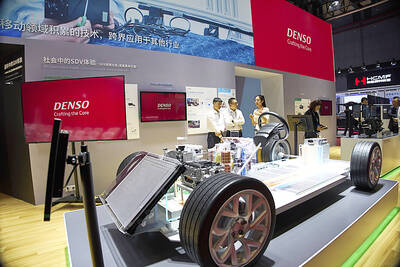
JOINT EFFORTS: MediaTek would partner with Denso to develop custom chips to support the car-part specialist company’s driver-assist systems in an expanding market MediaTek Inc (聯發科), the world’s largest mobile phone chip designer, yesterday said it is working closely with Japan’s Denso Corp to build a custom automotive system-on-chip (SoC) solution tailored for advanced driver-assistance systems and cockpit systems, adding another customer to its new application-specific IC (ASIC) business. This effort merges Denso’s automotive-grade safety expertise and deep vehicle integration with MediaTek’s technologies cultivated through the development of Media- Tek’s Dimensity AX, leveraging efficient, high-performance SoCs and artificial intelligence (AI) capabilities to offer a scalable, production-ready platform for next-generation driver assistance, the company said in a statement yesterday. “Through this collaboration, we are bringing two


 RSS
RSS