


Business confidence among entrepreneurs in Myanmar dropped “drastically” this year due to unclear economic policy, a survey showed yesterday, amid growing frustration over Burmese State Counselor Aung San Suu Kyi’s management of the fledgling economy.
Aung San Suu Kyi has identified economic reform as a key goal to complete Myanmar’s democratic transition after decades of isolation under military rule, but the sluggish pace of change has disappointed many in one of the region’s poorest nations.
Investors are also wary that Myanmar might face reinstatement of some sanctions over its treatment of its Rohingya minority, further threatening Aung San Suu Kyi’s promise of a reformist government that would attract much-needed foreign investment.
Photo: EPA
Myanmar’s short-term business confidence dropped to 49 percent this year from 73 percent a year ago, according to a survey by consultancy Roland Berger and the Union of Myanmar Federation of Chambers of Commerce and Industry.
The study, which reflects views of about 500 local and international business owners in Myanmar, said the “lack of a clear economic policy and plan” is to blame for the drop.
“What the private sector seems to be looking for are much more specific plans, endorsed by the government,” said Thomas Klotz, managing partner of Roland Berger in Southeast Asia.
“What is missing so far is the communication of an overall economic transformation roadmap, with clear targets, timeline and quick wins,” he said.
The survey was conducted earlier this year before the latest violence in Myanmar’s western Rakhine state that the UN said was “ethnic cleansing,” and which Klotz said was “likely to have further reduced investor confidence in Myanmar.”
Other challenges facing companies in Myanmar include lack of trained staff, unpredictable legislative environment and selective law enforcement, the survey showed.
Reuters exclusively reported on Monday that Myanmar would delay a long-awaited corporate reform that would open the door further to foreign investment, dealing a fresh blow to investor confidence in Aung San Suu Kyi’s administration.
Once one of the strongest economies in Southeast Asia before independence in 1948, Myanmar sank into poverty after decades of central planning and a failed experiment with socialism that involved the nationalization of many of its industries.
Myanmar’s ruling generals ceded power to a semi-civilian government in 2011, which embarked on sweeping economic reforms and slowly began loosening their grip on business, but their associates continue to dominate large parts of the economy.
The government last year issued a thin economic policy that many said lacked detail or plans for how to accomplish the goals.
In April, Myanmar passed a long-delayed investment law, simplifying procedures and giving foreign investors equal treatment to the locals.
Growth in foreign investment and GDP have slowed since Aung San Suu Kyi’s National League for Democracy took office last year after years of junta-era rules.
Myanmar recorded a monthly average foreign investment of US$739 million so far this year — below levels reported in 2015 under the former military-backed government, according to Roland Berger.
The IMF had downgraded Myanmar’s GDP growth forecast this year to 6.7 percent from 7 percent.
However, Klotz said 88 percent of business owners remained optimistic about Myanmar’s long-term outlook thanks to the potential of the market of more than 50 million people.
“‘More and faster’ will hopefully be the motto for the government’s economic agenda in 2018,” he said.
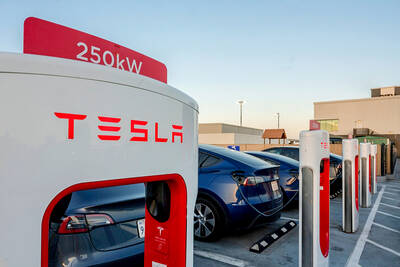
NEW IMPORTS: Car dealer PG Union Corp said it would consider introducing US-made models such as the Jeep Grand Cherokee and Stellantis’ RAM 1500 to Taiwan Tesla Taiwan yesterday said that it does not plan to cut its car prices in the wake of Washington and Taipei signing the Agreement on Reciprocal Trade on Thursday to eliminate tariffs on US-made cars. On the other hand, Mercedes-Benz Taiwan said it is planning to lower the price of its five models imported from the US after the zero tariff comes into effect. Tesla in a statement said it has no plan to adjust the prices of the US-made Model 3, Model S and Model X as tariffs are not the only factor the automaker uses to determine pricing policies. Tesla said

OpenAI has warned US lawmakers that its Chinese rival DeepSeek (深度求索) is using unfair and increasingly sophisticated methods to extract results from leading US artificial intelligence (AI) models to train the next generation of its breakthrough R1 chatbot, a memo reviewed by Bloomberg News showed. In the memo, sent on Thursday to the US House of Representatives Select Committee on China, OpenAI said that DeepSeek had used so-called distillation techniques as part of “ongoing efforts to free-ride on the capabilities developed by OpenAI and other US frontier labs.” The company said it had detected “new, obfuscated methods” designed to evade OpenAI’s defenses
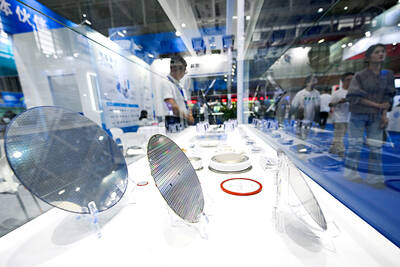
China’s top chipmaker has warned that breakaway spending on artificial intelligence (AI) chips is bringing forward years of future demand, raising the risk that some data centers could sit idle. “Companies would love to build 10 years’ worth of data center capacity within one or two years,” Semiconductor Manufacturing International Corp (SMIC, 中芯) cochief executive officer Zhao Haijun (趙海軍) said yesterday on a call with analysts. “As for what exactly these data centers will do, that hasn’t been fully thought through.” Moody’s Ratings projects that AI-related infrastructure investment would exceed US$3 trillion over the next five years, as developers pour eye-watering sums
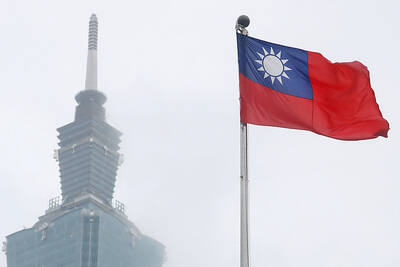
Bank of America Corp nearly doubled its forecast for the nation’s economic growth this year, adding to a slew of upgrades even after a rip-roaring last year propelled by demand for artificial intelligence (AI). The firm lifted its projection to 8 percent from 4.5 percent on “relentless global demand” for the hardware that Taiwanese companies make, according to a note dated yesterday by analysts including Xiaoqing Pi (皮曉青). Taiwan’s GDP expanded 8.63 percent last year, the fastest pace since 2010. The increase “reflects our sustained optimism over Taiwan’s technology driven expansion and is reinforced by several recent developments,” including a more stable currency,


 RSS
RSS