


The nation’s textile exports are forecast to grow 5 percent this year, thanks to improving customer demand worldwide, the Taiwan Textile Federation said yesterday.
In the first nine months of the year, exports of Taiwan’s textile products reached US$7.55 billion, edging up 1.5 percent from the same period last year, statistics compiled by the Ministry of Finance showed.
The growth momentum is expected to extend into the fourth quarter amid improving industry sentiment, federation secretary-general Justin Huang (黃偉基) said at a news conference for this year’s Taipei Innovative Textile Application Show (TITAS).
“Taiwanese textile suppliers will also benefit from the 2020 Tokyo Olympics over the coming years, as local companies are strong producers of functional wear and high-performance sportswear for athletes, “ Huang said, citing textile maker Far Eastern New Century Corp (遠東新世紀).
Far Eastern New Century, which mainly fabricates polyester-related materials, has teamed up with Adidas AG this year to manufacture running shoes made from reclaimed and recycled ocean trash.
“That kind of new product [with higher technical thresholds] will enable Taiwanese textile makers to differentiate themselves from their Chinese competitors in the global market,” Huang said.
Commenting on the industry’s outlook, Huang said that the emergence of e-commerce operators has gradually changed the supply chains in the global retailing industry, but that it would only have a limited impact on local textile and fabric companies.
Some US-based e-commerce operators are trying to manufacture low-priced apparel by themselves, but Taiwanese films still hold niches in the functional and sportswear markets, he said.
The three-day TITAS this year is to exhibit a variety of functional wear, smartwear featuring connectivity technologies, as well as recycled and sustainable textiles with a focus on having a lower carbon footprint, the federation said.
A total of 383 textile manufacturers are to use 789 booths to exhibit their latest products at the three-day event, which is to begin on Monday at the Taipei World Trade Center’s Nangang Exhibition Hall.
Buyers from more than 100 international brands are to participate in the event, which is forecast to generate orders totaling US$66 million this year, a 10 percent increase over last year’s US$60 million, the federation said.
Most top players in Taiwan’s textile and apparel industry are to take part in the event, including Far Eastern New Century, Eclat Textile Co (儒鴻), Lealea Enterprise Co (力麗) and Tex-ray Industrial Co Ltd (南緯實業).
However, key members of industrial conglomerate Formosa Plastics Group (台塑集團) — such as Formosa Chemicals & Fibre Corp (台化) and Formosa Taffeta Co (福懋興業) — are not to join the show this year, according to the participants list provided by the federation.

SECOND-RATE: Models distilled from US products do not perform the same as the original and undo measures that ensure the systems are neutral, the US’ cable said The US Department of State has ordered a global push to bring attention to what it said are widespread efforts by Chinese companies, including artificial intelligence (AI) start-up DeepSeek (深度求索), to steal intellectual property from US AI labs, according to a diplomatic cable. The cable, dated Friday and sent to diplomatic and consular posts around the world, instructs diplomatic staff to speak to their foreign counterparts about “concerns over adversaries’ extraction and distillation of US AI models.” Distillation is the process of training smaller AI models using output from larger, more expensive ones to lower the costs of training a powerful new
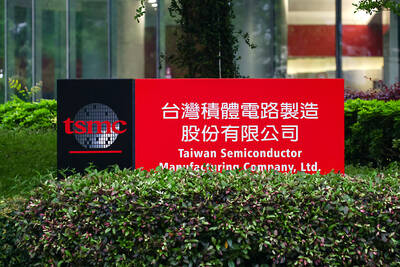
Shares of Taiwan Semiconductor Manufacturing Co (TSMC, 台積電) have repeatedly hit new highs, but an equity analyst said the stock’s valuation remains within a reasonable range and any pullback would likely be technical. The contract chipmaker’s historical price-to-earnings (P/E) ratio has ranged between 20 and 30, Cathay Futures Consultant Co (國泰證期) analyst Tsai Ming-han (蔡明翰) told Central News Agency. With market consensus projecting that TSMC would post earnings per share of about NT$100 (US$3.17) this year, supported by strong global demand for artificial intelligence (AI) applications, and the stock currently trading at a P/E ratio of below 25, Tsai said the valuation
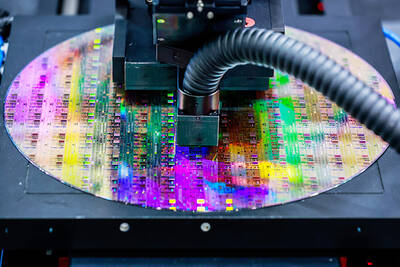
The artificial intelligence (AI) boom has triggered a seismic reshuffling of global equity markets, with Taiwan and South Korea muscling past European nations one by one. With its stock market now valued at nearly US$4.3 trillion, Taiwan surpassed the UK, Europe’s biggest market, earlier this month, data compiled by Bloomberg showed. South Korea is about US$140 billion away from doing the same. The tech-heavy Asian markets have shot past Germany and France in the past seven months. The shift is largely down to massive gains in shares of three companies that provide essential hardware for AI: Taiwan Semiconductor Manufacturing Co (TSMC, 台積電),
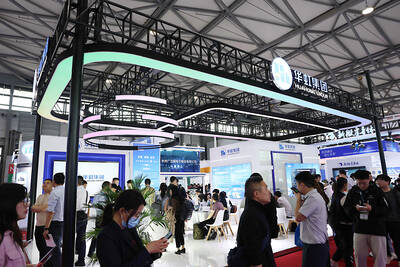
The US Department of Commerce last week ordered multiple chip equipment companies to halt shipments of certain tools to China’s second-largest chipmaker, Hua Hong Semiconductor Ltd (華虹半導體), its latest action to slow the country’s development of advanced chips, two people familiar with the matter said. The department sent letters to at least a handful of companies informing them of restrictions on tools and other materials destined for two Hua Hong facilities US officials believe make China’s most sophisticated chips, the people said. Top US chip equipment companies Lam Research Corp, Applied Materials Inc and KLA Corp, each of which has significant


 RSS
RSS