


Largan Precision Co (大立光), the world’s leading smartphone camera lens supplier, yesterday posted a net profit of NT$7.76 billion (US$256.84 million) for last quarter, up 11.49 percent annually and 64.75 percent quarterly on strong demand.
Earnings per share were NT$57.93, compared with NT$51.91 a year ago and NT$35.16 the previous quarter.
The gross margin gained 1.25 percentage points to 67.93 percent from last quarter, while its operating margin added 0.89 percentage points to 58.92 percent, the company said.
“A better product portfolio was the main reason behind the quarterly improvement in gross margin performance,” Largan chief executive officer Adam Lin (林恩平) told a teleconference yesterday.
Better-priced camera lenses with 10 megapixels or higher accounted for between 70 percent and 80 percent of Largan’s total shipments last quarter, but the production yield did not contribute much to the margin expansion, Lin said.
“I am not satisfied with the yield. I think there’s still room for improvement,” he said.
Largan’s revenue performance this month is estimated to be better than last month’s NT$5.44 billion, Lin said, but the performance for next month is unclear for the time being.
“We are not sure about next month’s shipments, because the clients are making adjustments to their orders,” Lin said.
However, Largan remains committed to gradually increasing the production capacity of its new plant in Taichung, he said, adding that increasing the specifications of handset cameras to bigger apertures and higher resolutions continues to be a major trend in the market.
An increasing number of handset vendors are adopting camera lens that are composed of six layers of plastic, while some clients are to adopt Largan’s camera lens, which is fabricated with seven layers, in the coming year, he said.
Camera lenses with seven layers enable better control of light at a bigger aperture and support higher resolutions, compared with lenses made with six layers, Largan said.
Investors who joined Largan’s teleconference were interested in the company’s development on the 3D sensing camera lens solutions, as Largan is reportedly part of Apple Inc’s 3D sensing supply chains.
Lin said Largan is evaluating the feasibility to completely use glass to produce aspheric lens for 3D sensing technology.
It is also applicable to use layers of glass and plastics, or completely use plastics, to manufacture camera lens for 3D sensing technology, Lin said.
Largan can reopen its full glass production line if the clients decide to adopt full glass lens for 3D sensing, he said.
“The main difference between the 3D sensing camera lens solutions is the choice of material. Other than that, Largan has the advantage in manufacturing and testing,” Lin said.
Largan shares yesterday rose 3.97 percent to close at NT$5,635 on the Taiwan Stock Exchange in Taipei, where the benchmark TAIEX edged up 0.66 percent.
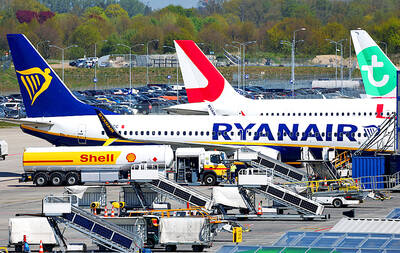
Ryanair, Transavia, Volotea and other low-cost airlines are feeling the financial pain from high jet fuel prices as a result of the Middle East war and are cutting flights. The closure of the Strait of Hormuz has taken a huge chunk of oil supplies off the market, sending the price of jet fuel soaring and triggering fears of shortages that could force airlines to cancel flights. Airlines are not waiting for a lack of supplies to react. “Travel alert: Airlines are cutting thousands of flights right now,” Travel Therapy host Karen Schaler said in an Instagram reel this past weekend.
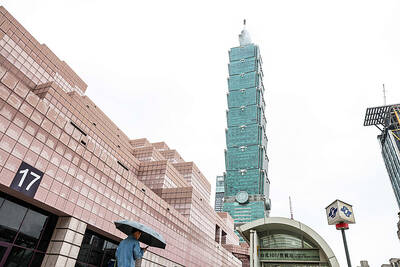
MANAGING RISKS: Taiwan has secured LNG sufficient to cover 95 percent of electricity demand for next month, UBS said, describing the government’s approach as proactive UBS Group AG has raised its forecast for Taiwan’s economic growth this year to 8 percent, up from 6.9 percent previously, and said expansion could reach as high as 8.6 percent if external energy shocks are avoided. The upgrade reflects a stronger-than-expected first-quarter performance and sustained momentum in artificial intelligence (AI)-driven exports, which UBS said are providing a firm foundation for growth despite geopolitical and energy risks. Taiwan’s GDP expanded 13.69 percent year-on-year in the first quarter, the fastest growth since the second quarter of 1987, the Directorate-General of Budget, Accounting and Statistics (DGBAS) reported on Thursday. On a seasonally
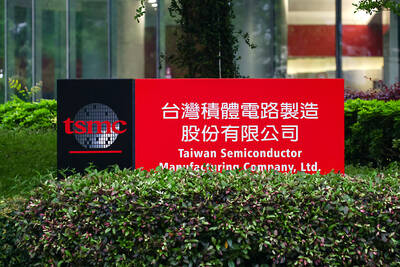
Shares of Taiwan Semiconductor Manufacturing Co (TSMC, 台積電) have repeatedly hit new highs, but an equity analyst said the stock’s valuation remains within a reasonable range and any pullback would likely be technical. The contract chipmaker’s historical price-to-earnings (P/E) ratio has ranged between 20 and 30, Cathay Futures Consultant Co (國泰證期) analyst Tsai Ming-han (蔡明翰) told Central News Agency. With market consensus projecting that TSMC would post earnings per share of about NT$100 (US$3.17) this year, supported by strong global demand for artificial intelligence (AI) applications, and the stock currently trading at a P/E ratio of below 25, Tsai said the valuation
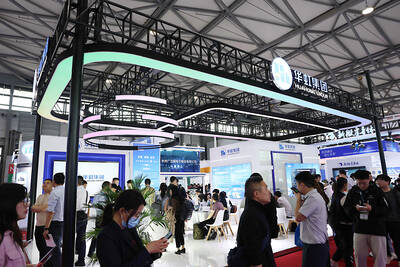
The US Department of Commerce last week ordered multiple chip equipment companies to halt shipments of certain tools to China’s second-largest chipmaker, Hua Hong Semiconductor Ltd (華虹半導體), its latest action to slow the country’s development of advanced chips, two people familiar with the matter said. The department sent letters to at least a handful of companies informing them of restrictions on tools and other materials destined for two Hua Hong facilities US officials believe make China’s most sophisticated chips, the people said. Top US chip equipment companies Lam Research Corp, Applied Materials Inc and KLA Corp, each of which has significant


 RSS
RSS