

The government aims to increase the nation’s electricity reserve margin from 7.5 percent to 15 percent by 2019, and up to 22 percent by 2025, as part of efforts to attract investment, the Ministry of Economic Affairs said yesterday.
“Taiwan Power Co (Taipower, 台電) has nine projects to increase electricity supply. We will ensure the state-run company finishes the projects on time to meet the government’s goal,” Minister of Economic Affairs Shen Jong-chin (沈榮津) told a media conference yesterday after a meeting with Premier William Lai (賴清德).
Shen briefed the ministry on the five main issues facing enterprises when investing in Taiwan, including constrained power and water supply, land and labor shortages, and a shortage of skilled workers.
“We need to work together to solve these issues to improve the nation’s investment environment and boost the economy,” Lai said before the briefing.
The ministry is to draft reward and punishment measures for Taipower, in a bid to push the firm to meet new power generator installation deadlines, Shen said.
Lai has requested that Taipower send the independent environmental impact assessment review committee the environmental impact assessments for the projects as early as it can to prevent any possible delays, Shen said.
The Water Resources Agency is to evaluate the feasibility of connecting the Taipei, New Taipei City, Taoyuan and Hsinchu water supply systems to form a regional water supply network, Shen said.
The network might offer more flexibility in allocating water supplies to enterprises within the region, Shen said.
“The premier said if it is feasible, just do it,” Shen added.
The Industrial Development Bureau is to continue evaluating increasing the floor area ratio in industrial zones from 210 percent to 300 percent, Shen said.
The bureau will do more research on a buyback plan of idled plots across the nation before presenting a more detailed proposal to the premier in the next briefing, Shen said.

Bankers in Hong Kong skipped the summer break as an artificial intelligence (AI)-fueled rush for capital sent share sales to a record, defying a bruising selloff in the city’s stocks. Initial public offerings (IPOs), placements and block trades raised US$47.5 billion in July to last month, the biggest haul ever for the period, data compiled by Bloomberg showed. That pushed fundraising this year above US$92 billion and within reach of the US$112.5 billion record set in 2021. AI has been at the heart of Hong Kong’s deal revival, but this summer brought a new level of intensity. Chinese companies raised ever-larger sums
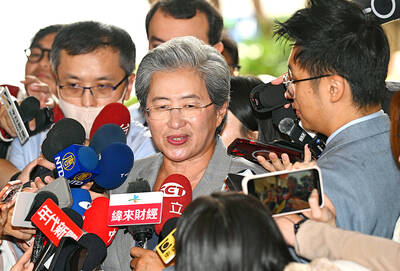
SILICON ISLAND: When asked about geopolitical tensions, Lisa Su said that ‘Taiwan is absolutely critical to the semiconductor supply chain, and very, very critical for AMD’ Advanced Micro Devices Inc (AMD) CEO Lisa Su (蘇姿丰) yesterday said the company plans to “substantially” increase manufacturing capacity next year through its Taiwanese supply chain, particularly with Taiwan Semiconductor Manufacturing Co (TSMC, 台積電), as surging demand for artificial intelligence (AI)-related processors continues to outstrip supply. “It is a very exciting time right now for all kinds of compute, and especially on the CPU [central processing unit] side,” Su said during a visit to Taiwan. “The overall market has increased a lot in 2026, and so we have also increased our own supply and capacity in 2026, but I can
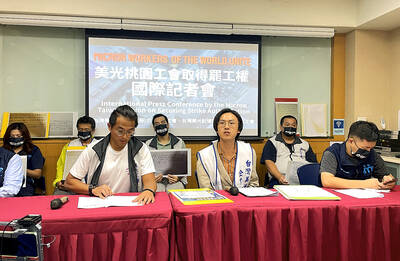
INDUSTRY STANDARD: Most global semiconductor companies have tied employee bonuses directly to corporate profits, the union said, urging Micron to do the same Micron Memory Taiwan Co’s (台灣美光) Taoyuan union secured strike authorization yesterday after a six-day vote, ramping up pressure on management to build a reasonable profit-sharing mechanism. Before the strike, the Taoyuan union “encourages” members to join a protest in Taipei on Oct. 19, union chairman Jerry Lin (林哲瑞) told a news conference in Taipei. The union did not rule out staging a snap strike, Lin said. The union has 2,258 registered members, with 88.3 percent backing the strike, he said. The vote comes as Micron’s board of directors is meeting today and tomorrow in the US. The union expects the board to respond

Elon Musk said his business empire would build and operate Terafab independently, quashing speculation about industry leader Taiwan Semiconductor Manufacturing Co (TSMC, 台積電) swooping in to run his ambitious chipmaking venture. Based in Texas, the Terafab project is Musk’s effort to break into the business of fabricating chips, in service of his companies Tesla Inc and SpaceXAI. While Musk had said that he was in discussions with TSMC, the trillionaire clarified in an X post yesterday that the only matter under consideration is for TSMC potentially leasing some part of the planned site and would not involve any operational role. “Maybe TSMC


 RSS
RSS