


Two years after a US$150 rolling robot captured the hearts of Star Wars devotees, Walt Disney Co is betting fans will shell out the same price for the droid’s dark, evil twin.
On the big screen, BB-9E is to face off against the beloved BB-8 in a new Star Wars installment in December from Disney’s movie studio. The toy, made by Sphero, is part of a collection of fancier gadgets Disney expects will help give its flagging consumer products business a boost.
Get ready for a US$200 goggles-and-light saber combo developed by Disney and Lenovo Group Ltd (聯想) that lets customers duel and play holographic chess; US$200 fighter drones from Propel; and a US$100 programmable robot kit from manufacturer littleBits Electronics Inc.
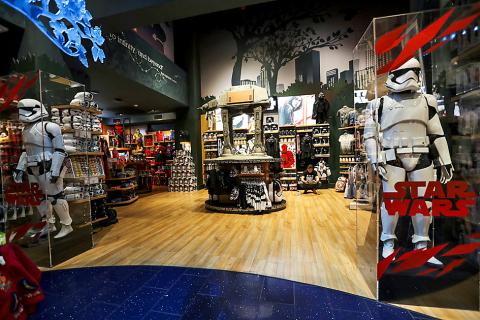
Photo: Bloomberg
“These are all products at a higher price point that we believe are going to help us continue to expand our audience,” said Jimmy Pitaro, the chairman of Disney’s consumer products arm.
Pitaro said his strategy is to offer merchandise for customers at all income levels, to reach as many people as possible.
Burbank, California-based Disney is pulling out all the stops for its new line of products tied to Star Wars: The Last Jedi, which hits theaters on Dec. 15. The rollout has included early reveals of new characters, a big focus on high-tech toys and product releases at 20,000 stores around the world on Friday, an event it calls “Force Friday.”
Pitaro’s division, the largest entertainment licensing operation in the world, could use a shot in the arm. Sales peaked with the release of Star Wars: The Force Awakens in late 2015, and they are down 15 percent in the first nine months of this fiscal year, as other kid-friendly films, such as Beauty and the Beast and Cars 3 failed to deliver the sales surge of predecessors Frozen and The Force Awakens.
Lower costs have allowed the unit to show increased profit for the past two quarters.
Disney, like other companies, has come to realize that modern consumers are looking for experiences as much as things.
This year’s marketing effort includes an augmented reality function on the Star Wars app that lets people see images of star fighters in the sky above 20 worldwide sites like the Eiffel Tower and the Hollywood sign. It also lets shoppers track virtual images in stores.
There is also an ongoing push for female characters, in particular The Last Jedi heroine Rey. Hasbro Inc this year released Forces of Destiny, an all-female line of US$22, 28cm poseable figures based on Star Wars characters that are also featured in short films viewable online.
“We’re basically partnering with Hasbro here to create a new category,” Pitaro said. “It’s not really a doll and it’s not really an action figure, it’s what we’re calling adventure figures.”
Whether all this allows Disney to top its previous Star Wars merchandise sales and reignite growth in its consumer products business remains to be seen.
The Force Awakens was the first Star Wars film in 10 years, so there was a lot of pent-up demand from long-time fans for new items. The Last Jedi is the third film in three years.
“It’s ludicrous to think this will do the same volume levels as Force Awakens, but it will still be quite a huge number,” said Marty Brochstein, who heads industry relations at the International Licensing Industry Merchandisers Association. “Most companies would love to have Disney’s level of success.”
Most would like to have customers like Harrison Tanji and his wife Danielle Jack, who were among the 30 people waiting in line at a Toys “R” Us store in Los Angeles at midnight on Friday morning, when the new products were first available for sale.
They spent US$240 picking up a Porg plush toy, Funko bobblehead and several Luke Skywalker action figures to add to a collection that already fills a room in their house.
Tanji said the crowd was not nearly what it was 18 years ago when he and friends waited outside a Toys “R” Us for a “Midnight Madness” event tied to the release of Star Wars: Episode I — The Phantom Menace.
There are more stores selling Star Wars products these days, he said, and it is harder to find an item that will rise in value like the earlier merchandise has.
Like Tanji and Jack, many passionate Star Wars toy buyers are collectors who look to eventually profit off at least some of their purchases, and given the hour, a lot of the people showing up for an early crack at the new merchandise on Friday were adults.
Mario Santiago, a 22-year-old background actor, arrived at a Target store in West Hollywood, California, at 9:30pm and was fourth place in a line of about 20 people awaiting the midnight debut.
He hoped to score some of Hasbro’s Black Series action figures and a Porg, a cuddly new creature he thinks will be a big hit.
“I’m going to be a geek for tonight,” he said.
Shares of contract chipmaker Taiwan Semiconductor Manufacturing Co (TSMC, 台積電) came under pressure yesterday after a report that Apple Inc is looking to shift some orders from the Taiwanese company to Intel Corp. TSMC shares fell NT$55, or 2.4 percent, to close at NT$2,235 on the local main board, Taiwan Stock Exchange data showed. Despite the losses, TSMC is expected to continue to benefit from sound fundamentals, as it maintains a lead over its peers in high-end process development, analysts said. “The selling was a knee-jerk reaction to an Intel-Apple report over the weekend,” Mega International Investment Services Corp (兆豐國際投顧) analyst Alex Huang
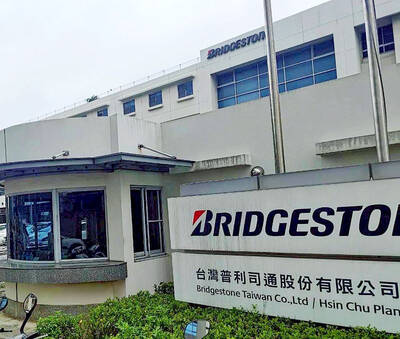
TRANSITION: With the closure, the company would reorganize its Taiwanese unit to a sales and service-focused model, Bridgestone said Bridgestone Corp yesterday announced it would cease manufacturing operations at its tire plant in Hsinchu County’s Hukou Township (湖口), affecting more than 500 workers. Bridgestone Taiwan Co (台灣普利司通) said in a statement that the decision was based on the Tokyo-based tire maker’s adjustments to its global operational strategy and long-term market development considerations. The Taiwanese unit would be reorganized as part of the closure, effective yesterday, and all related production activities would be concluded, the statement said. Under the plan, Bridgestone would continue to deepen its presence in the Taiwanese market, while transitioning to a sales and service-focused business model, it added. The Hsinchu
Taiwan Semiconductor Manufacturing Co (TSMC, 台積電) has approved a capital budget of US$31.28 billion for production expansion to meet long-term development needs during the artificial intelligence (AI) boom. The company’s board meeting yesterday approved the capital appropriation plan for purposes such as the installation of advanced technology capacity and fab construction, the world’s largest contract chipmaker said in a statement. At an earnings conference last month, TSMC forecast that its capital expenditure for this year would be at the higher end of the US$52 billion to US$56 billion range it forecast in January in response to robust demand for 5G, AI and
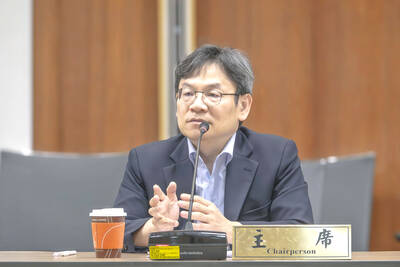
Taiwan Semiconductor Manufacturing Co’s (TSMC, 台積電) investment project in Arizona has progressed better than expected, but it still faces challenges such as water and labor shortages, National Development Council (NDC) Minister Yeh Chun-hsien (葉俊顯) said yesterday. Speaking with reporters after visiting TSMC’s Arizona hub and attending the SelectUSA Investment Summit in Maryland last week, Yeh said TSMC’s Arizona site turned a profit of NT$16.14 billion (US$514 million) last year in its first full year of mass production. “TSMC told me it was surprised by the smooth trial run of the first fab, which has left the company optimistic about the project’s outlook,”


 RSS
RSS