


Taiwan Mobile Co (台灣大哥大) yesterday threw its support behind a profit-sharing scheme based on viewing ratings, saying such a mechanism would be a win-win for content providers and TV services providers.
The nation’s No.2 telecom operator’s comments came as friction between Chunghwa Telecom Co (中華電信) and certain content providers about its multimedia-on-demand (MOD) Internet TV business led to consumer disputes following the launch of a new profit-sharing plan early this month.
Chunghwa Telecom has received numerous complaints from MOD subscribers over substantial cutbacks in on-demand channels due to the company’s conflict with its content providers over the profit calculation formula.
Under Chunghwa Telecom’s new profit-sharing program, “quality” content providers and TV programs with higher ratings would receive bigger shares of profits, while producers of “poor quality” content are granted smaller shares of profits and might be eliminated over time.
That is a drastic change from the company’s previous payment scheme, under which every channel operator received an equal share of profits, no matter the performance of its shows.
Chunghwa Telecom considers the old mechanism one of the main factors behind the MOD division’s massive losses — counting up to a cumulative loss of NT$31.5 billion (US$1.03 billion) over the past 13 years.
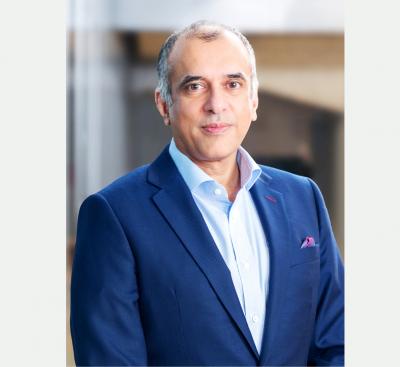
“It is good to see our peer launch a profit-sharing plan based on viewing figures,” Taiwan Mobile president James Jeng (鄭俊卿) told reporters on the sidelines of a ceremony in Taipei.
The company yesterday launched a crowdfunding campaign to support the construction of rooftop solar energy systems for a disadvantaged group in Pingtung.
“The new payment plan should help create a healthy industry by disposing of the inferior mechanism where every content provider receives an equal share of profit,” Jeng said, adding that the new plan encourages content providers to produce better programs.
However, Jeng also said the implementation should not jeopardize consumers’ interests.
Aside from telecom services, Taiwan Mobile also operates cable TV businesses via subsidiaries Kbro Co (凱擘) and TFN Media Co (台固媒體), which between them have 1.65 million subscribers.
Taiwan Mobile proposed to launch a profit-sharing system a few years ago, but aborted the plan due to the difficulty of obtaining TV rating data from third parties, Jeng said.
Taiwan Mobile suggestsed that regulators, including the National Communications Commission (NCC) and Ministry of Culture, help create a third-party TV rating agency to facilitate the wider adoption of new profit-sharing methods.
Separately, Jeng urged local telecom rivals to be rational when bidding for the new 4G spectrum later this year, considering the required capital investment and lower expected average revenue per user.
The floor bidding price of NT$29.4 billion, set by the NCC, looks reasonable, Jeng added.
Telecom operators are required to submit their applications before Sept. 1.

Taiwanese firms have increased investment in the Philippines in recent years as Manila’s ties with Washington deepen and global supply chains continue to shift away from China, an expert at the Chung-Hua Institution for Economic Research (CIER, 中華經濟研究院) said yesterday. The Philippines had not been among Taiwanese investors’ top choices in Southeast Asia, CIER Taiwan ASEAN Studies Center director Kristy Hsu (徐遵慈) said at a seminar in Taipei. However, Taiwan’s investment in the country has grown significantly since the COVID-19 pandemic, reaching US $257 million last year, a high in recent years, she said. Although Taiwan’s total investment in the Philippines still lags
HSBC Holdings PLC is deepening its commitment to Taiwan as the economy emerges as one of the bank’s fastest-growing markets globally, driven by an artificial intelligence (AI) investment boom, expanding cross-border trade, and rising wealth creation. “The advantage that Taiwan has is a growth story linked to the semiconductor and broader AI industries, strong underlying corporate performance, and wealth creation,” said Surendra Rosha, HSBC’s co-chief executive for Asia and the Middle East, in an exclusive interview with the Taipei Times on June 2, during this year’s HSBC Taiwan Conference. That combination has helped HSBC cement its position as the most profitable international

Intel Corp regards Taiwan Semiconductor Manufacturing Co (TSMC, 台積電) as a longstanding partner, as the US chipmaker would continue outsourcing production of advanced chips to TSMC, Intel chief executive officer Lip-Bu Tan (陳立武) said yesterday. “I don’t look at people as competitors. I look at the collaboration... Nvidia is also, you know, a good friend,” Tan told a news conference following his keynote speech at the Computex trade show in Taipei. “It’s a very trusted partnership for us... We are a big, top customer for them, and we’re going to continue doing that,” he said, referring to TSMC, the world’s largest foundry

Hon Hai Precision Industry Co (鴻海精密) yesterday said it would work with US chipmaker Intel Corp to jointly develop and deploy next-generation artificial intelligence (AI) infrastructure and intelligent computing platforms in a move to capture booming demand for AI computing systems. Hon Hai, also known as Foxconn Technology Group (富士康), said in a statement that the partnership would combine its global manufacturing scale, system integration expertise and AI data center deployment capabilities with Intel’s strengths in processor architecture, silicon technologies and software ecosystem. The companies said they plan to work on equipment used in AI data centers, including server racks powered by


 RSS
RSS