


Tesla Inc is recruiting engineers from Mexico to work on robotics and other automated equipment at its California factory, according to LinkedIn postings, part of a hiring push to ready the plant for mass production of the Model 3.
The electric automaker aims to build 500,000 cars a year by next year at its plant in Fremont, California. That would be a six-fold increase from last year.
A recruiting poster published on LinkedIn by Tesla senior technical recruiter David Johnson listed 15 types of engineers the company would be seeking at a recruiting event from Friday to Monday next week in Monterrey, Mexico.
The Silicon Valley automaker is under the gun to accelerate production and save money as it readies for volume production of the Model 3 in September.
The company’s future profitability hinges on its success, and high hopes for the mass-market vehicle have helped push Tesla shares up 47 percent since January.
Mexico boasts a substantial pool of manufacturing engineers, with 19 automotive plants owned by global automakers including General Motors Co, Ford Motor Co and Volkswagen AG.
Johnson wrote in a post that he hoped to interview manufacturing and mechanical engineers with experience in “Body in White” manufacturing — the stage of assembly in which sheet metal components are welded together to make up the outer frame of the car.
“We are looking for controls, robotic and weld engineers!” another Tesla employee, Dominik Knapp, wrote on his LinkedIn page.
Tesla has been hiring in the past few months for assembly-line jobs at the Fremont plant, but finding manufacturing engineers, who are in even shorter supply than software engineers in Silicon Valley, is a tougher challenge.
Doug Patton, president of SAE International, a professional association of automotive engineers, said Tesla’s search for engineers in Mexico underscored a dearth of talent in the industry.
“There are many more jobs than engineers; this is an engineering problem across the board,” he said.
US automakers and suppliers sometimes bring employees from Mexican plants to the US for short-term assignments, but Patton said he had not heard of any company recruiting on a “wholesale basis” as Tesla appears to be doing.
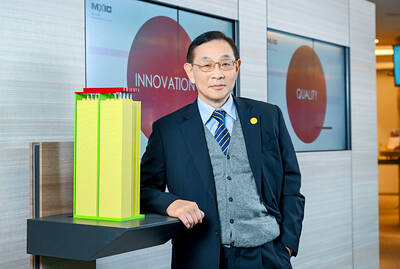
Macronix International Co (旺宏), the world’s biggest NOR flash memory supplier, yesterday said it would spend NT$22 billion (US$699.1 million) on capacity expansion this year to increase its production of mid-to-low-density memory chips as the world’s major memorychip suppliers are phasing out the market. The company said its planned capital expenditures are about 11 times higher than the NT$1.8 billion it spent on new facilities and equipment last year. A majority of this year’s outlay would be allocated to step up capacity of multi-level cell (MLC) NAND flash memory chips, which are used in embedded multimedia cards (eMMC), a managed

CULPRITS: Factors that affected the slip included falling global crude oil prices, wait-and-see consumer attitudes due to US tariffs and a different Lunar New Year holiday schedule Taiwan’s retail sales ended a nine-year growth streak last year, slipping 0.2 percent from a year earlier as uncertainty over US tariff policies affected demand for durable goods, data released on Friday by the Ministry of Economic Affairs showed. Last year’s retail sales totaled NT$4.84 trillion (US$153.27 billion), down about NT$9.5 billion, or 0.2 percent, from 2024. Despite the decline, the figure was still the second-highest annual sales total on record. Ministry statistics department deputy head Chen Yu-fang (陳玉芳) said sales of cars, motorcycles and related products, which accounted for 17.4 percent of total retail rales last year, fell NT$68.1 billion, or

In the wake of strong global demand for AI applications, Taiwan’s export-oriented economy accelerated with the composite index of economic indicators flashing the first “red” light in December for one year, indicating the economy is in booming mode, the National Development Council (NDC) said yesterday. Moreover, the index of leading indicators, which gauges the potential state of the economy over the next six months, also moved higher in December amid growing optimism over the outlook, the NDC said. In December, the index of economic indicators rose one point from a month earlier to 38, at the lower end of the “red” light.

MediaTek Inc (聯發科) shares yesterday notched their best two-day rally on record, as investors flock to the Taiwanese chip designer on excitement over its tie-up with Google. The Taipei-listed stock jumped 8.59 percent, capping a two-session surge of 19 percent and closing at a fresh all-time high of NT$1,770. That extended a two-month rally on growing awareness of MediaTek’s work on Google’s tensor processing units (TPUs), which are chips used in artificial intelligence (AI) applications. It also highlights how fund managers faced with single-stock limits on their holding of market titan Taiwan Semiconductor Manufacturing Co (TSMC, 台積電) are diversifying into other AI-related firms.


 RSS
RSS