


Sun Yad Construction Co Ltd (上曜開發) expects revenue to increase rapidly in the second half of this year, as the company might start to recognize income from a luxury housing project in July, chairman Chang Yu-ming (張祐銘) said on Thursday last week.
The Tainan-based company plans to file for an occupancy permit for the city’s first upscale residential building in May and transfer ownership to buyers in July, Chang said.
“The project, with 24 floors above ground and 88 units, is more than 90 percent sold, beating all market expectations in Tainan, where buyers prefer townhouses and dislike management fees,” Chang told an investors’ conference in Taipei.
The NT$3 billion (US$98 million) project could raise the company’s earnings significantly this year, Chang said, without providing further details.
Sun Yad has not yet released its financial results for the final quarter of last year. In the first three quarters, it reported a net loss of NT$0.62 per share, following a net loss of NT$0.88 per share for all of 2015, Taiwan Stock Exchange statistics showed.
Revenue last year dropped 29.45 percent annually to NT$596.98 million and the decline has continued this year, falling 20.51 percent year-on-year to NT$88.43 billion in the first two months, the statistics showed.
The company has in recent years shifted its focus from manufacturing and selling polyurethane resin to residential property development.
Last year, it changed its name from Sun Yad Technology Co Ltd and initiated a program to reduce its capitalization by 32.4 percent to offset losses.
The company is confident the real-estate market is to recover this year, Chang said, adding that Sun Yad has three other residential projects under construction in Tainan.
In the next five years, the company aims to launch new home projects at a pace of 50,000 ping (165,289m2) per year, he said.
Sun Yad is also looking for plots of land in New Taipei City for future projects, he added.
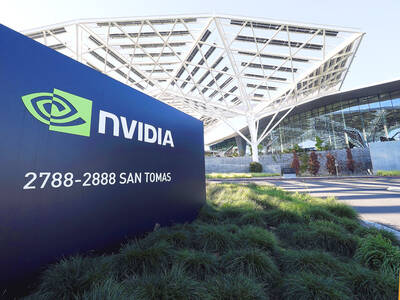
CHIP RACE: Three years of overbroad export controls drove foreign competitors to pursue their own AI chips, and ‘cost US taxpayers billions of dollars,’ Nvidia said China has figured out the US strategy for allowing it to buy Nvidia Corp’s H200s and is rejecting the artificial intelligence (AI) chip in favor of domestically developed semiconductors, White House AI adviser David Sacks said, citing news reports. US President Donald Trump on Monday said that he would allow shipments of Nvidia’s H200 chips to China, part of an administration effort backed by Sacks to challenge Chinese tech champions such as Huawei Technologies Co (華為) by bringing US competition to their home market. On Friday, Sacks signaled that he was uncertain about whether that approach would work. “They’re rejecting our chips,” Sacks
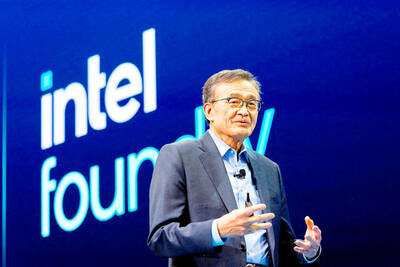
NATIONAL SECURITY: Intel’s testing of ACM tools despite US government control ‘highlights egregious gaps in US technology protection policies,’ a former official said Chipmaker Intel Corp has tested chipmaking tools this year from a toolmaker with deep roots in China and two overseas units that were targeted by US sanctions, according to two sources with direct knowledge of the matter. Intel, which fended off calls for its CEO’s resignation from US President Donald Trump in August over his alleged ties to China, got the tools from ACM Research Inc, a Fremont, California-based producer of chipmaking equipment. Two of ACM’s units, based in Shanghai and South Korea, were among a number of firms barred last year from receiving US technology over claims they have
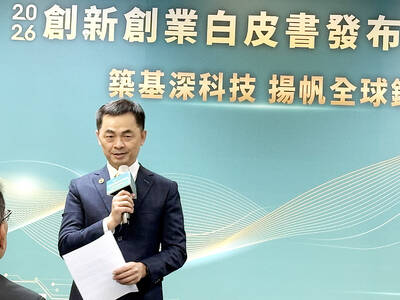
BARRIERS: Gudeng’s chairman said it was unlikely that the US could replicate Taiwan’s science parks in Arizona, given its strict immigration policies and cultural differences Gudeng Precision Industrial Co (家登), which supplies wafer pods to the world’s major semiconductor firms, yesterday said it is in no rush to set up production in the US due to high costs. The company supplies its customers through a warehouse in Arizona jointly operated by TSS Holdings Ltd (德鑫控股), a joint holding of Gudeng and 17 Taiwanese firms in the semiconductor supply chain, including specialty plastic compounds producer Nytex Composites Co (耐特) and automated material handling system supplier Symtek Automation Asia Co (迅得). While the company has long been exploring the feasibility of setting up production in the US to address

OPTION: Uber said it could provide higher pay for batch trips, if incentives for batching is not removed entirely, as the latter would force it to pass on the costs to consumers Uber Technologies Inc yesterday warned that proposed restrictions on batching orders and minimum wages could prompt a NT$20 delivery fee increase in Taiwan, as lower efficiency would drive up costs. Uber CEO Dara Khosrowshahi made the remarks yesterday during his visit to Taiwan. He is on a multileg trip to the region, which includes stops in South Korea and Japan. His visit coincided the release last month of the Ministry of Labor’s draft bill on the delivery sector, which aims to safeguard delivery workers’ rights and improve their welfare. The ministry set the minimum pay for local food delivery drivers at


 RSS
RSS