


Largan Precision Co (大立光), Taiwan’s leading smartphone camera lens supplier, is likely to again receive orders from Samsung Electronics Co after the South Korean company settled a patent dispute with Largan, analysts said.
“The victory in the three-year-long lawsuit is no doubt positive news for Largan’s operations in the long term,” Yuanta Securities Investment Consulting Co (元大投顧) analyst Jeff Pu (蒲得宇) said by telephone yesterday.
Pu’s remarks came after Largan filed a statement with the Taiwan Stock Exchange yesterday, saying that it has reached settlements with Samsung and Taiwan’s Genius Electronic Optical Co (玉晶光) over Largan’s patent rights.
Largan declined to disclose the details of the settlements, as it inked confidentiality agreements with the two companies.
Largan sued Samsung in the US District Court for the Southern District of California in November 2013, claiming that the South Korean smartphone vendor infringed on six patents that Largan registered in the US.
At that time, Samsung was one of Largan’s clients. The Taiwanese company shipped a small number of handset camera lenses to Samsung before it initiated a patent lawsuit against the South Korean firm.
The collaboration between the two companies was later suspended because of the patent dispute. Samsung’s camera lenses used in smartphones were mainly supplied by Sekonix Co Ltd, a South Korean camera lens supplier, in the past few years, according to analysts.
Pu said the settlement with Samsung would not only bring royalties income to Largan, but also reopen the possibility of supplying camera lenses to the world’s largest smartphone vendor.
He said it is an industry trend that smartphone vendors are migrating their handset camera lenses to higher specifications, such as dual cameras with multiple functions, in an effort to receive a warm market response.
Given Largan’s strong capability to deliver complicated dual camera lens designs with high production yields, it is only a matter of time before Samsung places orders to Largan, Pu said.
Pu said Largan’s anticipated collaboration with Samsung would confirm its leading position in the global optical industry, as the firm already has orders from Apple Inc, China’s Huawei Technologies Co (華為) and other smartphone manufacturers.
An analyst at Tashin Securities Investment Advisory Co (台新投顧) said Largan’s patent victory would widen the technological gap between Largan and second-tier camera lens makers in the global optics industry.
The settlement means Genius will need to deliver completely different industrial designs to avoid infringing Largan’s technologies, which is very difficult for second-tier manufacturers to achieve, the analyst, who declined to be named, said by telephone.
Largan has an ongoing lawsuit with domestic rival Ability Optoelectronic Technology Inc (先進光電), in which Largan in 2013 sued Ability for allegedly stealing trade secrets.
POWERING UP: PSUs for AI servers made up about 50% of Delta’s total server PSU revenue during the first three quarters of last year, the company said Power supply and electronic components maker Delta Electronics Inc (台達電) reported record-high revenue of NT$161.61 billion (US$5.11 billion) for last quarter and said it remains positive about this quarter. Last quarter’s figure was up 7.6 percent from the previous quarter and 41.51 percent higher than a year earlier, and largely in line with Yuanta Securities Investment Consulting Co’s (元大投顧) forecast of NT$160 billion. Delta’s annual revenue last year rose 31.76 percent year-on-year to NT$554.89 billion, also a record high for the company. Its strong performance reflected continued demand for high-performance power solutions and advanced liquid-cooling products used in artificial intelligence (AI) data centers,
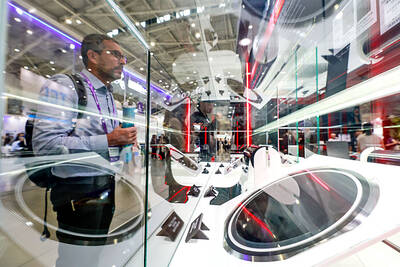
SIZE MATTERS: TSMC started phasing out 8-inch wafer production last year, while Samsung is more aggressively retiring 8-inch capacity, TrendForce said Chipmakers are expected to raise prices of 8-inch wafers by up to 20 percent this year on concern over supply constraints as major contract chipmakers Taiwan Semiconductor Manufacturing Co (TSMC, 台積電) and Samsung Electronics Co gradually retire less advanced wafer capacity, TrendForce Corp (集邦科技) said yesterday. It is the first significant across-the-board price hike since a global semiconductor correction in 2023, the Taipei-based market researcher said in a report. Global 8-inch wafer capacity slid 0.3 percent year-on-year last year, although 8-inch wafer prices still hovered at relatively stable levels throughout the year, TrendForce said. The downward trend is expected to continue this year,
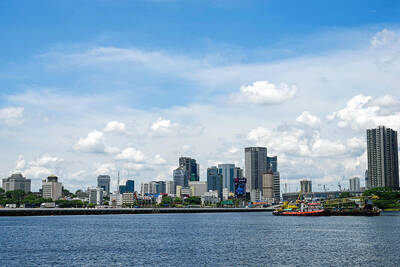
Vincent Wei led fellow Singaporean farmers around an empty Malaysian plot, laying out plans for a greenhouse and rows of leafy vegetables. What he pitched was not just space for crops, but a lifeline for growers struggling to make ends meet in a city-state with high prices and little vacant land. The future agriculture hub is part of a joint special economic zone launched last year by the two neighbors, expected to cost US$123 million and produce 10,000 tonnes of fresh produce annually. It is attracting Singaporean farmers with promises of cheaper land, labor and energy just over the border.

US actor Matthew McConaughey has filed recordings of his image and voice with US patent authorities to protect them from unauthorized usage by artificial intelligence (AI) platforms, a representative said earlier this week. Several video clips and audio recordings were registered by the commercial arm of the Just Keep Livin’ Foundation, a non-profit created by the Oscar-winning actor and his wife, Camila, according to the US Patent and Trademark Office database. Many artists are increasingly concerned about the uncontrolled use of their image via generative AI since the rollout of ChatGPT and other AI-powered tools. Several US states have adopted


 RSS
RSS